Moving can be a daunting task, especially when it comes to unpacking and organizing your belongings. Inspired by Marie Kondo’s books, *Spark Joy* and *The Life-Changing Magic of Tidying*, I have developed a unique approach to tackle the chaos. Despite my best intentions, I found myself with unopened boxes tucked away in an outbuilding and a caravan, a situation that many can relate to.
Throughout my journey, I realized that a tidy cabinet can often create a false sense of security. Hidden items can linger in corners, under stairs, or in the garage, waiting to be addressed. This is where my personal experience connects with others who have moved multiple times. Relocation can serve as a valuable opportunity to reassess what we truly need.
This guide combines practical advice with insights from my experiences and the KonMari method. Together, we will explore a calm sequence for evaluating possessions, organizing what is useful, donating what is not, and creating a sustainable routine for your home.
Key Takeaways
- Marie Kondo’s methods inspire a fresh perspective on organizing.
- Unpacking is often more than just opening boxes; it’s about assessing value.
- Hidden items can lead to clutter, even in seemingly tidy spaces.
- Relocation offers a chance to reset your ownership mindset.
- Practical advice can simplify the organization process.
Understanding the Need for Decluttering in a New Home
When you settle into a new place, the journey of unpacking can highlight the clutter lurking beneath the surface. Each item we own is handled multiple times during the move, from boxing it up to unpacking it in our new home. This repetitive process can expose areas where clutter accumulates.
For instance, belongings may remain packed in an outbuilding or tucked away in a caravan. This can create a sense of incompleteness in your new home, even if the visible surfaces are clean. It’s essential to recognize that a tidy appearance does not always equate to an organized space.
Limited storage and hurried unpacking often lead to piles of boxes and forgotten items. As I reflect on my own experiences and those of others who have moved numerous times, it becomes clear that relocation offers a unique opportunity. It allows us to evaluate our possessions and reconsider what we truly need.
Here are some key insights:
- Every item is handled four times, revealing hidden clutter.
- Boxes left in outbuildings or under stairs can make a house feel unfinished.
- Rushed unpacking leads to blocked pathways and forgotten belongings.
- Relocation encourages questioning our ownership of items.
- A visually tidy room is not the same as a genuinely organized home.
Setting Up Your Home Organization Infrastructure
The key to a smooth transition into your new home lies in developing a solid organization framework. A well-planned setup can make unpacking more manageable and help you find what you need quickly.
First, I recommend establishing a designated storage area in your home or garage. This space should accommodate your items without overcrowding. Consider using shelves, hooks, and containers that match the available space.
Next, labels play a crucial role in your organization strategy. They help identify what belongs inside each container or drawer. This not only makes it easier to locate supplies but also prevents duplicate purchases. For instance, you might discover you already own 20 bowls!
In cases where your garage or closet cannot hold seasonal and keepsake belongings, consider a storage unit. It provides an excellent alternative to keep your new home clutter-free.
Before making any furniture purchases, live in your new space for a while. This way, you can determine what fits best without rushing into costly decisions. Overall, creating designated zones and using correctly sized storage containers can save money by reducing repeated purchases and misplaced items.
| Storage Solutions | Benefits | Considerations |
|---|---|---|
| In-home Storage | Convenient access | Limited space |
| Storage Unit | Extra space | Monthly fees |
| Storage Containers | Organized items | Need for labels |
Embracing the KonMari Method for a Joyful Decluttering Process
Finding the right balance between necessity and sentimentality can be a delicate task during unpacking. The KonMari method, developed by Marie Kondo, emphasizes keeping only those items that truly spark joy when held. This approach invites a refreshing perspective on what we choose to keep.
It’s important to remember that this method doesn’t demand extreme minimalism. For instance, I chose to keep my wedding dress and the shoes I wore to an awards ceremony. These pieces carry memories that I cherish, and they definitely spark joy.
When evaluating your belongings, consider:
- Emotional response: Does the item make you feel happy?
- Practical usefulness: Is it something you really need?
- Condition: Is it in good shape?
- Frequency of use: How often do you use it?
As you navigate this process, take care with sentimental items. Separate immediate necessities from those that deserve a slower review. This will help you feel more confident in your decisions and ensure the job gets done efficiently.
By embracing the KonMari method, you can transform your space into one that reflects your values and brings you joy.
Sorting Essentials and Prioritizing What Matters
Assessing your possessions during unpacking can reveal what is essential and what is not. Each item you handle presents an opportunity to reflect on its value in your life. I often ask myself why I own each possession, what it provides, and whether I am willing to carry it through another move.
For example, dust on unused Tupperware, extra glasses, or a forgotten blender serves as a practical signal that an item may no longer serve me. This simple observation can guide my decision-making process.
I separate my belongings into clear categories: keep, donate, sell, recycle, and discard. This method ensures that every decision has a clear next action. I recommend donating to Goodwill, nonprofit organizations, and secondhand stores as responsible outlets for useful items that no longer belong in my home.
Additionally, selling suitable possessions can help recover some money while donating gives functional items a second life with someone else. Embracing this approach makes the process feel more rewarding.
| Action | Purpose | Recommended Outlets |
|---|---|---|
| Keep | Retain items of value | N/A |
| Donate | Give items a second life | Goodwill, nonprofits |
| Sell | Recover money | Secondhand stores, online platforms |
| Recycle | Dispose of responsibly | Local recycling centers |
| Discard | Remove unwanted items | Trash |
Clearing Out Boxes and Managing Temporary Storage
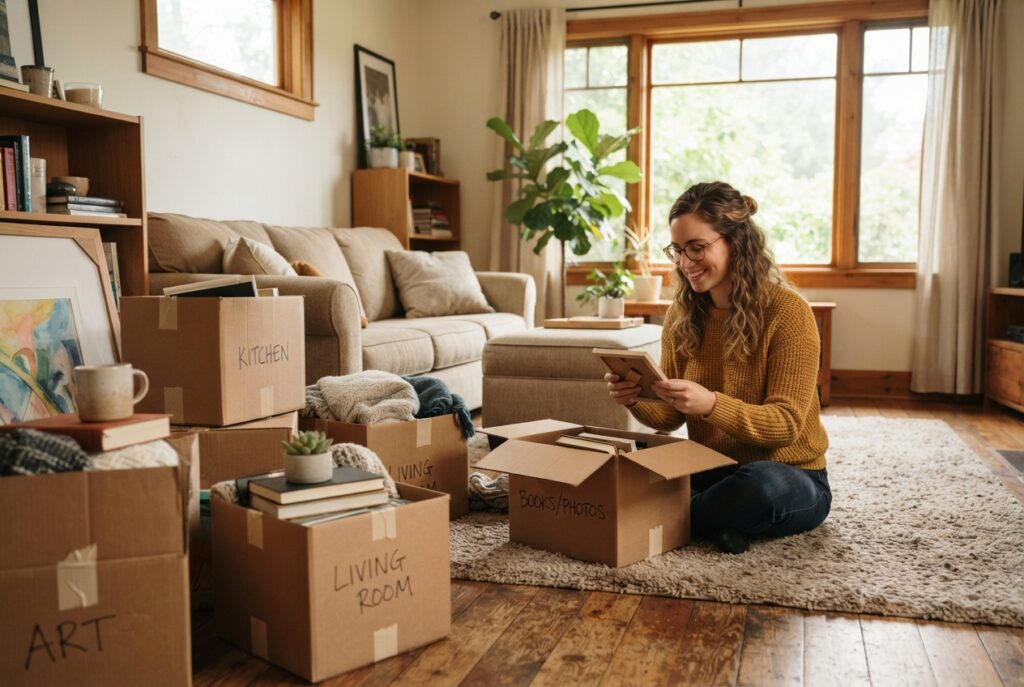
Tackling the chaos of unpacking requires a systematic approach to manage your belongings effectively. I find that emptying one box at a time in its designated room keeps the process organized. This way, I can immediately flatten the box to prevent clutter from building up.
Creating a temporary zone for empty boxes in the garage or another designated area is essential. This helps avoid scattering cardboard throughout my new home. Once I finish unpacking, I separate the flattened boxes into groups: keep, donate, and recycle.
Reflecting on my previous experiences, I remember how boxes piled up in the porch and under the stairs. It serves as a reminder to regularly review these temporary zones. Additionally, I label incoming belongings by room and purpose, ensuring that the next unpacking session has a clear direction.
| Action | Description | Next Steps |
|---|---|---|
| Empty Boxes | Unpack one box at a time in the correct room. | Flatten immediately to reduce clutter. |
| Temporary Zone | Create a designated area for empty boxes. | Review regularly to keep it organized. |
| Labeling | Label items by room and purpose. | Facilitate efficient unpacking sessions. |
Applying Practical Tips for Decluttering Specific Categories
Breaking down your possessions into specific groups can make unpacking feel less overwhelming. I often start with clothing, as my past experience living out of a suitcase taught me that a full wardrobe isn’t necessary.
When reassessing my clothes, I remove anything that doesn’t fit, flatter, or feel comfortable. I only keep pieces that provide a positive reason to stay in my closet. Wearable items are directed to a charity shop, while I preserve meaningful exceptions like my wedding dress or special-event shoes.
Before purchasing replacements, I make a note of genuine wardrobe gaps, such as a missing navy top or leisurewear. This helps me avoid impulse buys and ensures I only acquire what I truly need.
Books require careful consideration as well. After buying three books in one week, I realized I could benefit from using the library more often. This approach allows me to enjoy reading without accumulating unnecessary clutter.
For more tips on organizing your home effectively, check out this resource.
Overcoming Emotional Attachments During the Decluttering Process
Understanding the emotional connections to our belongings can transform the unpacking experience. I recall a moment when a moving bag split above a staircase, spilling household goods everywhere. It reminded me of how deeply we can be tied to our possessions.
Having moved friends and family multiple times, I learned that repeated relocation strengthens awareness of what ownership demands. I often invite trusted friends or family to ask direct questions, such as why I keep three remotes tucked away in the back of a closet.
Donating items feels like a positive change. Organizations like Goodwill can connect useful possessions with new owners. I also practice gratitude for the help I receive from loved ones while making decisions that lighten my future moves.
- Acknowledge the emotional weight of possessions.
- Invite friends to challenge unnecessary ownership.
- View donation as a way to create positive change.
- Practice gratitude for support during the process.
Designing a Functional Layout in Your New Home
Creating a functional layout in your new home can significantly enhance your daily living experience. A well-organized space not only looks appealing but also promotes efficiency in your daily routines.
To start, I focus on high-traffic areas like the porch and stairs. Misplaced boxes in these zones can hinder movement and comfort. It’s essential to keep frequently used items close to their point of use. For example, seasonal belongings can be stored in the garage or a closet.
Next, I organize cabinets and shelving only after measuring available capacity. This ensures that the layout supports real routines rather than imagined ones. Before unpacking everything, I create room-by-room destinations for clothing, books, kitchen supplies, keepsakes, and incoming possessions.
Lastly, I avoid purchasing furniture immediately. Instead, I observe how the new home functions during ordinary days and evenings. This thoughtful approach helps me make informed decisions about what truly fits my lifestyle.
Integrating Self-Storage Solutions for Extra Space
Integrating self-storage options can simplify the organization of your new home. Self-storage is an affordable and immediate way to gain extra space for items that don’t need to be in your daily living areas.
I often consider a self-storage unit for seasonal décor, keepsakes, and special collections. For example, Christmas décor may remain unused for 9-10 months, taking up valuable closet or garage capacity.
When selecting a storage unit, I compare sizes, access arrangements, security features, and pricing. This helps ensure I choose a facility that matches my actual requirements.
To keep my storage organized, I photograph the unit periodically. This practice helps me remember where each box is located. Additionally, I maintain a simple inventory and ensure walkways are accessible, rather than treating the unit as an unstructured overflow room.
| Storage Unit Features | Benefits | Considerations |
|---|---|---|
| Size Options | Fits various needs | Choose based on belongings |
| Access Arrangements | Convenient access | Check hours of operation |
| Security Features | Protects your items | Evaluate surveillance and locks |
| Pricing | Affordable solutions | Look for hidden fees |
Conclusion
I see a move as a chance to question what I own. Each possession may pass through my hands four times. My process is simple: evaluate each item, set up useful storage, unpack one box at a time, and give every belonging a clear home.
Marie Kondo’s joy test helps me decide what deserves space, but it does not mean I must part with meaningful clothing or keepsakes. I can keep what matters, donate useful goods to Goodwill or another nonprofit, sell suitable items, and recycle flattened boxes through local programs.
Once I feel settled, I keep the routine alive. I evaluate and scan each room, challenge old habits, practice mindful choices, donate what no longer serves me, and embrace the space I have made. Regular reviews help my home stay useful and calm.