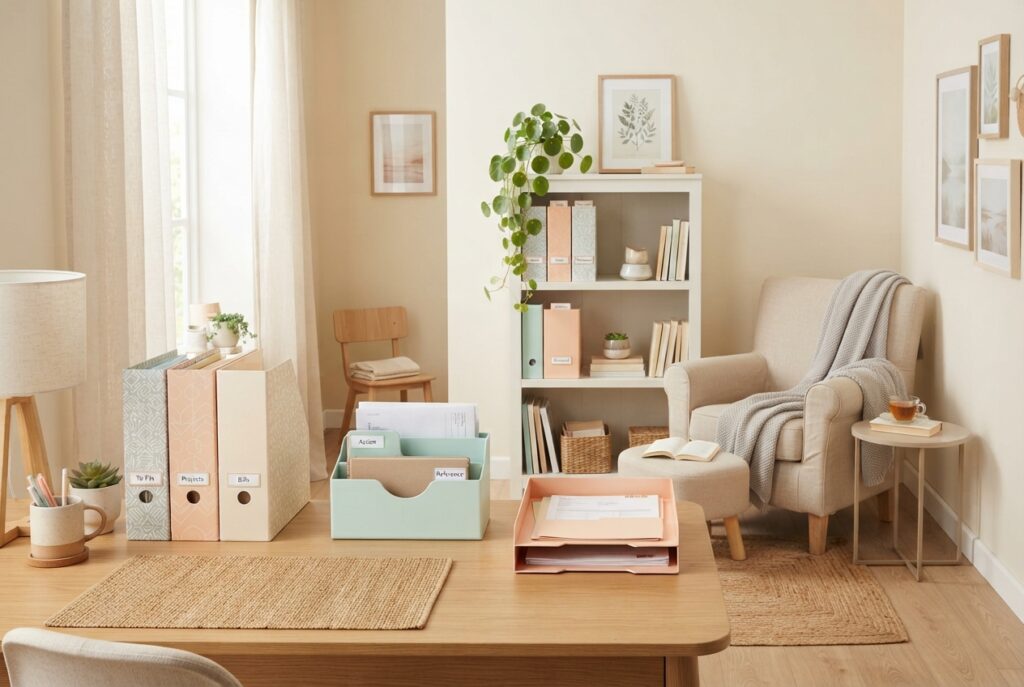
In today’s fast-paced world, managing the chaos at home can feel overwhelming. I remember a time when I desperately searched for a school-event document, only to find it buried under a mountain of papers. This experience taught me the importance of effective organization. With the right strategies, I discovered ways to tackle the mess and reclaim my space.
This article is part of the 31 Days to a Better Work + Life Balance series. Here, I will share my top tips for minimizing the overwhelming presence of documents in your life. A tidy home leads to a calmer mind, allowing you to focus on what truly matters.
Join me as we explore practical methods to reduce the chaos and create a more organized environment. Together, we can transform our living spaces into serene sanctuaries.
Key Takeaways
- Effective organization reduces stress and improves focus.
- Implementing simple strategies can significantly minimize paper buildup.
- A tidy home fosters a calmer and more productive mindset.
- Regularly reviewing documents helps maintain order.
- Explore more tips on organizing your home here.
Understanding the Impact of Paper Clutter
Every day, I realize how much unorganized documents can disrupt my life. The weight of disarray can make even simple tasks feel burdensome. When I searched through piles of papers for my son’s school-event time, I felt the stress of juggling family schedules. It’s easy to overlook how much these stacks can affect our daily routines.
Not only do these paper clutter piles consume time, but they can also lead to missed deadlines. I once found a bill nearly overdue because it was hidden in a sea of unsorted mail. Recognizing the impact of these issues is the first step toward a calmer home.
Common clutter piles often include:
- Home Finances
- Cards and Keepsakes
- Business Forms
- Kids’ School Papers and Artwork
- Printed Recipes
Understanding where the chaos originates helps in tackling it effectively. It’s time to get rid of unnecessary papers and create a more organized environment.
| Clutter Type | Common Sources | Suggested Action |
|---|---|---|
| Home Finances | Bank statements, bills | Set up a filing system |
| Kids’ School Papers | Artwork, report cards | Digitize and keep favorites |
| Business Forms | Contracts, invoices | Use a shredder for outdated forms |
| Cards and Keepsakes | Birthday cards, mementos | Limit to a memory box |
| Printed Recipes | Magazines, online printouts | Compile into a recipe binder |
Gathering and Sorting: Tackling Incoming Mail and Documents
The constant influx of mail and documents can quickly become a source of stress. To manage this, I focus on consolidating important paperwork and eliminating junk. Each piece of mail has a designated place, whether it’s my husband’s folder or a clipboard for bills and forms.
Setting up a temporary sorting station can make a big difference. I gather papers from drawers, mail piles, and sorter bins. Having a trash can and shredder nearby is essential for getting rid of unnecessary items right away.
To keep things organized, I recommend using binders, pocket dividers, and clipboards. I usually expect to need four or five binders for my main categories. Completing these binders can be done in short sessions, like during a football game or while chatting over dinner.
With these steps, I can tackle incoming mail effectively and maintain a tidy space.
| Type of Paperwork | Designated Place | Suggested Action |
|---|---|---|
| Husband’s Folder | Sort daily | |
| Bills | Clipboard | Pay promptly |
| Forms | Binder | File as needed |
| School Papers | Kids’ Binder | Review regularly |
| Junk Mail | Trash Can | Shred or discard |
Practical Paper Clutter Solutions for a Calmer Home
The overwhelming amount of mail and paperwork can easily take over our living spaces. To combat this, I follow the Touch-It-Once Rule. This means that as soon as I receive any document, I decide its fate: it either goes into storage or the trash. This simple step saves me from dealing with unnecessary clutter later.
Additionally, I categorize incoming items into three broad groups: To Do, Wait and See, and 2021. The last category includes important documents like home maintenance records and tax documents. Interestingly, I often find that out of seven pieces of mail, I can discard six or even all of them!
To further eliminate paper, I utilize online statements and electronic bill pay. I also love using apps like QuickBooks and Evernote. For my kids’ artwork, I take photographs instead of keeping every original piece. This way, I can cherish their creativity without the clutter.
Integrating Organizational Systems for Long-Term Success
Creating a sustainable system for organizing your documents is key to long-term peace at home. Transitioning to digital filing and paperless billing can drastically reduce the amount of paperwork you manage daily.
One effective way to eliminate paper clutter is by using apps like Evernote as a digital filing cabinet. Scannable can help you digitize essential documents, making it easier to keep track of important items like tax documents and bills.
Every Sunday, I dedicate time to process incoming mail and bills. This consistent practice ensures that I stay on top of my paperwork and can get rid of junk mail immediately. Marie Kondo’s approach, which categorizes papers into current-use, limited-time, and indefinite-retention, has been invaluable in my organizing efforts.
- Keep essential records in a fireproof lock box.
- Digitize artwork and school papers to save space.
- Regularly review and purge old documents.
Conclusion
My home runs more smoothly when each document has a clear next step. I do not need a perfect filing system; I need a practical routine that works during a busy week. A consistent review helps me spot upcoming deadlines, protect useful records, and let go of items that no longer serve a purpose.
Over time, these small choices make an organized home easier to maintain. I can update my approach as family needs change, while keeping vital records secure and easy to find. Progress matters more than a flawless system.
Choose one manageable action today: sort a single stack, scan a record worth keeping, or schedule a weekly review. When I make organization part of my routine, I save time and enjoy a calmer home.