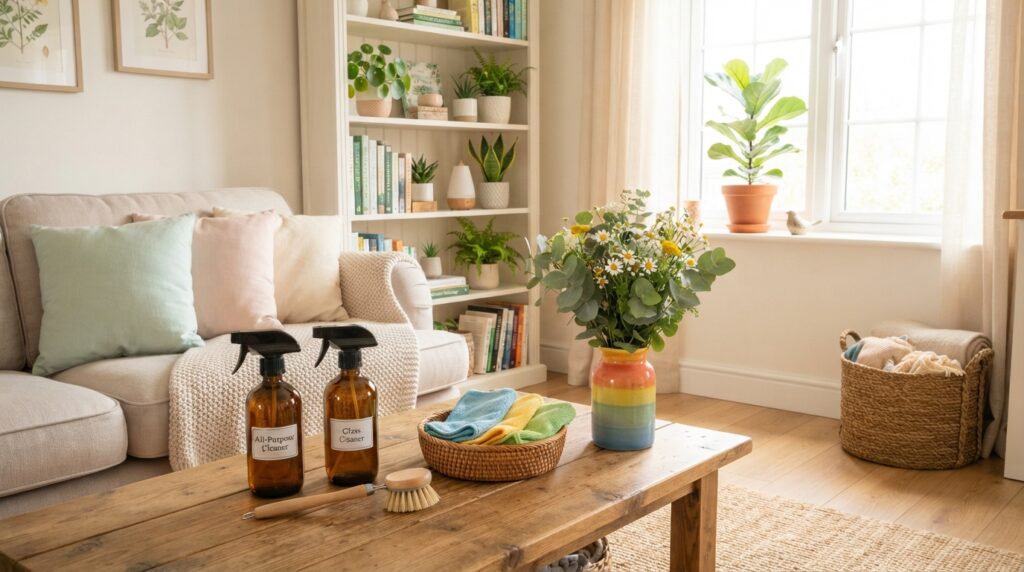
Keeping your living space fresh and inviting is essential for your well-being. Regular upkeep not only removes dirt and germs but also creates a more pleasant environment. The CDC emphasizes that consistent cleaning helps eliminate harmful impurities from surfaces, making your space healthier.
Moreover, research shows a direct link between clutter and stress. A tidy space can significantly improve your mood and reduce anxiety levels. By adopting simple routines, you can manage your chores without feeling overwhelmed.
In this article, you will discover effective strategies for maintaining cleanliness in various areas of your space. From kitchens to bedrooms, these practical methods will help you reduce allergens and bacteria, contributing to a healthier atmosphere.
Key Takeaways
- Utilize CDC guidelines to create a manageable cleaning routine.
- Understand the mental health benefits of a clutter-free environment.
- Incorporate small daily habits to maintain cleanliness.
- Learn how regular upkeep can minimize allergens and germs.
- Explore room-specific advice for effective maintenance.
Build a simple home cleaning routine you can stick with
A simple yet effective routine can help you maintain a tidy and welcoming atmosphere. To keep your space organized, consider handling daily messes as they occur. For instance, Jennifer Gregory suggests washing dishes right after meals and taking out the trash before it overflows.
In addition to daily tasks, it’s helpful to break larger chores into manageable segments. Spend about 10 minutes each morning making your bed and tidying visible surfaces in your bedroom. This small effort can make a big difference in how your space feels.
Furthermore, dividing chores across the week can prevent overwhelm. For example, you might wash bedding one day and tackle other tasks on different days. Encourage family members to pitch in as well, so that everyone shares the responsibility of upkeep.
- Follow Jennifer Gregory’s advice to wash dishes after every meal and remove trash before it overflows.
- Set aside approximately 10 minutes each morning to make the bed and tidy visible surfaces.
- Divide larger chores across separate days, such as washing bedding one day.
- Assign tasks to family members, including children, to share the workload.
- Use a written room-by-room list to reduce decision fatigue and simplify house cleaning.
Home care and cleaning tips for choosing the right supplies
Choosing the right supplies can make all the difference in your upkeep routine. A well-stocked cleaning caddy ensures you have everything at hand for efficient maintenance. Start by including essential items that cater to various surfaces in your space.
Microfiber cloths are a game-changer. Debra Johnson from Merry Maids notes that these cloths are machine washable and quick-drying, making them less likely to retain germs. Moreover, Jennifer Gregory from Molly Maid claims they can eliminate up to 99% of bacteria with just water.
Here’s what to include in your caddy:
- Glass cleaner
- Mildly abrasive cleaner
- All-purpose cleaner
- Latex gloves
- Reusable microfiber cloths
Always match your products to their intended surfaces. Different materials like glass, stainless steel, and wood require specific care. Lastly, avoid using a single sponge for all tasks, as Dawna Boone warns that sponges can harbor bacteria and become unsanitary.
Clean high-touch hard surfaces around your home
Maintaining clean surfaces is vital for reducing the spread of germs. High-touch areas, like doorknobs and countertops, collect dirt and bacteria easily. The CDC recommends cleaning these surfaces regularly to keep your space healthy.
To effectively manage these areas, focus on the following:
- Wipe down light switches, doorknobs, and countertops consistently, following CDC guidelines.
- Dust windowsills, bookshelves, and furniture before vacuuming or mopping to avoid spreading dust around.
- Use water and soap or products specifically labeled for the material to protect delicate surfaces.
- Recognize that household dust can harbor harmful chemicals, making consistent dust removal crucial.
- Pay extra attention to high-contact areas after guests leave, as recommended by the CDC.
Using the right products is essential. Choose those that are safe for each surface type. This ensures effective cleaning without causing damage.
| Surface Type | Recommended Cleaning Product | Cleaning Frequency |
|---|---|---|
| Wood | Wood cleaner | Weekly |
| Glass | Glass cleaner | As needed |
| Stainless Steel | All-purpose cleaner | Weekly |
Keep your kitchen fresh and ready for family meals
Maintaining a fresh kitchen is crucial for enjoyable family meals. A clean kitchen not only enhances the cooking experience but also promotes health by reducing bacteria. By following a few simple practices, you can ensure your kitchen remains inviting and safe.
First, it’s important to handle spills promptly. Wipe down counters immediately to prevent food residue from hardening. Debra Johnson emphasizes a clean-as-you-go approach, which keeps surfaces tidy and manageable.
Clean counters and handle spills promptly
- Use baking soda to tackle grease buildup on surfaces, as recommended by Dawna Boone. After applying, wipe with a clean, damp cloth.
- Wipe kitchen counters and spills immediately so food residue does not harden.
Wash dishes and separate raw meat from other foods
- Follow Jennifer Gregory’s advice to wash dishes after every meal and take out trash before it overflows.
- Keep raw meat separate from vegetables and always clean cutting boards with hot, soapy water before reuse.
- Schedule refrigerator cleaning three or four times yearly and oven cleaning every three to six months, depending on use.
| Task | Frequency | Notes |
|---|---|---|
| Wash Dishes | After each meal | Prevents bacteria buildup |
| Clean Counters | Daily | Use soap and water |
| Refrigerator Cleaning | 3-4 times yearly | Remove expired items |
| Oven Cleaning | Every 3-6 months | Based on usage |
Make bathroom cleaning easier with regular upkeep
Regular upkeep in your bathroom can simplify the cleaning process. Consistent attention to this room helps maintain a fresh and hygienic environment. According to Jennifer Johnson, cleaning the toilet, shower, tub, sink, and floors once or twice a week is essential. Pay special attention to the area behind the toilet, where bacteria can accumulate.
To make your routine more manageable, consider these practices:
- Use a squeegee after each shower to remove moisture from walls. This reduces buildup and makes weekly cleaning easier.
- Wash towels and bath mats regularly. Hang them fully to prevent damp fabric from lingering in the bathroom.
- Don’t forget forgotten spots like faucet aerators and toothbrush holders, which can harbor germs.
- When washing laundry, especially from someone who is sick, use detergent and warm water. The CDC allows combining this laundry with others, but remember to wash your hands afterward.
| Task | Frequency | Notes |
|---|---|---|
| Clean toilet | Weekly | Focus on behind the toilet |
| Wash towels | Every few days | Hang to dry completely |
| Wipe shower walls | After each use | Use a squeegee |
Refresh living rooms, bedrooms, carpets, and other soft surfaces
Creating a clean and inviting atmosphere in your living spaces is essential for your overall well-being. Regular maintenance of soft surfaces, such as carpets and upholstery, can significantly improve air quality and reduce allergens.
To keep your home fresh, consider the following practices:
Vacuum carpets, rugs, and furniture
Vacuuming is a crucial step in maintaining cleanliness. Ensure you vacuum carpets, rugs, sofas, and pet beds regularly. Don’t forget to reach beneath cushions and movable furniture to eliminate hidden dust.
Launder bedding and clean dust-collecting items
Washing bedding weekly in water above 130°F helps reduce dust mites, promoting better health. Additionally, curtains should be washed at least twice a year and lightly vacuumed monthly to control dust.
Moreover, remember to replace basic fiberglass air filters every 30 days. If you use pleated filters, they typically last about 90 days, but in homes with pets or allergies, consider changing them every 60 days.
| Item | Recommended Action | Frequency |
|---|---|---|
| Bedding | Wash in hot water | Weekly |
| Curtains | Wash and vacuum | Twice yearly |
| Air Filters | Replace | 30-90 days |
Know when to clean, sanitize, or disinfect surfaces
Understanding when to clean, sanitize, or disinfect is crucial for maintaining a healthy environment. Each step serves a unique purpose in reducing germs and keeping surfaces safe.
Start by cleaning with soap and water. The CDC defines cleaning as removing most germs, dirt, and impurities through scrubbing. This is important because dirt can prevent sanitizers and disinfectants from reaching germs effectively.
Clean first with soap and water
Use soap and water to clean surfaces before applying any sanitizing solutions. This ensures a thorough clean, allowing for better germ reduction.
Sanitize food-contact surfaces when needed
Sanitize surfaces that come into contact with food, especially after exposure to raw meat or during emergencies. A sanitizing mixture of 1/3 cup bleach per gallon of room-temperature water can be effective when directions permit.
Disinfect when someone is sick or has a weakened immune system
Disinfecting is essential when someone is sick or has a weakened immune system. Use a stronger bleach solution of 1/3 cup bleach per 3/4 gallon of water to kill most germs on surfaces.
Always treat cleaning, sanitizing, and disinfecting as different steps rather than interchangeable terms. Knowing when to apply each method can help maintain a healthier living space.
| Action | Purpose | Recommended Solution |
|---|---|---|
| Clean | Remove dirt and germs | Soap and water |
| Sanitize | Reduce germs to safe levels | 1/3 cup bleach per gallon of water |
| Disinfect | Kill most germs | 1/3 cup bleach per 3/4 gallon of water |
Use cleaning products safely and avoid common mistakes
Using cleaning products safely is crucial for maintaining a healthy living environment. You’ll want to ensure that you read every product label carefully. Follow the dilution directions and make sure the surface stays wet for the full disinfectant contact time. This is essential for effective cleaning.
Additionally, improving indoor air circulation is important. Open windows, doors, or use a fan whenever you use stronger bleach or disinfecting products. This helps to reduce harmful fumes and keep the air fresh.
Never mix bleach, vinegar, ammonia, or other cleaning chemicals. Doing so can create dangerous vapors that may harm your health. After using disinfectants, wash your hands with soap and water for at least 20 seconds, as recommended by the CDC.
Lastly, don’t forget to launder your reusable cleaning cloths, mop heads, and vacuum filters regularly. This practice prevents the spread of residue or germs throughout your space.
- Read every product label, follow dilution directions, and make sure the surface stays wet for the full disinfectant contact time.
- Improve indoor air circulation with open windows, doors, or a fan whenever you use stronger bleach or disinfecting products.
- Never mix bleach, vinegar, ammonia, or other cleaning chemicals because dangerous vapors can form inside the room.
- Wash your hands with soap and water for 20 seconds after disinfecting, following CDC safety guidance.
- Launder microfiber cloths, reusable rags, mop heads, and vacuum filters so cleaning supplies do not spread residue or germs.
Conclusion
A steady routine beats a long list of urgent chores. Tidy each day, give each room a weekly reset, then set aside time for deeper tasks. The CDC’s January 31, 2025 update supports regular cleaning to remove dirt, impurities, plus most household germs.
For family health, match products to each surface, keep raw meat apart, wash fabrics, improve bathroom airflow. Clean surfaces in busy areas; clean before you sanitize or disinfect, especially when someone is sick or has a weakened immune system. This can limit bacteria.
Use a written schedule, share tasks with household members, focus on kitchens, bathrooms, floors, soft furnishings, plus high-touch spots. This approach makes house cleaning take less time. Explore more beginner-friendly home maintenance guidance for a fresher home each day.