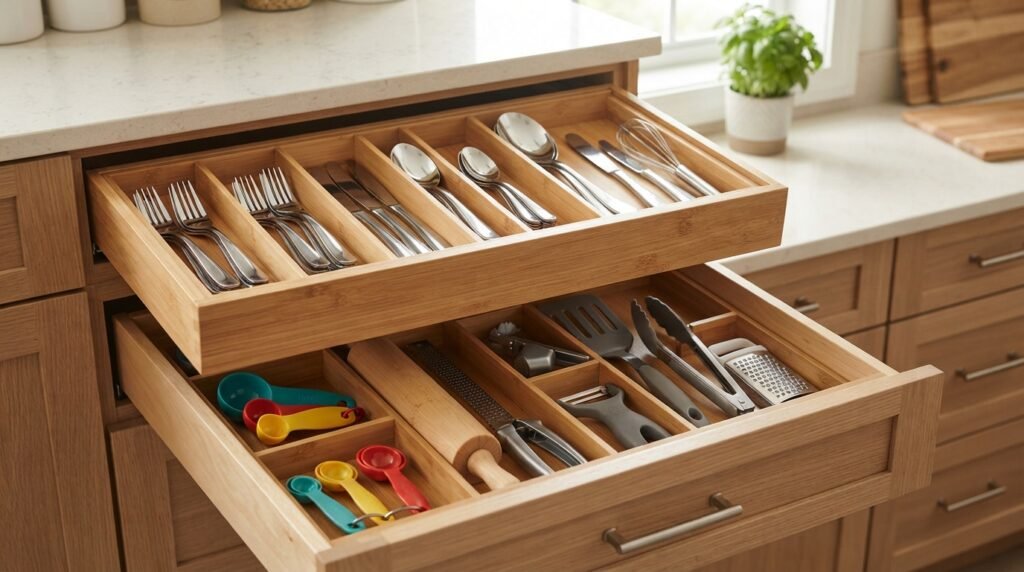
The kitchen serves as the heart of your home, bustling with activity throughout the day. It’s where family gathers, meals are prepared, and memories are made. With such a vital role, ensuring that your space is functional is essential. A recent kitchen overhaul in 2023 transformed one homeowner’s space, focusing on maximizing drawer capacity. They requested “all the drawers,” and the results speak for themselves.
Using drawers instead of cabinets can significantly ease the organization process. They reduce the need for leaning down or reaching up, making it simpler to access your items. Following Houzz’s advice, start by photographing your messiest drawer. This step helps you visualize the transformation and creates a satisfying before-and-after comparison.
This guide will walk you through a practical plan that begins with inventory and decluttering. You’ll learn about effective placement, measuring, and maintenance strategies. Get ready to embrace a new way of managing your kitchen space!
Key Takeaways
- The kitchen is a daily gathering place, making organization crucial.
- Maximizing drawer capacity can simplify access to items.
- Drawers reduce the need for bending and reaching.
- Documenting the mess can motivate you for a successful overhaul.
- Effective organization involves inventory, decluttering, and strategic placement.
Start With a Kitchen Drawer Inventory
At the heart of every home lies the kitchen, a lively space for cooking and connecting. To kick off your journey towards better organization, begin with a thorough inventory of your drawers. This step is essential for understanding what you have and what you truly need.
First, set aside 2 to 3 hours for this project, as Houzz recommends. Label each drawer with sticky notes while observing your daily routines. This will help you identify which items are used often, occasionally, or not at all.
Next, check if your pots are conveniently placed near the stove and if everyday dishes are close to the dishwasher. Also, take note of any food storage containers missing lids or items that are duplicates or oversized.
Don’t forget about the junk drawer! It often hides chargers and rarely used items that can take up valuable space. By treating this as an inventory project, you can reclaim a drawer that serves a purpose.
| Item Type | Usage Frequency | Action Needed |
|---|---|---|
| Utensils | Daily | Keep nearby |
| Tools | Occasionally | Relocate |
| Food Storage Containers | Seasonally | Check for lids |
| Duplicate Items | Never | Toss or donate |
Empty, Clean, and Declutter Each Drawer
In every home, the kitchen stands as a vibrant hub where daily life unfolds. To create a more organized space, it’s essential to empty, clean, and declutter each drawer.
Start by gathering supplies like cleaner, paper towels, sticky notes, a pen, contact paper, and a donation box. Clear a counter or island to work on, making the process easier.
Next, tackle one drawer at a time. This approach prevents feeling overwhelmed. As you empty each drawer, separate usable items into categories: keep, donate, recycle, or toss. Pay special attention to broken tools and damaged plastic.
After decluttering, wipe down every empty drawer thoroughly. This step ensures that your flatware, bowls, and utensils return to a clean surface. If you have organizers that fit well, like mesh metal ones, consider reusing them instead of buying new bamboo options.
Group Kitchen Items by How You Use Them
In the bustling realm of home cooking, the kitchen becomes a central stage for culinary creativity. A well-thought-out arrangement can save you time and effort during meal prep. By grouping items based on usage, you create a more efficient workflow.
First, keep cooking utensils and tools close to the stove. Your main utensil drawer should house essentials like whisks, tongs, and measuring cups. This setup allows you to grab what you need quickly while cooking.
Next, place everyday dishes and silverware near the dishwasher. This minimizes the distance you need to move when unloading. The silverware drawer, ideally located beside the dishwasher, helps streamline your cleanup routine.
Consider organizing your plates and bowls in a designated drawer. This can include dinner plates, salad plates, and various bowls, ensuring they are easy to access when needed. By separating serving pieces and baking supplies, each drawer can focus on a specific kitchen activity.
How to organize kitchen drawers with organizers and dividers
Your kitchen is a dynamic space where functionality meets creativity. To enhance the organization of your drawers, consider using various organizers and dividers. This approach not only maximizes your space but also streamlines access to your essential items.
Before purchasing any organizers, it’s crucial to measure each drawer’s dimensions. Houzz suggests taking note of the width, depth, and height. This step ensures you select organizers that fit perfectly, avoiding any unnecessary returns.
Measure drawers before choosing an organizer
Once you have your measurements, look for adjustable drawer organizers, bins, or containers. These can help create useful zones tailored to each item’s size. For instance, narrow compartments work well for flatware and small kitchen tools.
Use adjustable dividers, bins, or containers to create useful zones
Consider using two knife organizers instead of one. This allows for better visibility and safer access to your blades. Additionally, a bamboo wrap organizer can reclaim an entire drawer, making it easier to store plastic or aluminum products.
Glass food storage containers are also great. Stack them with lids above to keep everything visible and organized. By reusing existing organizers, like mesh metal ones, you can save money while enhancing your drawer organization.
| Item Type | Recommended Organizer | Purpose |
|---|---|---|
| Flatware | Expandable bamboo holder | Keep utensils separated |
| Knives | Two knife organizers | Safe and easy access |
| Wraps | Bamboo wrap organizer | Maximize drawer space |
| Food Storage | Stackable glass containers | Visibility and accessibility |
Choose a Place for Cookware, Dishes, and Food Storage
The kitchen is a place where culinary magic happens. A well-planned layout can make cooking and meal prep a breeze. When it comes to storing cookware, dishes, and food storage, placement is key.
Start by putting everyday cookware in a deep drawer near the stove. For instance, keep your 2-quart Demeyere saucepan and 12-inch Demeyere frying pan close at hand. This setup allows you to grab what you need quickly while cooking.
Mixing bowls, like the OXO stainless ones, should nest by size. This way, smaller bowls fit neatly inside larger ones, maximizing vertical space. For heavier items, such as the Lodge cast iron skillet and Blanc Creatives carbon steel frying pan, store them in a strong lower drawer. This keeps them out of the way and prevents overcrowding.
Additionally, keep lids and food storage containers easy to match. Designate a section or nearby drawer for lids so you can quickly find the right one. Arrange glass food storage containers with their lids visible above. This makes packing leftovers a snap.
| Item Type | Storage Location | Notes |
|---|---|---|
| Everyday Cookware | Deep drawer near stove | Easy access while cooking |
| Mixing Bowls | Nesting by size | Maximizes vertical space |
| Heavy Cookware | Lower drawer | Prevents overcrowding |
| Food Storage Containers | Visible lids above | Quick packing of leftovers |
Make the Most of Deep Drawers and Awkward Spaces
In your culinary workspace, maximizing space is crucial for efficiency. Deep drawers can serve as a solution for effective kitchen storage. They are perfect for larger cookware, mixing bowls, and appliances that require more vertical room.
When organizing, place less frequently used items toward the back. For instance, store your carbon steel and cast iron pans in a lower deep drawer. This way, you keep your essential items accessible.
Frequently used equipment should remain near the front. This prevents you from lifting or moving larger items repeatedly to reach everyday supplies. Avoid placing heavy blenders or slow cookers at awkwardly low heights, as this can lead to injury.
Additionally, consider moving unstable items elsewhere. For example, water bottles can shift across the drawer floor. They may be better suited in the pantry instead of the lunchbox drawer.
| Item Type | Storage Location | Notes |
|---|---|---|
| Large Cookware | Deep drawer | Easy access for cooking |
| Mixing Bowls | Deep drawer | Maximizes vertical space |
| Less-Used Items | Back of deep drawer | Out of the way |
| Heavy Appliances | Front of drawer | Prevents injury |
Keep Everyday Essentials Easy to Find
Every home thrives on the efficiency of its kitchen, where daily routines unfold. Keeping essential items within easy reach can transform your cooking experience. Consider placing frequently used plates, bowls, flatware, mugs, and cooking tools in the most accessible drawers. This setup is especially useful since the kitchen may be utilized around ten times daily.
Position the plate drawer at the top, as plates are used often and should sit near the dishwasher. Similarly, the silverware drawer should be directly beside the dishwasher, simplifying unloading tasks. For children, ensure that cups, bowls, and plates are stored at a safe, reachable height, allowing them to help independently.
After several days, review the contents of each drawer. Move anything that remains inconvenient or difficult to retrieve. Maintaining clear categories helps every family member return essentials to the same location after cooking, eating, or cleanup.
| Item Type | Storage Location | Notes |
|---|---|---|
| Plates | Top drawer | Easy access for meals |
| Silverware | Beside dishwasher | Simplifies unloading |
| Children’s items | Accessible drawer | Promotes independence |
| Miscellaneous | Regular review | Improves convenience |
Conclusion
A lasting setup begins with a clear view of what you own. Take inventory, empty and clean each drawer, then sort items before choosing a home for them. Group tools by task and location: keep cooking supplies near the stove and everyday dishes beside the dishwasher. Measure each space before buying organizers. Use dividers, bins, bamboo trays, or clear containers only when they improve access.
Reserve deep drawers for large cookware, mixing bowls, food storage, and items you use less often. Keep heavy equipment stable and easy to lift. A simple system should save time, not add another chore. Check your setup every few weeks, then adjust it as your household’s routines change. For more ideas, explore practical home organization tips and make your whole home feel easier to manage.