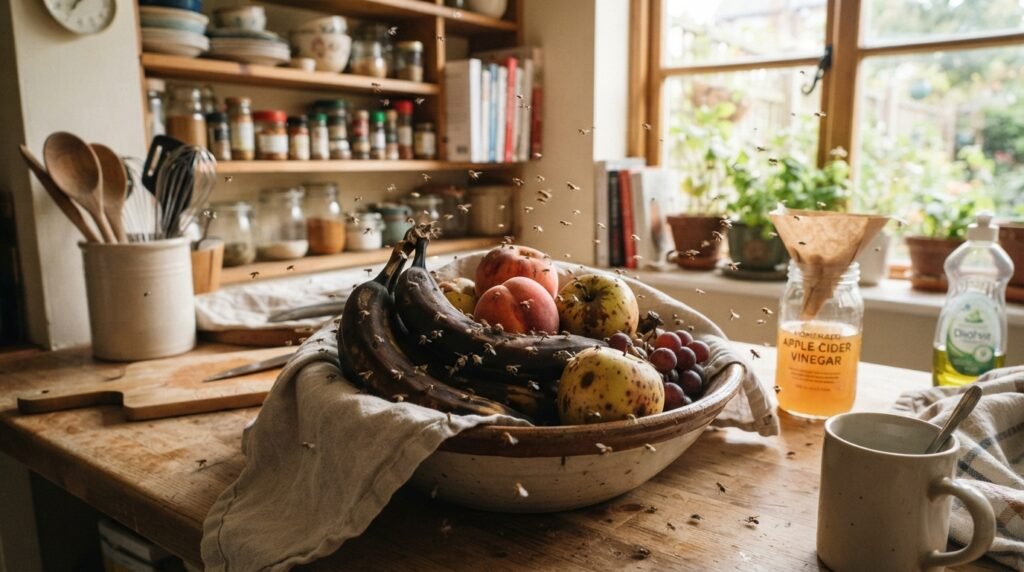
Dealing with a small infestation can quickly become frustrating. These tiny insects, known as Drosophila melanogaster, measure about 3-4 mm long. Their rapid reproduction is alarming, as a single female can lay up to 50 eggs each day. This means that if you notice them buzzing around your produce or kitchen, it’s essential to act swiftly.
Adult fruit flies can live up to 30 days, making consistent cleanup crucial. Even after you think you’ve eliminated them, hidden sources of eggs and larvae may still exist. To effectively tackle this problem, you’ll need a practical method. This includes removing food and moisture, cleaning potential breeding sites, and setting traps throughout your home.
Understanding their lifecycle and behavior is key. By addressing both the adult flies and their breeding grounds, you can successfully manage and prevent further infestations.
Key Takeaways
- Female fruit flies can lay up to 50 eggs daily.
- Adult flies measure about 3-4 mm and can live for 30 days.
- Consistent cleanup is vital to prevent infestations.
- Removing food and moisture helps eliminate breeding sites.
- Using traps can effectively control the fly population.
How to Get Rid of Fruit Flies in Kitchen
A few pesky insects can turn into a larger problem if not addressed. These tiny pests are often drawn to sugary organic materials. Start by removing any fermenting produce, food residue, and other food sources that may attract them.
Begin your inspection at the kitchen sink, fruit bowl, and trash. Grocery-store produce can carry these insects or their eggs into your home. Also, make sure to dry damp areas and eliminate standing moisture. This is crucial since larvae thrive where organic material and water are present.
Next, place traps beside the sink, fruit bowl, or trash can. This strategic placement increases the chances of catching these pests. Remember, both source removal and trapping are necessary, as controlling their population may require several treatments.
Identify Fruit Flies and Find Their Source
Spotting these tiny invaders can lead to a quick search for solutions. Understanding what these pests look like is crucial. Common fruit flies may have red eyes, tan bodies, black upper abdomens, and gray undersides. This identification helps you choose the right treatment.
Search around ripe produce, food scraps, and the edges of your sink. These areas often harbor larvae that develop in moist organic material and standing water. Additionally, check houseplant soil for fungus gnats, which prefer plants over fermenting food.
It’s also essential to distinguish drain flies. They have fuzzy wings and a moth-like appearance, making them easy to identify. Knowing the differences helps avoid treating the wrong insect.
Remember, eggs may arrive on the surfaces of produce. This explains why an infestation can appear suddenly after a grocery shopping trip.
| Insect Type | Appearance | Common Locations |
|---|---|---|
| Fruit Flies | Red eyes, tan bodies | Near ripe fruit, food scraps |
| Fungus Gnats | Small, dark flies | Houseplant soil |
| Drain Flies | Fuzzy wings, moth-like | Drains, damp areas |
Remove Overripe Produce and Other Breeding Sites
Ignoring overripe produce can lead to a rapid increase in these pesky insects. It’s crucial to take action immediately. Start by discarding any damaged or overripe items. Fruit flies thrive on soft, sweet organic material, making these fruits prime breeding sites.
Next, keep fresh produce in the refrigerator. This simple step can help prevent an infestation from escalating. Remember, your kitchen is a hotspot for these flies, so vigilance is key.
Don’t forget to check your trash cans and recycling bins. Look for decaying meat, soda residue, or forgotten scraps that can support fly eggs. Wipe up any spills around the fruit bowl and counters, as large soda or alcohol spills can become breeding grounds.
Lastly, inspect apples, bananas, peaches, and tomatoes individually. Eggs can hitch a ride into your home on grocery-store food surfaces, so being thorough is essential.
| Item | Action | Reason |
|---|---|---|
| Damaged Fruit | Discard immediately | Breeding site for flies |
| Fresh Produce | Refrigerate | Prevents attraction |
| Trash Cans | Inspect regularly | Hides decaying food |
| Spills | Wipe clean | Eliminates breeding material |
| Grocery Produce | Check for eggs | Prevents new infestations |
Clean Your Kitchen Sink and Drain
A clean kitchen sink is essential for keeping unwanted pests at bay. Fruit flies may lay eggs in kitchen drains and garbage disposals that contain moist food waste. This makes regular cleaning a must.
Start by scrubbing the sink basin and garbage disposal. Remove any food debris where fruit flies can thrive. Next, flush and clean drain openings carefully. Focus on removing organic matter and standing water that can sustain larvae.
Don’t forget to inspect the disposal splash guard, drain rim, and nearby pipes. Hidden residue can remain even after visible food is gone. Keeping the sink as dry as possible between uses is crucial. This reduces the moisture that supports fruit fly development.
Repeat drain cleaning alongside trapping. Killing adult flies will not solve the problem if eggs or larvae are hidden inside organic buildup.
| Action | Method | Reason |
|---|---|---|
| Scrub Sink | Use a sponge and soap | Removes food debris |
| Clean Drains | Flush with hot water | Eliminates organic matter |
| Inspect Disposal | Check splash guard | Removes hidden residue |
| Keep Dry | Wipe after use | Reduces moisture |
| Regular Maintenance | Clean weekly | Prevents infestations |
Make an Apple Cider Vinegar Fruit Fly Trap
Creating an effective trap can be a game-changer in your battle against these tiny pests. One popular method involves using apple cider vinegar, which attracts fruit flies. By combining this vinegar with a few drops of dish soap, you can significantly increase your trap’s effectiveness.
Start by pouring approximately ¼ cup of apple cider vinegar into a container. Then, add a few drops of liquid dish soap. This soap reduces the surface tension, causing the flies to sink and drown.
For a simple setup, use an open bowl and place it near the fruit bowl or sink, where these pests are often found. Alternatively, cover a jar with plastic wrap, securing it with a band. Poke several tiny holes in the wrap, allowing flies to enter but not escape.
Testing a jar lid with very small holes can yield impressive results. One source reported catching at least 50 fruit flies within a week! Regularly check your trap, replace contaminated bait, and continue removing food sources to enhance your chances of success.
| Step | Action | Purpose |
|---|---|---|
| 1 | Pour vinegar | Attracts flies |
| 2 | Add dish soap | Reduces surface tension |
| 3 | Use an open bowl | Simple setup |
| 4 | Cover jar with plastic wrap | Prevents escape |
| 5 | Check regularly | Maintain effectiveness |
Try Other Fruit Fly Traps Around Your Kitchen
Exploring various traps can enhance your chances of catching those annoying pests. You might want to try using leftover wine as a simple bait option. Leaving a small amount of wine in its bottle with a few drops of dish soap can be effective. Testing this method caught approximately four or five fruit flies.
However, treat this wine method as an easy experiment rather than a guaranteed solution. Its effectiveness can be limited, so consider a commercial trap for better results.
For a ready-to-use lure, try a Terro fruit fly trap, which lasts about 45 days. Alternatively, the Zevo sticky light trap uses blue and ultraviolet light to attract flies, gnats, and mosquitoes.
Position these commercial traps near the fruit bowl, sink, or trash. This will help ensure that adult pests cannot replace the food sources you’ve removed.
- Leave a small amount of leftover wine in its bottle with a few drops of dish soap.
- Treat the wine method as an easy experiment rather than a guaranteed solution.
- Consider a Terro commercial trap for a ready-to-use lure lasting 45 days.
- Use a Zevo sticky light trap for flying insects.
- Position traps near the fruit bowl, sink, or trash while continuing cleanup.
Keep Fruit Flies From Coming Back
Preventing a return of these tiny pests is crucial for maintaining a clean home. By adopting a few simple habits, you can keep your kitchen free from future infestations.
First, always wash produce when it enters your home. Grocery-store fruit can carry eggs that lead to an infestation before you even notice adult flies. Next, refrigerate ripe fruit whenever practical. Fruit flies cannot survive in cold temperatures, so this is an effective deterrent.
Wipe counters and clean spills promptly, especially sugary residues from soda, alcohol, or juice. These attract flies and can become breeding grounds. Additionally, empty and wash trash cans regularly to ensure that discarded produce and garbage do not support another generation of flies.
Finally, keep the fruit bowl, sink, disposal, and recycling area clean as part of a repeatable weekly prevention routine. This consistent effort will significantly reduce the chances of fruit flies returning.
| Action | Frequency | Purpose |
|---|---|---|
| Wash Produce | Every time | Removes potential eggs |
| Refrigerate Ripe Fruit | Always | Prevents fly survival |
| Wipe Counters | Daily | Eliminates food residues |
| Empty Trash Cans | Weekly | Prevents breeding |
| Clean Sinks | Weekly | Reduces hidden spots |
Know What to Expect and When to Get More Help
Managing an infestation of these tiny pests can be a drawn-out process. It’s important to understand that you might see new adult fruit flies even after you’ve started your cleanup efforts. Under ideal temperature conditions, these pests can develop in as little as one week. This means you should remain vigilant as you work to eliminate them.
While traps are effective at catching adult flies, continue removing food sources. Just killing visible flies does not address the eggs and larvae hidden away. Therefore, maintaining your cleaning routine is essential.
If you notice activity persisting after several days of trapping, it’s time to recheck potential breeding spots. Look closely at drains, disposals, recycling bins, and trash. Hidden spills can also contribute to the problem.
Keep in mind that the full life cycle of these pests can last 25 days or more. So, a week of cleanup might not completely solve the issue. If you find that repeated source removal and trapping aren’t working, consider seeking professional pest control help. Eradication may require several treatments.
| Expectation | Action | Reason |
|---|---|---|
| New Adult Flies | Continue Cleanup | Development takes about a week |
| Persistent Activity | Recheck Breeding Spots | Hidden eggs and larvae may exist |
| Full Life Cycle | Maintain Efforts | Can last 25 days or more |
| Professional Help | Seek Assistance | Repeated methods may fail |
| Regular Trapping | Use Traps | Control adult population |
Conclusion
For a lasting result, clear every food source first. Discard overripe produce, scrub drain buildup, empty the trash, and wipe sugary spills. These steps help you get rid of fruit flies by removing places where they feed and breed.
Place a trap near your bowl or sink. Apple cider vinegar and soap work in a jar, while wine can lure adults. A commercial trap or sticky light offers another option. Cover a jar with plastic wrap and poke small holes for an easy homemade lure.
Stay patient: eggs may mature within a week, so keep cleaning, washing produce, and refrigerating ripe items. Cold helps stop fruit flies from surviving. If activity continues, inspect hidden drains or contact a qualified pest professional for further treatment.