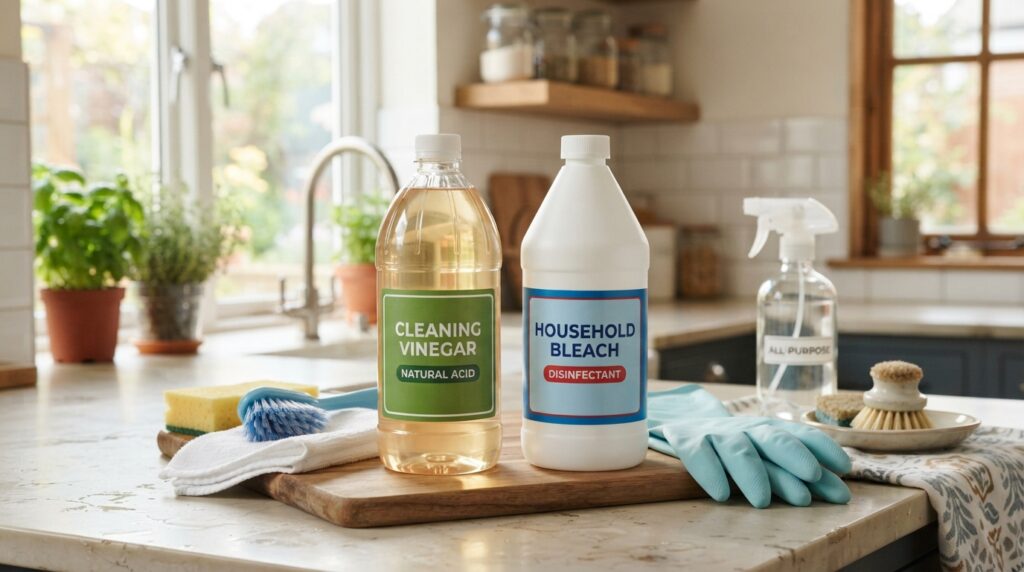
When it comes to tackling messes in your home, the choice between vinegar and bleach can be confusing. Each product serves its purpose, but they are not interchangeable. Understanding their differences is crucial for effective use.
According to a comparison by Shifrah Combiths on Apartment Therapy, vinegar is a mild solution containing 4-7% acetic acid. It’s great for addressing buildup, odors, and everyday grime. However, it’s not designed to disinfect surfaces.
On the other hand, bleach is a powerful disinfectant that can kill almost all germs. It’s not the best choice for everyday cleaning tasks, especially for grease or mineral deposits. Knowing when to use each product will help you maintain a clean and safe environment.
In this article, we will guide you on how to make the right choice based on the specific mess, germ risk, and materials in your home. Get ready to discover practical solutions for your cleaning needs!
Key Takeaways
- Vinegar is effective for routine grime and odors.
- Bleach is primarily a disinfectant, not an everyday cleaner.
- Understanding the difference helps in making informed choices.
- Each product has unique strengths for specific tasks.
- Use vinegar for buildup; reserve bleach for disinfection.
Cleaning vinegar vs bleach: What each cleaner does
Understanding the distinct roles of vinegar and bleach can clarify your cleaning choices. While both are popular household products, they serve different purposes.
According to Apartment Therapy, cleaning involves removing dust and dirt, while disinfecting means killing almost all germs on a surface. White vinegar contains about 5% acetic acid, which helps dissolve mineral buildup and neutralize odors. However, it doesn’t effectively eliminate harmful pathogens.
In contrast, bleach contains sodium hypochlorite, which acts as a powerful oxidizing disinfectant. This means it can kill bacteria, viruses, and fungi when used correctly. A registered disinfectant can eliminate 99.9% of germs within five to ten minutes of contact, unlike vinegar, which may take around 30 minutes to show effects on some germs.
| Cleaner | Active Ingredient | Effectiveness | Contact Time |
|---|---|---|---|
| Vinegar | Acetic Acid (5%) | Loosens buildup, neutralizes odors | 30 minutes |
| Bleach | Sodium Hypochlorite | Kills 99.9% of germs | 5-10 minutes |
Always remember to clean surfaces before disinfecting, as organic material can reduce the effectiveness of any disinfectant.
Where vinegar works best around your home
Knowing the optimal applications for vinegar can make your cleaning tasks easier. This versatile solution excels in various areas, especially when it comes to tackling mineral deposits and light grease.
Removing mineral deposits, soap scum, and light grease
A 1:1 vinegar-and-water solution is perfect for dissolving hard-water spots, calcium, and soap scum. It’s a great way to manage buildup in bathrooms and kitchens. Vinegar can handle light-to-moderate grease, making it useful for stovetops and range hoods.
Cleaning glass and deodorizing everyday messes
For glass surfaces, vinegar works wonders. It leaves a streak-free shine and can deodorize musty odors in places like drains and refrigerators. This solution is safe for plastic and many nonporous surfaces.
Surfaces to avoid, including natural stone and some grout
However, be cautious. The acidic nature of vinegar can etch or damage natural stone, brick, cement, and grout. Always spot-test before applying vinegar to new surfaces to avoid any potential damage.
When bleach is the better choice
Certain circumstances demand a stronger approach, making bleach the better choice. This powerful disinfectant is essential for disinfecting high-touch surfaces, especially after illnesses like the flu or COVID-19, or following contact with raw meat.
In these situations, using bleach can effectively eliminate harmful bacteria and pathogens. High-touch areas, such as doorknobs and light switches, require a properly diluted disinfectant instead of vinegar.
Disinfecting high-touch surfaces after illness or raw-meat contact
For general disinfection, a typical bleach dilution is about 1:100, which is roughly one-half teaspoon per cup of water. Always refer to the label for specific instructions. This ensures you achieve the desired disinfecting effect.
Treating mold on appropriate hard, nonporous surfaces
When dealing with mold, it’s important to distinguish between hard, nonporous surfaces and porous materials. A stronger dilution of approximately 1:10 may be necessary for heavy-duty mold cleanup. Always prioritize ventilation and protective equipment when using bleach.
Remember, mixing bleach and vinegar can create toxic chlorine gas, so never combine them. For safe and effective cleaning, consider checking out these essential home maintenance tips.
Vinegar vs. bleach: How they compare by cleaning job
Comparing the effectiveness of vinegar and bleach can help you choose the right product for your needs. Each has its strengths, especially when it comes to specific tasks.
When it comes to disinfecting strength, bleach shines. It can eliminate 99.9% of germs within five to ten minutes of contact. On the other hand, vinegar, while effective for light jobs, may take about 30 minutes to impact some germs. Remember, vinegar is not an EPA-registered disinfectant.
For everyday cleaning, vinegar excels at tackling light-to-moderate grease and soap scum. It effectively dissolves hard-water deposits, making it a great choice for routine maintenance. However, bleach does not cut grease or handle mineral buildup well.
Surface compatibility is another factor. While bleach can damage color, wood, and some metals, vinegar may etch natural stone and grout. Always consider the material before applying either solution.
In terms of odor, vinegar has a sharp scent that fades quickly, while bleach requires good ventilation due to its strong chemical smell. Both products are affordable, but your choice should depend on the specific cleaning job at hand.
How to use both cleaners safely
Safety is key when using strong cleaners like bleach and vinegar. To avoid dangerous reactions, it’s crucial to follow some important guidelines.
First, never mix these two products. The combination creates toxic chlorine gas, which can be harmful in enclosed spaces. You should also avoid spraying vinegar over wet bleach residue. Even leftover chemicals can react and produce dangerous fumes.
If you need to use both cleaners on the same surface, follow these steps:
- Clean with one product.
- Rinse thoroughly with water.
- Allow the surface to dry completely.
- Then, apply the other cleaner.
Always follow the product labels for dilution, contact time, and rinsing requirements. This ensures safe and effective use. Additionally, be aware that stronger acetic acid concentrations above 10% require proper personal protective equipment and good ventilation.
Conclusion
Choose vinegar for mineral spots, soap scum, glass, odors, and light grease. It works well for everyday messes, but it does not provide reliable germ control.
After an illness or raw-meat contact, use properly diluted bleach on suitable hard, nonporous surfaces. It may also help address mold on appropriate surfaces. Follow the product label: a registered disinfectant needs its stated contact time, often five to ten minutes. Vinegar does not offer the same protection.
Check labels and spot-test first to protect stone, grout, wood, metal, and colored surfaces. Never combine these products. Before switching from one to the other, rinse the surface well with water and let it dry completely. The right choice depends on the task, the surface, and whether germs are a concern.