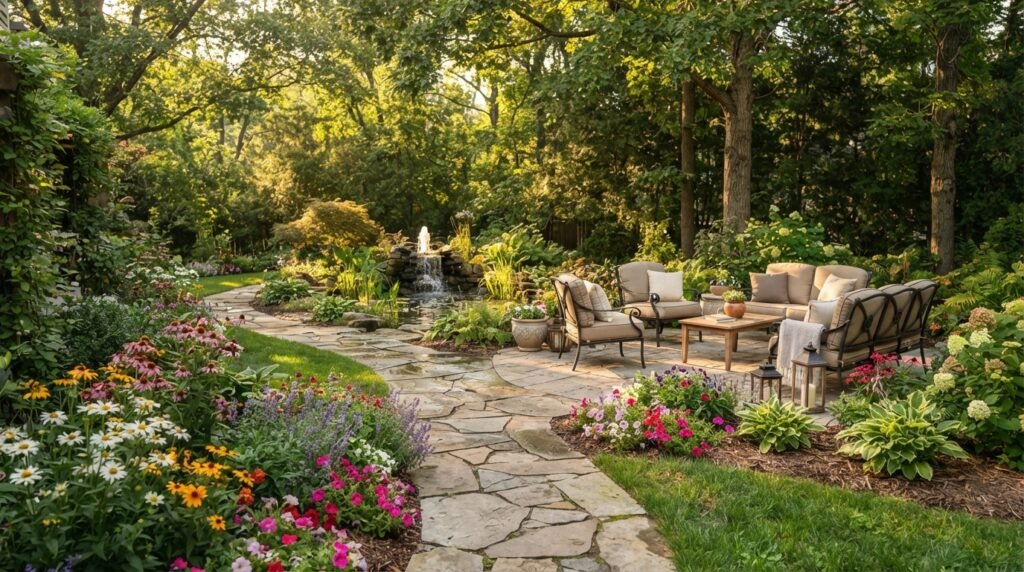
Your outdoor space is more than just a patch of grass; it’s an extension of your home. As Janet Loughrey points out, these areas now serve as venues for play, barbecues, reading, and relaxation. Whether you have a small plot or a spacious lawn, there are numerous backyard landscaping ideas to enhance your outdoor living experience.
In this article, we’ll explore practical design ideas that cater to various settings, from compact urban plots to large family-friendly retreats. We’ll also dive into features like decks, patios, and pools that can transform your yard into a stylish living space.
With inspiration from Houzz’s impressive collection of over 98,000 images, you’ll discover a wide range of styles and materials to suit your taste. Expect approachable design tips that allow you to create a welcoming atmosphere without needing a complete overhaul.
Key Takeaways
- Your outdoor area can be a vibrant extension of your home.
- Explore diverse design ideas for any size space.
- Incorporate features like decks and patios for enhanced enjoyment.
- Use images for inspiration to visualize your ideal space.
- Implement simple tips to create a welcoming environment.
Start With a Plan for Your Backyard Landscaping
Transforming your outdoor area starts with thoughtful planning. Before you make any changes, it’s crucial to assess your yard’s size, sunlight, soil, and existing features. This evaluation will help you understand what you have to work with and what adjustments may be needed.
Begin by measuring your yard. Record any slopes, irregular shapes, and sunlight patterns. Don’t forget to note the soil conditions and any existing trees or shrubs. This information is vital for selecting the right plants and features.
Next, prioritize how you want to use the space. Whether it’s for dining, play, or a vegetable garden, having a clear idea will guide your design choices. For example, Helena Wagner’s Asian-inspired garden exemplifies how a defined style can create a serene environment.
Lastly, test your lawn soil for pH and nutrients. This will ensure your plants thrive. Also, consider if you need privacy solutions, like screens or hedges, to enhance your comfort in the space.
| Task | Description | Purpose |
|---|---|---|
| Measure Yard | Record dimensions and features | Understand space limitations |
| Assess Sunlight | Note sunlight patterns | Choose appropriate plants |
| Test Soil | Check pH and nutrients | Ensure plant health |
| Rank Priorities | Decide on main uses | Guide design decisions |
Create Outdoor Living Zones for Different Activities
Creating distinct areas in your outdoor space enhances functionality and enjoyment. You can design your yard to include zones for dining, relaxing, and play. This way, each part of your yard serves a unique purpose.
Consider using the multifunctional garden rooms created by Alli Guileria as inspiration. These spaces can provide clear definitions for areas like cooking, reading, or quiet meditation without feeling disconnected.
To ensure smooth transitions between zones, connect them with paths, landings, or arbors. This makes movement through your outdoor living space feel natural and comfortable. You can also define these transitions with plants, tall planters, or even lattice for added privacy.
Keep dining and outdoor kitchen areas close to your home. This allows for easy access while placing quieter seating or family garden areas farther away from busy household traffic. For more tips on affordable upgrades, check out this resource.
Make a Small Backyard Feel More Spacious
A small outdoor area can still feel inviting and spacious with the right design choices. Start by selecting compact furniture that promotes movement. Opt for foldable chairs or a bistro table instead of bulky pieces. This will help maintain a clear path and make your space feel larger.
Next, consider incorporating vertical gardens. These can house herbs, tomatoes, or climbing vines, allowing you to utilize limited ground space effectively. As Bower & Branch suggests, dual-purpose features like a fire pit that doubles as a coffee table can maximize functionality.
Additionally, enhance visual openness by keeping garden-bed edges clean and maintaining uncluttered sightlines. Practical storage solutions for toys and tools will help keep your yard tidy. Remember, every square foot counts in a compact yard.
| Feature | Description | Benefit |
|---|---|---|
| Compact Furniture | Choose smaller pieces like bistro tables | Improves circulation |
| Vertical Gardens | Utilize walls for planting | Maximizes planting space |
| Dual-Purpose Items | Fire pits that serve as tables | Increases functionality |
| Storage Solutions | Benches with hidden storage | Keeps space organized |
Build an Inviting Patio and Pathway
An inviting patio and well-placed pathways can significantly enhance your outdoor experience. The right materials can create a cohesive look that suits your style and budget. Consider using pavers, gravel, or stone to achieve the desired aesthetic.
When selecting materials, compare options like concrete pavers, natural stone, and gravel. Each has unique benefits, so think about your home’s style and maintenance needs. For instance, Houzz showcases over 15,000 examples of concrete pavers and nearly 30,000 natural stone options, making it easier to visualize your design.
Walkways are essential for guiding movement through your yard. They connect various areas, such as your deck, dining space, or garden. You can combine a solid patio with gravel extensions to create more seating without extensive paving costs.
Finally, ensure that paths and surfaces are level and free of hazards. Proper lighting can also enhance safety and aesthetics, illuminating walkways for evening enjoyment.
| Material | Benefits | Considerations |
|---|---|---|
| Concrete Pavers | Durable and versatile | May require sealing |
| Natural Stone | Elegant and unique | Higher cost |
| Gravel | Affordable and easy to install | Can shift over time |
| Brick | Classic look | May require maintenance |
Choose Native Plants for a Low-Maintenance Garden
Utilizing native plants in your garden is a smart way to create a beautiful and low-maintenance space. These plants are well-suited to your local climate and growing conditions, which means they require less water and care. By selecting the right species, you can enjoy a vibrant landscape that thrives with minimal effort.
Start by matching plants to your specific environment. Consider factors like sunlight, soil texture, and moisture levels. For instance, Houzz’s Woodland Rain Gardens showcase native birch, willow, fern, and iris, all of which harmonize with the landscape while serving ecological functions.
Next, think about layering your plant selections. Combining trees, shrubs, perennials, and ground covers can create visual interest and provide habitats for wildlife. Janet Loughrey suggests using a mix of annuals and ornamental grasses to enhance your garden’s appeal across all seasons.
Planning for seasonal color is essential. You can achieve this by incorporating plants that offer flowers, berries, and unique foliage throughout the year. The Danby conifer garden exemplifies how thoughtful plant choices can maintain year-round beauty while minimizing maintenance.
| Plant Type | Characteristics | Benefits |
|---|---|---|
| Trees | Provide shade and structure | Support wildlife and reduce heat |
| Shrubs | Offer privacy and define spaces | Require less water once established |
| Perennials | Bloom year after year | Low maintenance and resilient |
| Ground Covers | Suppress weeds and cover soil | Enhance soil health and aesthetics |
Add Privacy With Trees, Shrubs, and Fencing
Creating a tranquil environment in your garden starts with strategic plant placement and fencing. Homeowners often seek ways to enhance their outdoor spaces, and privacy is a key factor. Layering plants can effectively screen views and soften the harsh lines of fences.
Consider using trees, shrubs, and vines to create a natural barrier. For instance, Lori Scott transformed a sloping yard by combining fencing with layered plantings and an arbor. This approach not only adds privacy but also enhances the overall landscape.
When selecting privacy plants, aim for varied heights. This technique makes the space feel more natural and inviting. A hedge, trellis, or pergola can also provide seclusion while allowing light and airflow.
Remember to communicate with neighbors about any changes. Following Bower & Branch’s advice, choose attractive fencing that looks good from both sides. This ensures a harmonious look while maintaining your desired privacy.
Grow Up With a Pergola or Vertical Garden
Elevate your outdoor experience by incorporating vertical elements like pergolas and trellises. These structures not only add beauty but also provide privacy and shade. You can use them to create a cozy nook or to support climbing plants that enhance your garden’s aesthetics.
Consider training flowering or fruiting vines across these supports. Make sure to check the mature weight of the plants and their attachment methods. Additionally, assess sunlight and irrigation needs to ensure they thrive.
Follow Bower & Branch’s example by growing tomatoes vertically or placing herbs in containers along the side of your home. Hanging baskets and window boxes can also be mounted on a deck, pergola, or wall, allowing you to add greenery without taking up valuable ground space.
With 741 pergola examples available on Houzz, you can find design ideas for dividing zones, framing entrances, and creating a stronger focal point in your outdoor area.
Design a Cozy Seating Area for Everyday Relaxation
Creating a cozy seating area can transform your outdoor living space into a perfect retreat. Imagine a spot where you can unwind after a long day or enjoy a weekend gathering with family. Proven Winners showcases a delightful seating area surrounded by a tall mixed hedge, offering both privacy and a lush backdrop for relaxation.
Consider incorporating comfortable furniture, such as a loveseat or a sectional couch, tailored to fit your available space. For instance, Debbie Brooks designed a narrow backyard lounge featuring a plush couch sectional paired with a stone fireplace, making it a welcoming oasis.
When designing your area, think about adding elements like a deck, canopy, or outdoor rug. These features can enhance comfort and usability across seasons. A nearby fire pit can also create a warm ambiance, perfect for chilly evenings.
For a peaceful retreat, place a reading chair or lounge farther from the main dining area. This allows you to escape the hustle and bustle while still enjoying your outdoor space.
Make a Fire Pit the Backyard’s Gathering Spot
Creating a central gathering spot in your outdoor area can elevate family and friend interactions. A fire pit serves as a focal point, inviting warmth and conversation. It’s essential to choose a fire pit style that complements your home and enhances your outdoor aesthetic.
Consider options like a modern gas fire pit, a rustic stone installation, or a built-in feature. Each style can harmonize with your home’s design while providing a cozy atmosphere. You can explore Houzz’s collection of 7,789 fire-pit examples to find inspiration for layouts and designs.
Pick a fire pit style that fits your yard and home
- Choose a fire pit that matches your aesthetic—be it sleek and modern or classic and rustic.
- Utilize the variety of styles available to enhance your outdoor area.
- Look at examples of circular gathering layouts or integrated seating for ideas.
Arrange comfortable seating and clear space around the fire
Ensure your seating arrangement is both comfortable and functional. Use chairs or built-in benches that allow for easy movement and access. A good example is the San Francisco backyard with a custom-built natural-gas fire pit surrounded by a Redwood bench. This setup creates a compact, low-maintenance gathering area.
Remember to maintain safety by keeping fire features away from combustible structures, overhanging branches, and narrow pathways. Always follow local regulations to ensure a safe and enjoyable experience.
| Fire Pit Style | Description | Considerations |
|---|---|---|
| Modern Gas | Sleek design, easy to use | Check gas line access |
| Rustic Stone | Natural look, blends with nature | May require more maintenance |
| Built-in Feature | Permanent, integrated into landscaping | Higher installation cost |
| Portable Bowl | Flexible, easy to move | Less stable in windy conditions |
Bring Cooking and Dining Outdoors
Establishing an outdoor kitchen and dining area can enhance your home’s entertaining potential. By integrating these spaces, you create a seamless flow that encourages family gatherings and outdoor living.
First, consider placing the outdoor kitchen near your home’s indoor kitchen. This setup makes it easy to transport food, dishes, and beverages without hassle. A great example is the Houston outdoor kitchen featuring a Big Green Egg grill, RCS grill, double burner, granite counters, and concrete pavers.
Next, create a dining area that allows for movement. Ensure there’s enough clearance around the table for guests to pull out chairs and walk comfortably. Think about combining a grill, prep counter, refrigerator, and storage with a dining area to suit your cooking habits.
Lastly, adapt designs like Debbie Brooks’s narrow backyard, which pairs an outdoor kitchen with dining and casual bar-style seating. This flexibility allows for enjoyable family entertaining.
| Feature | Description | Benefits |
|---|---|---|
| Outdoor Kitchen | Includes grills, counters, and storage | Convenient for cooking outdoors |
| Dining Area | Seating arrangement for meals | Encourages family gatherings |
| Bar-Style Seating | Casual seating near the kitchen | Promotes social interaction |
| Clearance Space | Room to move around the table | Enhances comfort for guests |
Add a Water Feature for Calm and Character
Introducing a water feature into your landscape can create a serene environment that captivates the senses. Consider adding a pond, waterfall, or fountain to enhance your outdoor space. Each option brings unique benefits and can suit various sizes and maintenance levels.
Take inspiration from Morty Bachar and Patty Storms, who designed their Delaware home around a natural pond that supports local wildlife. This not only beautifies the area but also promotes biodiversity.
Using moving water, as Lori Scott did with a waterfall, can effectively mask urban noise and create a calming atmosphere. If your space is limited, a compact fountain or birdbath can still provide the soothing sound of water and attract wildlife.
When positioning your water feature, ensure it’s visible from your home, patio, or favorite garden path. This placement allows you to enjoy its beauty and tranquility from various vantage points.
Rethink the Lawn With Sustainable Landscaping
Reimagining your lawn can lead to a more sustainable and vibrant outdoor space. Instead of traditional grass, consider replacing sections with native plants, gravel, or garden beds. This approach not only reduces mowing and irrigation but also promotes biodiversity.
For example, Marina Wynton designed a small urban area featuring a low-maintenance perennial border, gravel, and permeable pavers. This design minimizes upkeep while enhancing the aesthetic appeal. You can also install permeable pavers to allow rainfall to soak into the ground, reducing runoff.
Additionally, consider the xeriscaping techniques seen in Colorado Springs, which utilize dry river beds and drought-tolerant plants. These strategies are ideal for hot climates and can significantly lower water usage.
Implementing features like rain gardens, French drains, and underground storage can effectively manage water runoff from your deck or pool. By incorporating these sustainable landscaping ideas, you can create a beautiful and eco-friendly space.
| Feature | Description | Benefits |
|---|---|---|
| Native Plants | Plants that thrive in local conditions | Low maintenance and drought-resistant |
| Gravel | Ground cover alternative to grass | Reduces mowing and water needs |
| Permeable Pavers | Pavers that allow water infiltration | Minimizes runoff and promotes drainage |
| Xeriscaping | Landscaping designed for water conservation | Ideal for dry climates, reduces water use |
Plan for a Pool, Play Area, or Other Backyard Feature
Envisioning your outdoor area as a functional and beautiful space can elevate your home experience. When planning, consider features that suit your family’s needs and available space. Whether it’s a pool, play area, or a cozy dining terrace, the right choices can make all the difference.
Explore options like a garden shed, sport space, or raised beds that align with your priorities. Use Houzz’s collection of over 6,240 slope and hillside projects to find innovative ideas for terraces and retaining walls that enhance uneven areas.
For smaller yards, think about compact play features such as climbing walls, tree swings, or mounted chalkboards. These can provide fun without taking up too much room. You can also divide larger yards into paved and grassy areas, making slopes safer and more usable.
Lastly, remember that children grow quickly. Plan adaptable spaces that can transition from play areas to relaxing gardens or dining spots over time. This foresight ensures your outdoor area remains enjoyable for years to come.
Use Shade and Lighting to Enjoy Your Yard Longer
Enhancing your outdoor space with shade and lighting can significantly extend its usability. Imagine lounging comfortably during hot days or enjoying warm evenings with friends and family. By thoughtfully incorporating these elements, you can create a welcoming atmosphere that invites relaxation and enjoyment.
To add shade, consider options like a mature tree, a stylish pergola, or an adjustable umbrella. Shade sails and canopies also provide flexible solutions without taking up too much space. Bower & Branch suggests using cantilever umbrellas for areas where a permanent structure might overwhelm your design.
Add shade with a tree, pergola, umbrella, or shade sail
Integrating these features not only offers relief from the sun but also enhances your landscape. Properly placed shade can transform your outdoor living areas into comfortable retreats.
Light pathways, patios, and focal points for evening use
Illuminating pathways, patios, and key features like water elements or fire pits enhances safety and ambiance. Consider using low-voltage LED lighting to create a warm glow around your space. For instance, the San Francisco “Backyard Bliss” showcases a natural-gas fire pit paired with strategic lighting that highlights seating areas and plantings.
Ensure that your lighting is directed thoughtfully to enhance the atmosphere while maintaining privacy. Aim fixtures so they do not create glare through windows or into neighboring yards. This approach allows you to enjoy your outdoor areas well into the evening.
| Feature | Description | Benefits |
|---|---|---|
| Shade Trees | Mature trees provide natural shade | Cooler outdoor areas |
| Pergolas | Architectural structures for climbing plants | Adds beauty and partial shade |
| Umbrellas | Adjustable for various spaces | Flexible and easy to store |
| Lighting | Low-voltage LED for pathways | Enhances safety and atmosphere |
Set a Backyard Landscaping Budget and Build in Phases
Budgeting for your outdoor renovations is crucial for achieving your dream space. Start by setting a realistic budget that covers grading, drainage, plants, lawn removal, pavers, patios, decks, lighting, irrigation, furniture, labor, and professional design.
Follow Janet Loughrey’s advice by gathering multiple opinions and comparing lower-cost hardscape or furnishing options without sacrificing durability. Building in phases can help you manage costs effectively. Begin with essential tasks like drainage, circulation, soil improvement, or basic planting before adding larger features like a pool or outdoor kitchen.
Consider doing some planting yourself to save money while hiring professionals for complex tasks such as grading and structural construction. Additionally, choosing durable furniture, hardscape, lighting, and plants ensures your investment lasts longer without frequent replacements.
Conclusion
Your best outdoor design starts with how you want to use the space. Assess your yard, set your priorities, and arrange garden rooms for your family. Backyard landscaping ideas can begin with plants, a seating nook, a water feature, or a patio built in stages. Match privacy screens, a fire pit, pool, or pergola to your local climate and available room.
Choose native plants, less turf, permeable pavers, rain gardens, gravel, and easy-care beds for a healthier landscape. Keep paths clear and safe, select durable materials, and add useful lighting near dining and seating areas. These choices support outdoor living and make your home feel more welcoming.
Homeowners can start with one practical project, then make backyard improvements as needs and budgets change. Explore landscaping ideas, take the first step, and let your garden grow with you.