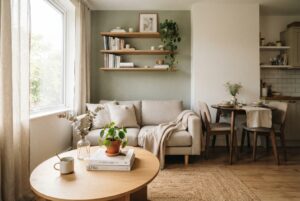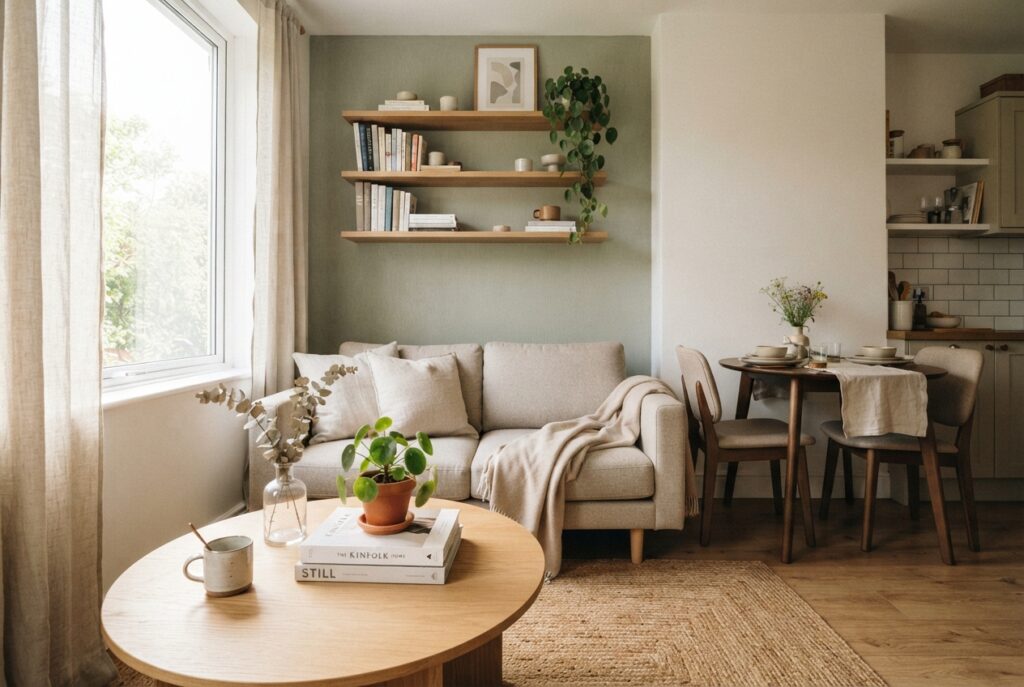
Creating a peaceful home environment is a goal many of us share. However, when living in a space with limited square footage, achieving this can seem daunting. In my journey, I’ve discovered that a few practical strategies can make a significant difference. Drawing on advice from experts like Alexandra Gater, I learned the importance of living in a space before making major changes.
Through my experiences in various living situations—from a converted triple dorm room to a cozy one-bedroom apartment—I found that limited space doesn’t automatically lead to clutter. Instead, it’s about how we use that space. Storage solutions can provide a designated home for everyday items, freeing up valuable floor and countertop areas.
In this article, I will share realistic ideas for different areas of your home, including apartments and shared spaces. Together, we will explore decluttering techniques, multipurpose furniture, and how to define zones effectively. Join me on this journey to create a calmer home!
Key Takeaways
- Living in a space before organizing helps understand its unique needs.
- Limited square footage does not mean inevitable clutter.
- Effective storage can maximize usable space.
- Realistic ideas can transform apartments and shared areas.
- Decluttering and multipurpose furniture are key to a calmer home.
Setting the Stage for a Calmer Home
A serene home can significantly enhance our well-being. One way to achieve this is through decluttering. Alexandra Gater emphasizes the importance of observing daily habits before making any major changes. By understanding how we use our space, we can select storage solutions that truly meet our needs.
When every frequently used item has a consistent location, a tidy room can reduce friction during daily routines. This organization fosters a sense of peace and efficiency. Additionally, Rachel Robinson highlights that storage can be flexible and multipurpose. A single wall or shelf can support various activities, making the most of our living environment.
In my experience, a well-organized three-bedroom townhouse can comfortably accommodate a family of four. By thoughtfully assigning functions to each room, we can create harmony without chaos. Kitchens, bedrooms, and living rooms can all serve multiple purposes, enhancing our overall living experience.
Smart Storage Solutions for Multipurpose Spaces
Finding effective storage solutions can transform any room into a more functional area. With the right choices, you can maximize space while keeping your home tidy. I’ve discovered that creative shelving and multipurpose furniture can significantly enhance your living experience.
For instance, Gater’s use of a narrow IKEA shoe cabinet in her entryway is a perfect example. This shoe cabinet is priced at $150 and is ideal for tight spaces. Alternatively, the Yamazaki six-tier shoe rack, available for $155, offers a stylish way to keep shoes organized.
Open shelving can also be a game-changer. The IKEA Elvarli system, priced at $550, allows you to display books and decor while acting as a room divider. The Castlery Posey Shelf, listed at $1,099, adds a touch of elegance while providing storage.
When it comes to seating, consider the West Elm Harris Sleeper Sectional, which features storage and is currently discounted to $2,638. This piece not only serves as a sofa but also provides hidden storage for blankets or pillows.
| Storage Solution | Price | Functionality |
|---|---|---|
| IKEA Ställ Shoe Cabinet | $150 | Narrow storage for shoes |
| Yamazaki Six-Tier Rack | $155 | Stylish shoe organization |
| IKEA Elvarli System | $550 | Open shelving and room division |
| West Elm Harris Sleeper Sectional | $2,638 | Seating with storage |
Decluttering Tips: Purge, Sort, and Simplify
The journey to a calm home begins with letting go of excess. A well-planned decluttering process can make a significant difference in your living environment. Here’s a step-by-step guide to help you through this essential task.
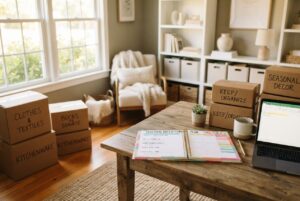
Start with a complete inventory of your items. Gather all your gadgets, appliances, plates, cups, and utensils in one place. This allows you to see everything at once and make informed decisions.
Next, challenge the “just in case” mentality. For example, consider the handwritten college notes kept for seven years. If you haven’t used them, it might be time to let them go.
Identify duplicates, such as a rarely used George Foreman grill compared to your regular grill. This can help you decide what to keep and what to donate.
Separate your items into four groups: keep, donate, recycle, and discard. Usable items can be donated to places like Goodwill or a church garage sale.
Finally, remove donation piles within a week. This prevents temporary storage from becoming a new source of clutter. Make it a habit to review your bins, shelves, and cabinets whenever a room feels crowded.
Practical Tips for Organizing Small Spaces
Maximizing your home’s potential is key to achieving comfort and style. I’ve found that the right tools and products can make a significant difference in how we utilize our space. Here are some essential items that have transformed my approach to compact storage.
Essential Tools and Products for Compact Storage
- IKEA RASKOG rolling cart: This versatile cart is perfect for moving supplies between the kitchen, craft area, or office.
- Baskets: Using baskets can help contain loose items while adding a polished look, as demonstrated by Megan Hopp in her Brooklyn rental.
- Pegboards: Chef Julia Child swore by pegboards in her kitchen. The IKEA Skådis pegboard, priced at $54, is a great option for organizing tools and supplies.
- Kitchen Islands: Consider the Article Holme Kitchen Island at $1,199 or the Crate & Barrel Basque Kitchen Island at $1,299 for extra prep and storage space.
Innovative Ideas from Real-Life Experiences
In my experience, flexibility is crucial. For instance, I transformed an 8-by-8-foot basement area into a workout space and later an office. This adaptability shows how effective organization can change the function of a space.
When choosing organizers, prioritize portability and frequency of use. This way, you can keep your home functional and stylish.
Creative Use of Vertical and Door Space
Maximizing every inch of your home can truly elevate its functionality. I’ve found that using vertical and door space is a clever way to reclaim areas that often go unnoticed. Hooks and shelves can turn walls into practical storage solutions.
For instance, I admire how Alexandra Gater mounted skis on a stairway wall, freeing up floor space while keeping them accessible. This principle applies to other items like surfboards, skateboards, and bicycles, which can also be hung on walls instead of cluttering up valuable floor areas.
Another great example is Julia Child’s use of pegboards in her kitchen. The IKEA Skådis pegboard, priced at $54, allows you to keep cooking supplies visible without crowding counters. It’s an efficient way to store kitchen essentials.
Additionally, over-the-door shoe holders can help manage footwear, while wire racks can neatly hold toilet paper and paper towels. If you’re looking for a stylish kitchen solution, consider the Williams Sonoma Enclume low-ceiling pot rack at $161 for limited cabinet space.
| Storage Solution | Price | Functionality |
|---|---|---|
| IKEA Skådis Pegboard | $54 | Visible kitchen organization |
| Over-the-Door Shoe Holder | Varies | Footwear storage |
| Wire Racks | Varies | Hold lightweight items |
| Williams Sonoma Enclume Pot Rack | $161 | Ceiling-mounted kitchen storage |
These clever hacks not only optimize space but also add a touch of style to your home. For more tips on enhancing your home, check out efficient home organization strategies.
Maximizing Closet and Cabinet Efficiency
Efficient use of closet and cabinet space can dramatically improve your home’s functionality. By choosing customizable systems, you can tailor storage to meet your unique needs. For instance, the IKEA PAX/GRIMO wardrobe is a great investment at $1,790, providing ample room for clothes and accessories.
Options from retailers like Home Depot and The Container Store also offer flexible solutions. I’ve used the IKEA ALGOT, now known as BOAXEL, to enhance three closets with adjustable shelves, hanging areas, and drawers. This adaptability allows me to maximize every inch.
To utilize closet height effectively, I recommend placing a dresser beneath hanging clothes in a shared children’s room. This clever use of vertical space can make a significant difference. For shoe organization, inexpensive pantry bins from Walmart can keep footwear off the floor, maintaining a tidy environment.
Additionally, consider using bed risers and under-bed storage for suitcases, seasonal clothing, and even pots and pans. Every vertical foot counts! In the entryway, a cube unit can neatly store children’s toys, ensuring that every area serves a purpose.
Designing Custom Zones in Every Area
Creating distinct areas within a home can enhance its overall functionality. Open-plan layouts can benefit from thoughtful zoning. This approach allows you to designate spaces for dining, relaxing, or working without erecting permanent walls.
For instance, one effective way to separate areas is by using furniture. In a family living area, you can create a dining zone, a toy area for children, and a cozy television nook. This setup keeps activities organized and enjoyable.
A secretary desk is an excellent addition to any bedroom or apartment. Priced at $499, it provides a work zone that can be closed when not in use. Alternatively, the IKEA Norberg wall-mounted drop-leaf table, at $110, offers a similar solution. It folds down from the wall, turning into a dining table or workspace as needed.
Additionally, consider using a IKEA RASKOG rolling cart to create a movable zone. This versatile piece can adapt to your needs throughout the day. By establishing consistent boundaries, each area can maintain its purpose, contributing to a calmer and more organized environment.
Conclusion
Calm starts when I decide what deserves a place in my home. I found that removing unused appliances and old college notes can bring relief. Keep useful items, then give each a clear spot: a shelf, basket, cabinet, shoe rack, or bin beneath the bed.
Hooks, doors, closets, and a wall-mounted rack reclaim space without adding square footage. Another rack uses wall space, while a vertical organizer and movable organizers keep storage neat in shared spaces and busy spaces. These ideas offer practical ways to live small.
Flexible solutions suit changing routines. A Murphy table, secretary desk, or storage seating can adapt each zone. Set aside time every six months to review clothing, kitchen supplies, pantry goods, and decor. Pair decluttering with custom zones and smart storage solutions; this approach keeps daily life manageable, not restrictive. I hope this article gives you a clear solution.