Clutter can feel overwhelming, but there’s no one-size-fits-all approach. Each person’s definition of clutter varies, as noted by Millie of Bella Organizers. The key is understanding when possessions begin to disrupt daily life.
The Declutter Hub suggests a “little and often” method. This involves quick maintenance tasks that take just five or ten minutes. It’s a manageable way to keep clutter at bay.
For those with busy households, Shannon Murphy of Simpl Living Co recommends dedicating one day each month for a focused decluttering session. This strategy allows families to stay on top of their space without feeling burdened.
In this guide, I will share my seasonal plan, blending daily upkeep, monthly mini-projects, and comprehensive home reviews. By framing this process as flexible, I aim to create a calmer, more functional home environment.
Key Takeaways
- Clutter is subjective and varies for each individual.
- Short, frequent tasks can effectively manage clutter.
- One dedicated decluttering day each month can help busy families.
- A flexible approach can enhance home functionality.
- Seasonal resets can be a part of a successful decluttering strategy.
Understanding Clutter: Defining the Problem and Its Impact
The experience of clutter is subjective, impacting people in diverse ways. Millie of Bella Organizers defines clutter as unnecessary or unwanted possessions that interfere with daily life. Each person has a different tolerance for clutter, making it crucial to recognize when it begins to affect our space.
Warning signs include feeling uncomfortable in your home, spending excessive time searching for items, or even buying duplicates. These issues indicate that your current systems are not supporting your daily routines effectively.
Visual clutter can create frustration and reduce usable space, leading to emotional overwhelm. While cleaning enhances hygiene, decluttering involves making decisions about which items deserve continued space.
| Warning Signs | Emotional Impact | Suggested Action |
|---|---|---|
| Feeling uncomfortable | Increased stress | Assess your space |
| Searching for items | Frustration | Organize regularly |
| Buying duplicates | Overwhelm | Evaluate needs |
The Benefits of Decluttering: Mental and Physical Refreshment
A disorganized environment can lead to stress and decreased productivity. Many find that letting go of unnecessary items creates a sense of mental clarity. When I declutter, I often feel lighter and more open, as if a weight has been lifted.
Millie of Bella Organizers highlights that clients frequently report feeling calmer after they let possessions go. Grouping items by category reveals just how much we own. For example, gathering all my books from different rooms can be eye-opening.
Reducing clutter in my home not only enhances my living space but also renews my energy. With fewer things around, cleaning becomes easier, and I can move freely. This shift makes my home feel more inviting and manageable.
how often to declutter: Crafting a Personalized Plan
Each family experiences clutter differently, often influenced by lifestyle changes. It’s essential to recognize what triggers clutter in my home. This awareness helps me establish a plan that fits my unique needs.
Shannon Murphy of Simpl Living Co suggests dedicating one day each month for focused decluttering. This approach is particularly effective for busy households, especially when paperwork or children’s clothing starts to pile up.
Additionally, I will incorporate daily ten-minute tidies and weekly thirty- to sixty-minute refreshes. These small sessions can keep clutter manageable and prevent it from becoming overwhelming.
Some common triggers for clutter include:
- Moving or downsizing
- Welcoming a new baby
- Hosting guests
- Family members moving in
By being mindful of these factors, I can adjust my decluttering routine as needed. Using feelings of frustration or lost items as signals will help me stay on track.
Seasonal Decluttering Plan: Quarterly Strategies and Room-by-Room Approaches
Every season brings a fresh opportunity for a thorough assessment of my belongings. This quarterly approach allows me to tackle clutter in a structured way, ensuring that I address each category of items effectively.
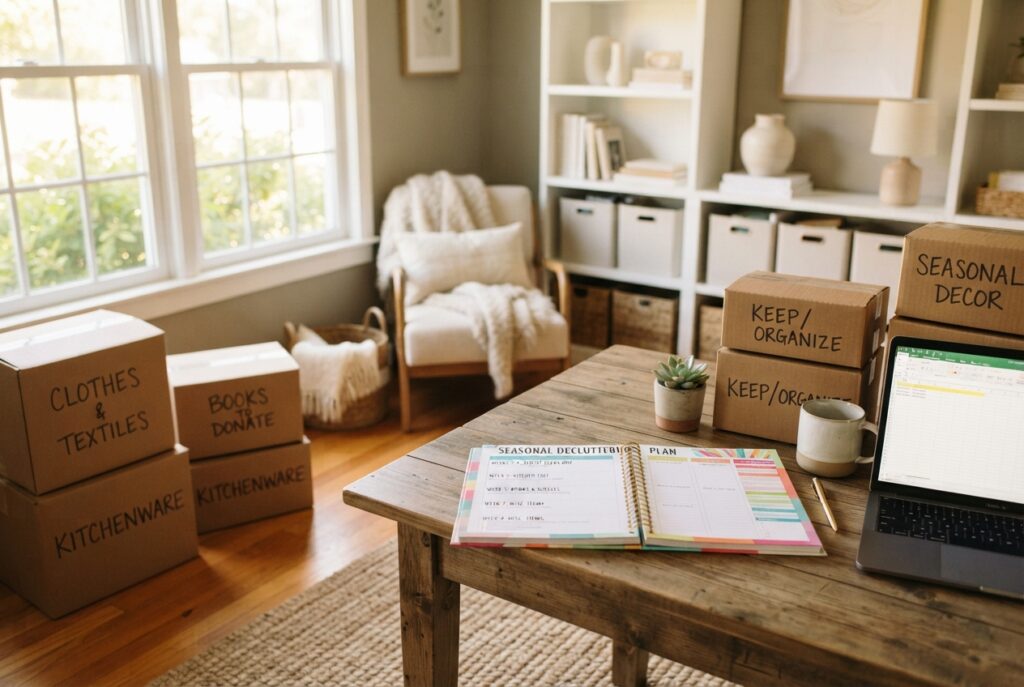
Millie suggests starting with clothing, shoes, kitchen items, and books. This method helps in prioritizing what truly deserves space in my home. By checking each category every two to three months, I can maintain a clutter-free environment.
What to Tackle Each Season: Clothing, Kitchen, and More
- Spring: Review winter clothing, shoes, linens, and outdoor equipment.
- Summer: Assess lightweight clothing, kitchen tools, and seasonal items.
- Fall: Rotate summer clothing, inspect shoes, and prepare for colder weather.
- Winter: Check holiday decorations, kitchen supplies, and neglected areas like junk drawers.
Room-by-Room Steps: Focused Strategies for Every Space
For a successful decluttering process, I will gather similar items together rather than sorting room by room. This category-based sorting allows me to see the full extent of what I own.
Additionally, I will treat vacuum storage bags as a temporary solution for out-of-season clothing, ensuring I make decisions about what I truly need to keep.
| Season | Items to Review | Focus Areas |
|---|---|---|
| Spring | Winter clothing, shoes | Outdoor equipment, linens |
| Summer | Lightweight clothing | Kitchen tools, books |
| Fall | Summer clothing | Shoes, storage preparation |
| Winter | Holiday decorations | Junk drawers, garage |
Practical Decluttering Tips: Getting Started and Staying Motivated
The journey of clearing clutter begins with small, manageable steps. I find that starting with mini tasks can make a big difference in my home. The Declutter Hub suggests five- or ten-minute projects. These can include clearing a surface, sorting a drawer, or emptying a bag.
By focusing on one category, like clothing or shoes, I can gather similar items together. This allows me to make quick decisions about what to keep, donate, or discard. A ten-minute task can clear one drawer or sort incoming mail without requiring much time.
Additionally, I connect these small projects to my daily routine. For example, I might sort a drawer while listening to a podcast or clear counters while waiting for water to boil. This approach makes decluttering feel less like a chore.
Shannon Murphy’s recommendation of dedicating one day each month for a focused decluttering session serves as a practical backup. This is especially helpful when daily tasks slip in busy family homes.
Organizing vs. Cleaning: Establishing a Balanced Routine
Creating a balanced routine involves understanding the unique roles of cleaning and decluttering. Millie of Bella Organizers defines decluttering as the process of making decisions about possessions. This includes sorting items by category, deciding what stays, and letting go of unwanted items.
On the other hand, cleaning focuses on maintaining a hygienic home. It involves regular activities that do not inherently remove possessions but keep surfaces and spaces tidy.
Organizing complements these processes by creating practical systems for frequently used items. Tidying simply returns items to their designated spots, while cleaning ensures everything remains sanitary.
After decluttering, cleaning becomes easier. With fewer possessions, I can access surfaces, floors, and cabinets more efficiently. This clarity prevents cleaning tasks from being mistaken for meaningful decluttering.
By using Millie’s distinctions, I can determine whether a messy area needs a cleaning task, an organizing adjustment, or a deeper review. This understanding helps maintain a functional and inviting home.
Maintaining a Clutter-Free Home: Daily Habits and Lifestyle Adjustments
Establishing a clutter-free environment involves consistent habits and mindful adjustments. I will spend a few minutes each day returning possessions to their designated places. This simple practice follows Millie’s advice for preventing major future sessions.
Every two to three months, I will review high-turnover categories such as clothing, books, and kitchen items. This regular check helps keep my home organized and reduces clutter buildup.
Additionally, the “one thing in, two things out” approach will help control incoming items throughout the year. This strategy applies particularly well to clothing and books, ensuring that I maintain balance.
To make maintenance realistic, I will schedule short weekly resets and monthly projects. Family members can share responsibility by assigning zones and holding brief tidy-up sessions.
Lastly, I will donate or gift usable possessions through local charities and community programs. This practice prevents unwanted items from lingering in storage and supports those in need.
Conclusion
There is no single schedule that fits every home or family. My answer for how often I should declutter depends on my space, daily demands, and comfort level. I use brief resets, monthly sessions, seasonal checks, and one larger review each year.
That steady way saves time and energy. I check clothes and clothing by season, while books, paperwork, kitchen items, a drawer, and garage storage follow their own pace. Clear storage spots and limits on new things make the house easier to manage.
When my space feels tense, I adjust the frequency rather than wait for a set day. A move, a new family routine, or repeated searches can signal a need for change. My goal is a calm home, not a perfect showplace: less wasted time, fewer duplicate items, and a routine that supports cleaning and daily life. The right plan makes the whole house work better all year.