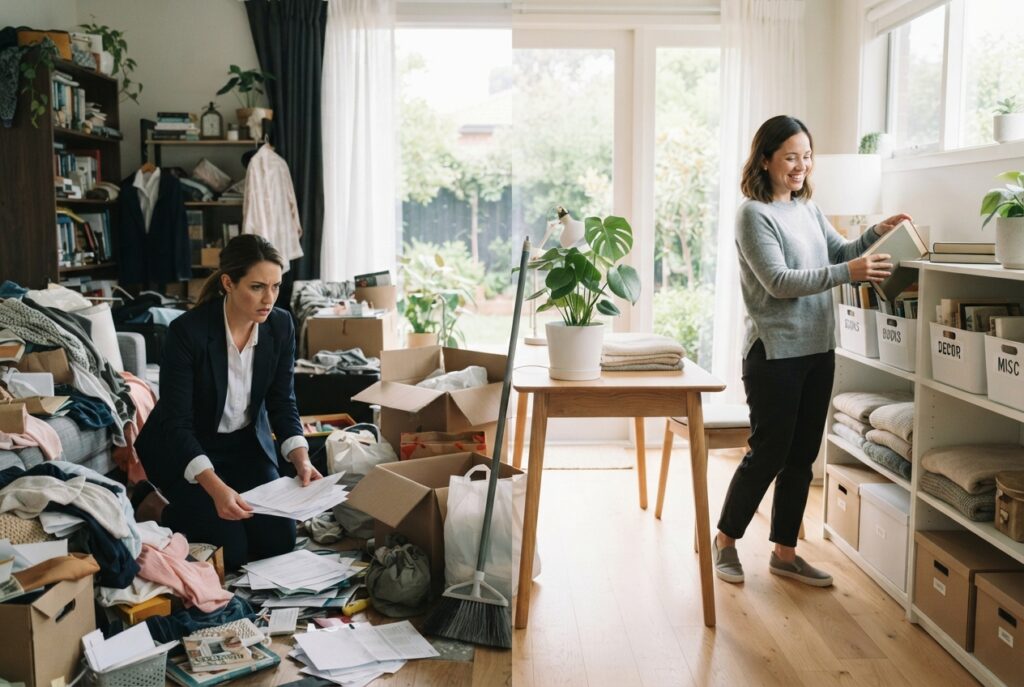
As a new parent with a six-week-old baby, I found myself overwhelmed after moving into a new home. Surrounded by at least 30 boxes of books, the clutter felt mentally exhausting. In my search for support, I discovered the Association of Professional Declutterers and Organisers. This resource helped me understand the difference between removing unnecessary items and arranging useful ones.
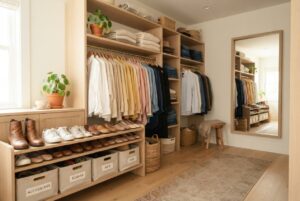
It’s important to note that a tidy home doesn’t mean an empty one. For instance, Christian Bense’s Battersea flat showcases attractive open shelving filled with books and decorative objects. This intentional design demonstrates that you can create a beautiful space without sacrificing comfort.
Throughout this article, I will explore practical decisions, emotional comfort, and how the processes of sorting and arranging can impact daily life. Join me as we navigate through definitions, personal experiences, and practical strategies for a more organized home.
Key Takeaways
- Understanding the difference between removing items and arranging them is crucial.
- A tidy home can still be filled with meaningful possessions.
- Support resources can make the process of organizing easier.
- Intentional design can enhance both aesthetics and comfort.
- Practical decisions affect how we manage our space.
Introducing Decluttering vs Organizing
Upon entering my new home, I was struck by the daunting task of sorting through all my belongings. It became clear that there are two distinct processes involved: getting rid of unnecessary items and creating order with what remains. This distinction is essential for anyone looking to improve their living space.
Decluttering involves making decisions about what to remove from your home. For example, you might donate clothes, recycle old magazines, or discard expired medications. Each choice helps reduce clutter and makes your space feel more manageable.
On the other hand, organizing is about establishing systems for the items you choose to keep. This can include labeling pantry containers, grouping office supplies, or arranging clothes by season. While it may take more time and effort, the end result is a well-ordered space that reduces stress and chaos in your life.
Many people find themselves overwhelmed by the process. Professional organizers, like Mimi Bogelund, offer guidance at $35 per hour, helping clients navigate their unique challenges. Ultimately, the best approach depends on individual circumstances, emotional attachments, and the current phase of life.
Decluttering vs Organizing: A Deep Dive into the Process
With a new baby and boxes piled high, I faced a challenge that tested my resolve. The emotional weight of each item made it hard to know where to start. Many clients, like me, feel overwhelmed and uncertain about their next steps. Mimi Bogelund, a professional organizer, emphasizes the importance of understanding what truly matters. She often begins by asking clients how they envision their homes and what feelings they want to evoke.
For me, clearing out an underwear drawer provided unexpected relief. I finally matched those stray socks and felt lighter. Yet, there’s a cautionary tale from ADDitude. They warn that over-removing items can lead to regret. You might toss something only to realize later that you need it.
As I navigated my new space, I found that organizing isn’t just about tidiness; it’s about adapting to life changes. Lisa Woodruff’s recent webinar highlighted how our organizing systems should evolve with us. It’s essential to find a balance between order and the emotional ties we have to our belongings.
Practical Steps for a Tidy Home
Moving into my new home, I quickly learned that achieving a tidy space involves strategic choices. To start, it’s helpful to declutter by category. Mimi Bogelund suggests tackling clothes first, as this can lead to quick wins. Once clothes are sorted, you can move on to books, papers, and kitchen items.
Books can be further divided into subcategories like fiction, gardening, and cookbooks. This method simplifies the process and makes decision-making easier. Additionally, breaking tasks into bite-sized periods can help maintain momentum. For example, spending just one hour on a Saturday can lead to meaningful progress.
As I organized my Tupperware cupboard, I found relief in removing random lids and broken containers. For unwanted items, consider options like charity pickups or local selling groups on Facebook. By connecting each decluttering decision to a practical home system, you can create a space that truly supports your life.
| Category | Example Tasks | Potential Outcomes |
|---|---|---|
| Clothes | Sort by type, donate unused items | Quick win, increased space |
| Books | Group by genre, recycle old ones | Easier access, reduced clutter |
| Kitchen | Remove broken items, organize containers | Improved functionality, relief |
Innovative Storage Solutions and Organizational Systems
While settling into my new space, I realized that innovative storage can transform clutter into a well-organized environment. There are many creative ways to maximize space and enhance functionality in every room.
IKEA’s Skubb drawer dividers are a fantastic solution for creating smaller sections in drawers. This makes everyday items easier to see, reach, and return after use. Additionally, Mimi Bogelund’s file-fold method allows clothes to be stored vertically, saving about two-thirds of ordinary clothing storage space.
To keep things organized, consider a landing table for keys and a utility-room basket for donations. These practical systems help reduce recurring clutter. Furthermore, ONESource suggests using clear labels, under-bed bins, and vertical shelves to increase usable space without needing a larger home.
It’s also wise to store frequently used items between shoulder and knee level, placing rarely used belongings in higher or lower storage areas. For inspiration, look at Christian Bense’s Battersea flat, which uses open shelving for organized books and decorative objects.
Lastly, adopting one-in-one-out habits and conducting regular calendar reviews can help maintain the effectiveness of your storage systems over time.
Conclusion
My home feels easier to use when I match each task to its purpose. Decluttering removes possessions that no longer fit my life; organizing gives useful, necessary, or meaningful items a dependable home. ADDitude’s warning about removing too much reminds me to pause before I let go of something I may still need.
Mimi Bogelund’s category method helps me make clear choices, while a one-hour Saturday session keeps the work manageable. File folding also saves drawer space and makes clothes easier to find. After a move or downsizing, ONESource recommends labels, vertical shelves, under-bed bins, and storage ottomans to help keep daily items in place.
Both steps matter: removing excess without a system can leave a mess, while arranging every item without first clearing what I do not need only shifts the clutter. I aim for a home that supports my life today.