Moving into an 800-square-foot home with my boyfriend Rocky has been a journey. We faced the challenge of managing a 5-by-3-by-8-foot space that lacked built-in shelves or hooks. After five months, it became clear that our wardrobe was overflowing with clothes and clutter.
Accessing the high top shelf was a struggle, and our belongings seemed to multiply. I realized that we needed practical solutions to tackle the chaos. This article will share my experiences and strategies for maximizing storage without costly renovations.
From using dressers and garment racks to clever underbed containers, I’ll explore various methods to create a more functional environment. The focus will be on achievable solutions that enhance everyday life, rather than complex construction projects.
Key Takeaways
- Managing a small wardrobe can be challenging but rewarding.
- Practical storage solutions can transform your space.
- Everyday items can be used creatively for better organization.
- Accessibility is key in maximizing storage potential.
- Simple changes can lead to significant improvements in your home.
Introduction and Why Closet Organization Matters
Sharing an 800-square-foot home with Rocky has opened my eyes to the importance of smart storage. Living in such a compact space, I quickly learned how crucial it is to maintain visual order. Even though I consider myself naturally disorganized, I discovered that a tidy area can bring a sense of calm and satisfaction.
A well-organized space can significantly reduce morning friction. When everything has its place, I can find my clothes easily and start my day without stress. This simple change prevents clutter from spreading throughout our small home.
Connecting organization with our thrifted and budget-friendly furnishings has made this journey even more rewarding. With just one practical solution, I realized I could transform our shared room without a complete redesign.
| Benefits of an Organized Space | Impact on Daily Life | Practical Solutions |
|---|---|---|
| Visual Order | Reduces stress | Use dividers |
| Easy Access | Saves time | Install shelves |
| Clutter Control | Enhances focus | Utilize baskets |
Assessing Your Closet Challenges and Goals
In our snug 800-square-foot home, I’ve discovered how essential it is to maximize space. Every inch counts, and assessing what takes up valuable room is crucial. To begin, I recommend measuring your storage area and taking photos of problem spots. This way, you can see where clothing, shoes, and accessories tend to pile up.
Next, identify specific issues. For instance, if you have a high top shelf that’s hard to reach, it’s likely not being used effectively. Bulky items like sweaters can consume space quickly, so consider whether they are truly loved, worn, and fit well. This method can help you decide what to keep and what to let go.
Separating everyday items from seasonal ones is another effective strategy. By doing this, you can streamline your storage and make your space more functional. Define your goals—whether it’s easier access, reducing clutter, or simply creating a calmer environment in your bedroom.
Creative closet organization ideas for Maximum Efficiency
Living in a compact space has made me rethink how I store my belongings. To create a functional environment, I’ve combined a small MALM-style dresser with slim velvet hangers and labeled containers. This approach not only saves space but also keeps everything organized.
One effective strategy is to group clothing by category, color, and sleeve length. This method simplifies the process of choosing outfits. I’ve found that using slim velvet hangers significantly increases hanging capacity, especially in a shared area.
Establishing daily routines is equally important. I focus on returning shoes to their designated spots, folding clothes right after wearing them, and putting accessories back immediately. These small habits make a big difference in maintaining order.
“A tidy area can bring a sense of calm and satisfaction.”
By adopting these simple yet effective strategies, I can enjoy a more organized home without feeling overwhelmed.
Creative Storage Solutions for Clothes and Accessories
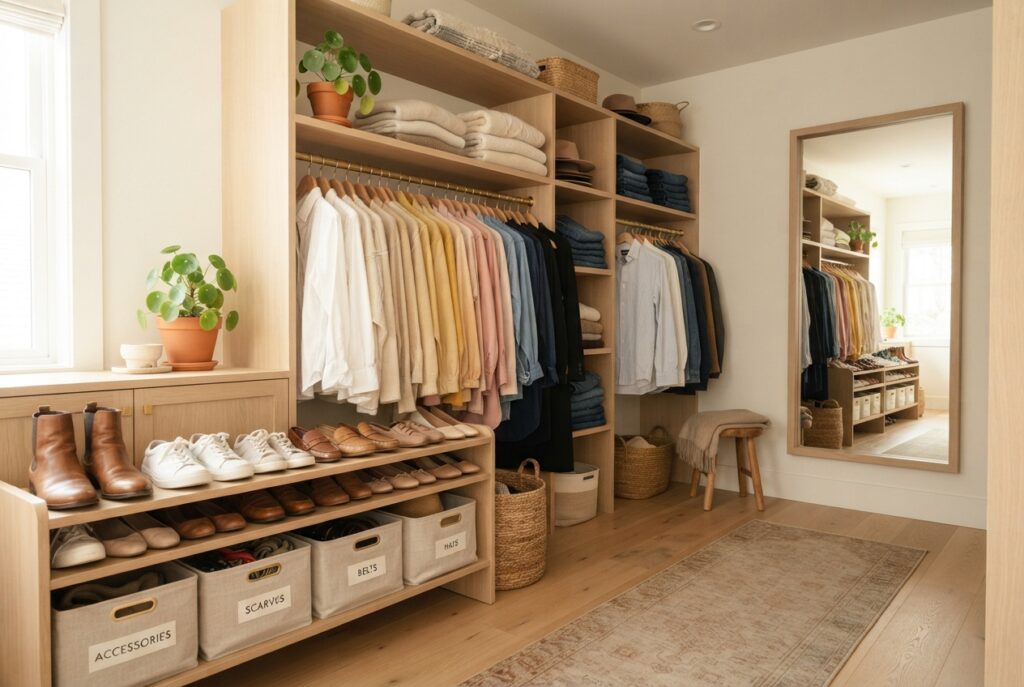
In a compact living space, I’ve learned the value of clever storage solutions. Utilizing baskets, boxes, and dividers can significantly enhance how I store my clothing and accessories. These tools help separate folded items, bags, hats, and small accessories without wasting vertical capacity.
For instance, I recommend a ten-cap Velcro organizer for baseball caps. This handy item keeps my favorite caps neatly displayed. Additionally, a scarf organizer with over 20 wire loops is perfect for storing scarves or tights.
Jewelry can often become tangled, but a double-sided hanging jewelry organizer with more than 75 clear pockets keeps everything visible and accessible. I also apply Marie Kondo’s file-folding method to my drawers, allowing folded clothing to stand upright for easy scanning.
It’s essential to distinguish between frequently used accessories and seasonal items. I place the latter in labeled baskets or closed boxes, ensuring that my space remains organized and functional.
| Storage Solution | Purpose | Capacity |
|---|---|---|
| Velcro Cap Organizer | Holds baseball caps | 10 caps |
| Scarf Organizer | Stores scarves and tights | 20 loops |
| Jewelry Organizer | Keeps jewelry visible | 75 pockets |
| Storage Bags | Holds bedding items | 3 pillows or quilts |
Maximizing Vertical Space with Shelving and Hooks
Finding ways to use every inch of vertical space has become a necessity in my small home. One effective method is to install upper shelves, vertical rails, and over-door hooks. These features transform neglected wall and door areas into useful storage.
High shelves are perfect for items like extra bedding, travel accessories, and tall heels that I don’t use often. I recommend using woven bins with clip-on labels for easy identification, especially when the storage is high up.
When choosing a shelf system, consider whether fixed shelving or adjustable systems work best for your needs. This allows you to match the depth and height of the shelves to your clothing. Additionally, safety is important; use step stools and motion-activated lighting to make high storage accessible.
Underbed and Hidden Storage Options
In a small living space, every inch counts, especially when it comes to storage. One often-overlooked area is the space beneath your bed. This hidden zone can be a game-changer for managing bulky items like sweaters and seasonal clothing that take up too much room in your main storage area.
When considering underbed storage, I found three effective solutions: see-through PEVA sweater bags, fold-open fabric bins, and long wheeled boxes. Each option has its advantages, but I prefer wheeled containers for their accessibility. They allow me to retrieve clothing easily, especially when I need a cozy sweatshirt on a chilly evening.
To keep everything organized, I recommend grouping garments by season or frequency of use. This way, underbed storage won’t become just another hidden pile. Instead, it can serve as a practical solution that enhances the overall functionality of your bedroom.
| Storage Option | Type | Accessibility |
|---|---|---|
| PEVA Sweater Bags | See-through | Moderate |
| Fabric Bins | Fold-open | Easy |
| Wheeled Boxes | Long | Very Easy |
Open Closet Systems and Visual Organization Tips
In my small living space, I’ve discovered the charm of open display systems. These setups not only enhance functionality but also add a touch of style to my home. One practical option is incorporating garment racks, which allow me to showcase my favorite clothing items.
For instance, I love using the Red Oak Folding Garment Rack and the Freestanding Industrial Garment Rack. These racks serve as stylish displays, especially when a standard wardrobe can’t hold everything. I organize the clothing by category, color, and sleeve length, ensuring a visually calm and functional arrangement.
Additionally, I create intentional vignettes with my favorite shoes, bags, scarves, and even framed photographs. This approach adds personality to the space while keeping it organized. However, it’s essential to maintain balance. An open rack should not become another crowded storage surface.
Multi-Person Closet Management Strategies
Living with another person in a small space can be challenging, especially when it comes to sharing storage. My boyfriend Rocky and I faced this dilemma in our 5-by-3-by-8-foot closet. We quickly realized that effective management strategies were essential for harmony in our home.
One effective solution is to create clearly labeled zones for each person’s clothing needs. By designating specific areas for hanging, folded items, shoes, and accessories, we reduce the chances of misplaced things. This method not only organizes our space but also simplifies our morning routines.
To accommodate our different schedules, we decided to store Rocky’s early-riser clothing in a living-room cabinet. We explored options like media cabinets, credenzas, and sideboards, which provided extra storage without cluttering our bedroom.
By establishing these zones, we maintain a tidy space and minimize conflicts over clothing. This approach proves that you don’t need a larger home or expensive custom solutions to achieve a functional living area.
| Storage Type | Purpose | Benefits |
|---|---|---|
| Media Cabinet | Store clothing | Accessible for early risers |
| Credenza | Extra storage | Stylish and functional |
| Sideboard | Organize accessories | Space-saving solution |
| Bookshelf Cabinet | Display and store | Versatile use |
Innovative Shoe Storage Techniques That Work
Finding smart ways to store shoes can significantly enhance the functionality of a small living area. With limited space, it’s essential to explore various storage options that keep footwear organized and accessible.
For everyday footwear, I recommend using a combination of shoe racks, baskets, and clear boxes. Here are some effective solutions:
- Clear shoe boxes can be arranged three across and three high on a shelf, storing nine pairs per shelf.
- A 26-shelf over-door shoe organizer is perfect for maximizing vertical space.
- Hinged-front boxes allow easy access to frequently worn shoes without unstacking everything.
- Breathable racks are ideal for shoes needing ventilation, while closed boxes protect dust-sensitive pairs.
- Establish a simple return routine to prevent shoes from becoming a clutter hazard near the entrance.
By implementing these storage solutions, I can keep my footwear in great condition while ensuring easy access. These small changes make a big difference in maintaining an organized and stylish home.
Customizing Solutions with Dividers and Baskets
Creating an efficient storage solution in my home has been a rewarding challenge. I’ve discovered that systems like IKEA’s PAX and The Container Store’s Elfa can transform any space. Both options offer customizable features that cater to individual needs.
IKEA’s PAX system includes wardrobe frames with rods, drawers, and shelves. This flexibility allows me to configure my storage according to what I actually need. In contrast, the Elfa system utilizes a top track and vertical rails, making it easy to adjust components as my needs change.
After an Elfa makeover, I noticed that shelving doubled, and I gained about 60% more hanging space. This significant increase in capacity made a noticeable difference in my daily routine.
- Consider using drawers, rods, and shelves tailored to your storage needs.
- Explore options like ClosetMaid and EasyClosets for additional systems.
- Wire shelf dividers, available in 16-inch and 12-inch widths, help keep sweaters and bags upright.
Budget-Friendly Organization Hacks for Every Home
Embracing creativity has led me to discover economical storage options in my small home. With limited space, I turned to thrift stores and DIY projects for affordable solutions. Places like Craigslist and Goodwill offer great finds for dressers, cabinets, and shelving that won’t break the bank.
For example, I found a coffee table made from a wood pallet, which adds character to my living area. Additionally, I prefer selling or gifting unwanted clothing rather than donating large quantities. This way, I can pass on pieces I no longer wear while keeping my space tidy.
Repurposing everyday items is also a smart move. Shoe boxes, baskets, and tiered pants hangers can serve as excellent organizers without the need for a complete custom system. By taking time to measure and plan, I’ve learned that a modest budget can still lead to organized storage solutions that enhance my home.
Styling Your Closet for a Chic and Functional Look
Finding the right balance between aesthetics and practicality in my small home has been a delightful challenge. By incorporating decorative elements, I can create a space that feels intentional and stylish.
Adding a full-length mirror not only enhances the look but also creates an illusion of more space. A jute pouf and a runner can add texture, while robe hooks provide a functional yet decorative touch. Carefully chosen baskets help keep accessories organized and accessible.
Adding Decorative Elements and Personal Touches
To make the space feel personal, I display favorite bags, jewelry, and framed photographs. These accents add character without cluttering the area. It’s essential to balance decorative styling with practical access, ensuring the closet remains functional.
Incorporating Lighting, Mirrors, and Accents
For closets lacking built-in lighting, I recommend wireless motion-sensor LED lights. They illuminate the space when the door opens, making it easy to find what I need. Additionally, Caséta by Lutron sensors can activate existing lights, enhancing convenience.
With these thoughtful touches, my closet becomes not just a storage area but a stylish part of my home. Explore more ideas on maximizing style in small spaces.
Conclusion
My best results begin with editing clothing, measuring the closet, and spotting wasted capacity. That quick review gives each item a purpose and makes organization easier to maintain.
From there, I use vertical shelves, slim hangers, labeled baskets, dividers, and organizers to make storage simple. Clear boxes and a small box for jewelry or accessories help keep details in view. I also keep shoes easy to reach; a second pair of shoes can live near the entry. Underbed bins handle bulky pieces, while a cabinet or dresser can add space without a remodel.
For a shared closet, I give each person a clear zone and follow a steady reset routine to save time. Finally, light, a mirror, bags, and a few personal accents bring style to the look. Small changes make my home feel polished without a luxury renovation.