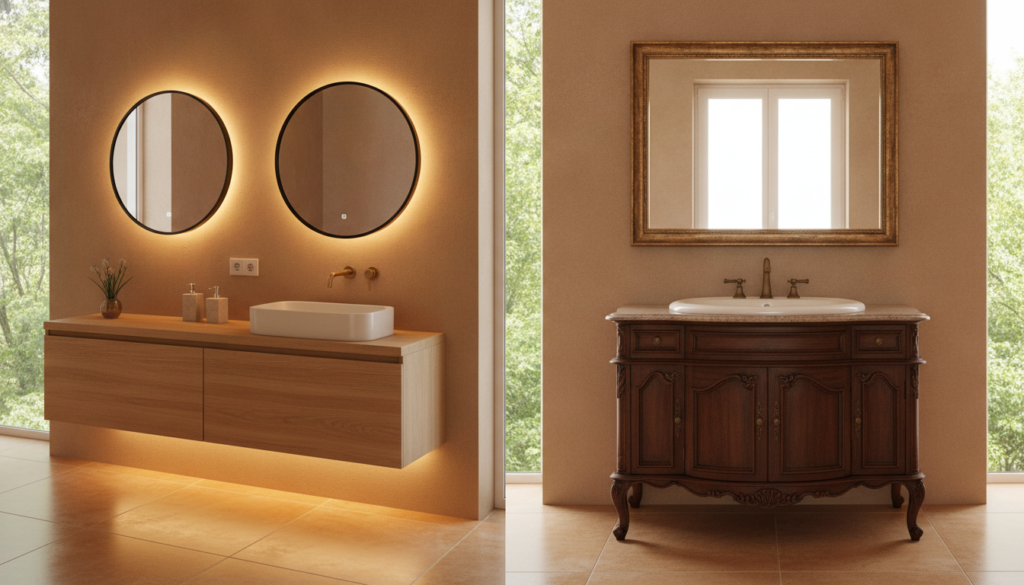
When it comes to designing your dream bathroom, choosing the right style of vanity is a crucial step. The decision between a sleek, wall-mounted option and a more grounded cabinet can greatly influence the overall feel of your space. A floating vanity offers a modern, airy aesthetic that can transform any bathroom into a contemporary oasis.
However, it’s essential to consider how your choice will affect functionality and storage. Whether you’re renovating a primary bathroom or a guest space, understanding the differences between these two popular styles is vital. This guide will help you navigate the essential aspects of each option, ensuring you make the best decision for your home.
Whether you lean towards the clean lines of a floating design or the classic appeal of a freestanding unit, we’ve got you covered. Dive into the details and discover which style suits your needs best.
Key Takeaways
- Choosing a bathroom vanity is a key decision in modern bathroom design.
- A floating vanity creates a spacious, contemporary look.
- Consider functionality and storage needs when selecting a style.
- This guide outlines the main differences between both options.
- Explore all details to find the best fit for your home.
Overview of Vanity Styles in Modern Bathrooms
The style of vanity you choose plays a crucial role in defining your bathroom’s ambiance. At Deslaurier, experts with over 40 years of experience have designed and installed countless vanities tailored to meet unique client needs in every bathroom.
Modern bathrooms often feature a vanity that serves as the central focal point for both daily grooming and overall interior design. Understanding the evolution of bathroom style is essential when selecting fixtures that will remain functional and beautiful for years.
Professional designers emphasize that the right vanity can significantly enhance the visual appeal of your bathrooms while providing necessary daily utility. It’s important to evaluate how different design trends influence the way we perceive storage and aesthetics in contemporary residential bathrooms today.
Exploring Floating Vanity vs Traditional Vanity
Deciding between a wall-mounted or floor-standing unit can significantly impact your bathroom’s look. A floating vanity is mounted directly to the wall, creating a distinct visual separation from the floor. This feature defines its modern character and gives an illusion of more space.
In contrast, a freestanding unit rests firmly on the floor. This style provides a classic, grounded appearance, common in many traditional bathrooms. When comparing these two, consider how the installation method affects the overall flow and utility of your bathroom space.
Both styles of vanities offer unique advantages. Your final decision should align with your specific lifestyle and long-term home goals. Exploring the differences between a floating vanity and a freestanding unit helps you determine which will best suit your specific bathroom.
Understanding Floating Vanities
The right design can transform your bathroom into a stylish retreat. Floating vanities are known for their sleek, minimalist look, which helps create a sense of openness. By keeping the floor visible, they can make even small spaces feel larger.
These units are mounted directly to the wall, requiring robust wall support to ensure stability. It’s essential to check that your wall can handle the weight before installation. A secure mount is vital for daily use, providing peace of mind.
Design and Aesthetic Appeal
The aesthetic appeal of floating vanities often stems from their clean lines. They are a perfect choice for contemporary bathroom design, offering a unique look that enhances the overall decor. As designer Jane Doe once said,
“A well-chosen vanity can be the centerpiece of a bathroom, marrying function with style.”
Installation Essentials and Wall Support
Proper installation is key. Floating vanities require special mounting brackets and strong wall support to remain secure. By eliminating the base, they provide a unique look that makes the floor appear larger and more expansive.
Diving into Traditional Vanity Characteristics
The characteristics of your chosen cabinet can greatly influence both style and functionality in your bathroom. A floor-mounted cabinet design typically includes a sturdy base that rests on the floor, offering significant storage space for your bathroom essentials.
These freestanding units often feature multiple drawers and deep cabinet interiors. This makes them ideal for families who need extra organization. The base of a traditional cabinet is designed to hide plumbing while providing a solid foundation for the heavy countertop and sink.
You will find that these cabinets are highly effective at maximizing the available storage in a busy master bathroom or shared space. Choosing a floor-mounted cabinet ensures that you have plenty of room for towels, toiletries, and other items within easy reach.
- A sturdy base enhances stability and storage capacity.
- Multiple drawers provide organization for various bathroom items.
- Effective design hides plumbing while maintaining aesthetic appeal.
- Maximizes storage in busy bathrooms, ensuring convenience.
- Offers easy access to essentials, keeping your space tidy.
Key Considerations for Your Bathroom Layout
Your bathroom’s layout and size will guide your decision on the most suitable cabinet style. When planning your bathroom layout, it’s crucial to consider how the size of the room influences the placement of your new unit.
A large bathroom might benefit from the anchoring effect of a freestanding unit, while a smaller room feels more open with a wall-mounted option. Always measure your available space carefully to ensure that the cabinet you select does not obstruct movement or door swings.
The dynamics of your bathroom change significantly based on whether you choose a wall-mounted or floor-standing cabinet. Always evaluate the flow of the room to ensure that your chosen unit enhances the overall utility and comfort of the space.
- Consider the size of your room when choosing a cabinet.
- Measure carefully to avoid obstruction in movement.
- Evaluate how the layout impacts the cabinet’s functionality.
- Ensure the chosen style complements the room’s dynamics.
- Think about how your choice affects the overall comfort of the space.
Comparing the Pros and Cons
Evaluating the strengths and weaknesses of different cabinet styles can greatly impact your bathroom experience. Each option has its unique features that cater to specific needs, especially in smaller spaces.
In small bathrooms, wall-mounted options are a top choice. They create an illusion of more space by exposing the floor underneath. A powder room often benefits from this style, keeping the area feeling light and open.
However, there are potential drawbacks to consider. One major concern is the reduced storage space compared to cabinets that reach the floor. Additionally, you must consider the weight of the unit. Floating options require secure mounting to prevent damage from water or heavy use.
While these sleek designs offer modern aesthetics, they may not be the best fit if you need maximum storage for your powder room.
| Aspect | Floating Vanities | Traditional Cabinets |
|---|---|---|
| Space Illusion | Creates a sense of openness | Can appear bulky |
| Storage | Limited storage capacity | Ample storage options |
| Installation | Requires secure wall support | Simple floor placement |
| Weight Consideration | Must support weight safely | Less concern with weight |
Step-by-Step Guide to Measuring and Preparing Your Space
Measuring your space correctly is vital for selecting the ideal bathroom unit. Accurate dimensions ensure that your new fixture fits seamlessly into your design. Here are some essential tips to guide you through the process.
First, measure the height of your bathroom fixture from the floor to the top of the countertop. This step is crucial to ensure it meets your needs. The standard height ranges from 32 to 36 inches, with 34 inches being the new universal average.
Next, check that your plumbing lines are correctly positioned. Whether they come through the floor or out of the wall, this will affect your installation. Also, make sure to measure your floor and wall space carefully. This ensures your new unit fits perfectly without any gaps.
Finally, don’t forget to account for the height of your sink, especially if you are using a vessel style that sits above the countertop surface. Proper planning will help you avoid common installation issues.
| Measurement Aspect | Details |
|---|---|
| Height | Standard range: 32-36 inches; 34 inches is the average |
| Plumbing | Verify positioning from floor or wall |
| Floor Space | Ensure no gaps for a snug fit |
| Sink Height | Consider if using a vessel style |
Customizing Your Vanity Design
Creating a unique look for your bathroom is an exciting journey. You can personalize your unit by selecting premium materials and finishes that align with your style. This allows you to create a space that feels distinctly yours.
Vanderloc offers high-quality options made in the USA, allowing you to choose from a variety of finishes like stained wood or painted surfaces. This flexibility ensures your choice complements your overall design.
When selecting the right countertop material, consider both durability and aesthetics. The right choice can enhance the visual appeal of your custom cabinet while providing the functionality you need.
Here are some tips to help you customize your design:
- Choose materials that reflect your bathroom style, such as modern, transitional, or classic.
- Pick hardware that adds the perfect finishing touch to your design.
- Consider how different countertop options can impact the overall look and feel.
- Tailor your unit to meet your specific needs and preferences.
- Ensure that all elements work together harmoniously for a cohesive appearance.
Installation Process Tips for Both Vanity Styles
Installing your new bathroom unit can be a straightforward task with the right guidance. Here are some essential tips to help you with the process.
Installation Techniques
For a wall-mounted unit, ensure that the cabinet is perfectly level. Secure it to the wall studs for adequate support. This step is crucial to prevent any accidents later on.
Setting Up a Floor-Mounted Unit
When installing a traditional cabinet, place the base firmly on the floor. Then, secure it to the wall for added stability. This method ensures that your unit remains in place.
- Always double-check your plumbing connections after the installation. This helps prevent leaks that could damage your new cabinet.
- If you are installing a wall-mounted unit, it’s helpful to have a partner hold it in place while you secure it.
- Proper installation guarantees that your cabinet functions well and remains safe, whether it’s mounted on the wall or resting on the floor.
Maintenance and Cleaning Best Practices
Keeping your bathroom unit in top shape is essential for both aesthetics and hygiene. Regular cleaning helps prevent dirt and grime buildup, especially around the base of your cabinet. You want to ensure that your space remains inviting and fresh.
One of the significant advantages of a wall-mounted unit is that it makes cleaning the floor underneath much easier. With this style, you can effortlessly mop or vacuum, making your daily cleaning routine faster and more efficient.
It’s also crucial to wipe down your unit and countertop frequently. This protects the finish from water damage and soap residue buildup over time. As a result, your space remains visually appealing and functional.
In case of a leak, a wall-mounted cabinet is less likely to suffer damage from standing water on the bathroom floor. This added benefit contributes to the longevity of your fixtures, ensuring a hygienic environment for your family.
Remember, maintaining a clean unit is essential for both its longevity and the overall health of your bathroom. A well-kept space enhances your daily experience and adds to the value of your home.
Budgeting and Cost Considerations
Budgeting for your bathroom renovation involves understanding the costs associated with different cabinet styles. The financial aspect can influence your decisions significantly. For instance, a high-end wall-mounted double-sink unit can cost up to $5,000 for the cabinet alone.
On the other hand, entry-level freestanding options are generally more affordable. Basic models start around $2,000, which includes the cabinet and installation. This makes them an attractive choice for those on a tighter budget.
It’s important to weigh the long-term value of your investment. Floating vanities often require more complex installation and higher material costs. However, their modern aesthetic can significantly enhance your bathroom’s appeal to potential buyers.
Always factor in the cost of additional items like sinks, faucets, and countertops when calculating the total price of your new unit. This will give you a clearer picture of your overall budget.
| Type | Cost Estimate | Notes |
|---|---|---|
| High-End Floating Vanity | Up to $5,000 | Includes cabinetry only |
| Entry-Level Freestanding Vanity | Starting at $2,000 | Includes cabinet and installation |
| Additional Items | Varies | Sinks, faucets, countertops |
Conclusion
Choosing the right cabinet style can be the final touch that completes your bathroom design. The decision between a sleek wall-mounted option and a more grounded cabinet should reflect your specific needs and budget.
Floating vanities offer incredible flexibility for modern rooms, while traditional cabinets provide the storage space that many busy families require. Both styles often serve as the centerpiece of your bathroom, enhancing its overall appeal.
Whether you prefer the airy look of a floating unit or the classic utility of a floor-mounted design, there is an option that fits your vision. We hope this guide helps you navigate the various designs and styles available to create the perfect bathroom for your home.