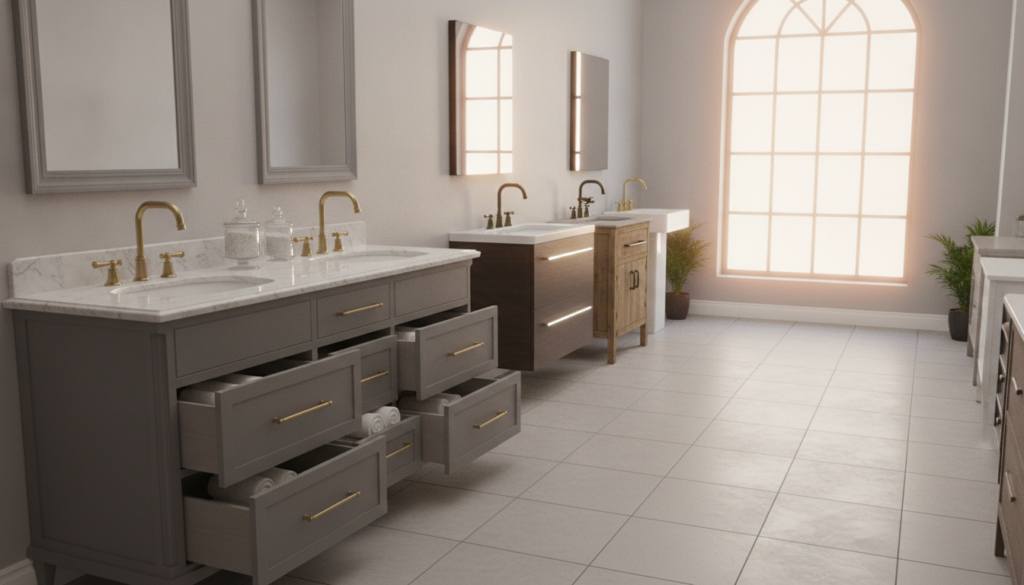
Choosing the right vanity can feel like piecing together a complex puzzle for your home. It’s essential for transforming your space into a functional and stylish personal sanctuary. A vanity serves as the heart of the room, housing your sink and providing essential storage for daily rituals.
Many homeowners discover that selecting the perfect vanity requires balancing aesthetic preferences with the practical realities of available floor space. Experts, including Richard Trethewey from This Old House, emphasize the importance of careful planning. This ensures your new fixture fits seamlessly within your existing layout.
Whether you’re working with small spaces or larger master suites, understanding the various options available will empower you to make a smart, informed decision. With the right approach, your bathroom can reflect your style while meeting your everyday needs.
Key Takeaways
- Vanities are central to the functionality and style of your bathroom.
- Careful planning is essential for a seamless fit in your space.
- Balancing aesthetics with practicality is crucial in your selection.
- Understanding your options will lead to a more informed decision.
- Transforming your bathroom can enhance your daily routines.
Understanding Your Bathroom Space and Needs
Understanding the dimensions of your space is key to finding the right fixture. Before diving into options, take the time to measure your bathroom. Accurate measurements will ensure that your new unit fits perfectly without disrupting traffic flow.
Richard Trethewey emphasizes the importance of double-checking your bathroom space. Industry standards recommend maintaining at least 30 inches of clear floor space in front of your new vanity. This clearance is vital for easy movement.
Additionally, it’s essential to keep a minimum of 15 inches from the center of the sink to any adjacent wall or fixture. This distance ensures comfortable daily use. When planning your layout, consider the swing of doors and drawers to avoid collisions with walls or other fixtures.
If you’re working with smaller bathrooms, a floating vanity can create the illusion of a larger space. This design choice not only enhances aesthetics but also maximizes functionality.
| Measurement | Recommendation | Purpose |
|---|---|---|
| Clear Floor Space | 30 inches | Easy movement in front of vanity |
| Distance from Sink | 15 inches | Comfortable usage |
| Floating Vanity | Consider for small spaces | Visual spaciousness |
Exploring Different Vanity Styles
Exploring various styles of vanities can open up new possibilities for your bathroom design. You can opt for a freestanding vanity if you prefer a classic look. This type does not require wall reinforcements, making it easier to install.
On the other hand, wall-mounted vanities are excellent for modern homes. They create an airy, open feel by exposing more of the bathroom floor. This can make your space feel larger and more inviting.
If you have a compact area, consider a corner vanity. These units maximize floor space by combining a sink and storage into one efficient design. This way, you won’t sacrifice precious space while still enjoying the functionality of a vanity.
Many homeowners find that different types of vanities offer unique benefits. For instance, standard freestanding units are often easier to install. Evaluate whether your chosen style complements the overall design theme of your home.
How to Choose a Bathroom Vanity: Key Considerations
Finding the ideal fixture for your space involves careful consideration of several factors. First and foremost, the quality of the materials used in your cabinet can significantly affect its longevity. A well-constructed unit can withstand daily moisture and wear, ensuring it remains functional for years.
Additionally, the installation method plays a crucial role in the final look of your space. Wall-mounted units, for instance, require different structural support compared to standard floor-standing models. This can impact both aesthetics and functionality.
When selecting your materials, prioritize durability, especially in high-humidity environments. It’s also essential to ensure that your chosen design allows for proper plumbing access, which is vital for a successful installation.
Experts recommend investing in high-quality materials. This not only enhances the beauty of your fixture but also ensures it serves as a lasting part of your home.
Materials and Finishes: Selecting Durable Options
When it comes to selecting materials for your vanity, durability is key. The right choice not only affects the look but also the longevity of your fixture. Solid wood is a classic option, known for its strength and natural beauty. However, it often comes at a higher price compared to engineered materials.
Master carpenter Norm Abram points out that MDF is an excellent choice for vanity construction. Its edges are treated like solid wood, making it both efficient and cost-effective. This material reduces waste during production, which is a bonus for eco-conscious homeowners.
For countertops, you might consider quartz or stone. These materials provide a polished look and exceptional durability, perfect for the daily wear and tear of a busy bathroom. Remember, while solid wood offers warmth, it must be sealed properly to guard against moisture damage.
Plywood is another reliable option, but it requires covering exposed edges to maintain its aesthetic appeal. Additionally, selecting the right finish for your vanity is crucial. A good finish not only enhances the appearance but also protects the surface from moisture and scratches.
| Material | Durability | Cost |
|---|---|---|
| Solid Wood | High | High |
| MDF | Moderate | Low |
| Plywood | Moderate | Medium |
| Quartz | High | Medium to High |
| Stone | High | High |
Size, Dimensions, and Layout Considerations
The dimensions of your space play a crucial role in determining the perfect fixture. Accurate measurements ensure that your new unit fits well and enhances your bathroom’s functionality. Here are some essential points to consider:
- Measure the width, depth, and height of your area to ensure the size is proportional to your overall layout.
- A standard vanity height is about 32 inches, but you may prefer a 36-inch comfort height for ergonomic benefits.
- When planning your sink cutouts, remember that the countertop overhang typically extends 1/2 to 1 inch beyond the cabinet box at the front.
- Always leave at least 30 inches of clear floor space in front of the vanity for comfortable movement.
- Proper planning of the toe kick space, usually 3 to 4 inches high, allows you to stand closer to the sink without hitting your feet.
Storage and Organizational Features
Storage solutions are essential when considering the functionality of your vanity. A well-planned vanity can transform clutter into organized elegance. This ensures you have everything you need at your fingertips while maintaining a clean look.
When it comes to organization, drawers are perfect for small items like makeup. In contrast, cabinets are better suited for larger items, such as towels. Combining both features can maximize your storage potential.
- Opt for a vanity that includes drawers for small toiletries and a spacious cabinet for larger cleaning supplies.
- If space is limited, consider adding wall-mounted storage cabinets above the toilet to enhance your storage capacity.
- Open shelving can create a spa-like ambiance, but be ready to keep these areas tidy for a polished appearance.
- Modern vanities often come with built-in organizational features like dividers or pull-out trays, making grooming tools easily accessible.
- Assess your specific storage needs before purchasing a vanity to ensure it accommodates all your daily essentials.
Budgeting: Price Ranges and Cost Breakdown
Budgeting for your new fixture can significantly impact your renovation experience. The average cost of a vanity ranges from $300 for stock units to over $3,800 for custom, high-end pieces. Understanding these price ranges is essential for making informed decisions.
If you’re on a tight budget, consider pressboard vanities with marbled tops. They offer a functional and affordable solution for your home renovation project. Mid-range options strike a balance between cost and quality, often allowing for some customization.
Decide whether you want to handle the installation yourself or hire a professional. DIY installation can save you money, but professional help ensures plumbing is done correctly. Always factor in the cost of any complex plumbing or electrical work needed for built-in lighting.
Design and Style Tips for a Harmonious Look
Creating a cohesive design for your space can elevate its overall appeal. It’s important to consider how different elements come together. Start by focusing on colors and lighting that match your existing decor.
Choosing Colors and Lighting to Match Your Space
Lighting designer Francesca Bettridge recommends positioning lights 36 to 40 inches apart at eye level. This setup helps eliminate shadows on your face. For optimal illumination, place an over-mirror light fixture 75 to 80 inches above the floor, ensuring it’s at least 24 inches long.
- Never shine light directly on the mirror; instead, aim for even lighting on your face.
- Choose a vanity color that complements your bathroom decor for a cohesive look.
Selecting Hardware, Mirrors, and Countertops
When selecting hardware, match your knobs and pulls to the finish of your faucet. This detail can tie your design together beautifully. A frameless mirror offers a clean, modern look, while a framed mirror adds elegance.
- Choosing the right countertop surface, like quartz or marble, influences both style and maintenance.
- Consider how each piece contributes to the overall design to ensure a harmonious feel.
Installation, Maintenance, and Future Upkeep
Installing your new fixture can be straightforward with the right guidance. Richard Trethewey explains that replacing a vanity usually takes between 2 to 4 hours for an experienced DIY homeowner. Before starting, remember to turn off the water supply. This step prevents leaks when disconnecting the old sink and faucet.
Once you’re ready, ensure the vanity is level. Use shims to stabilize it before securing it to the wall studs. This will help maintain its position and functionality.
Maintaining your vanity is essential for longevity. Clean the countertop with products suitable for its material to avoid damaging the surface finish. Periodically check for leaks under the sink and tighten any loose hardware. This practice helps prevent long-term damage to your cabinet.
Additionally, always caulk around the edges of your vanity top. This prevents water from infiltrating the wall, which can lead to mold or rot issues.
| Task | Frequency | Purpose |
|---|---|---|
| Check for leaks | Monthly | Prevent damage |
| Clean countertop | Weekly | Maintain appearance |
| Stabilize vanity | During installation | Ensure level |
| Caulk edges | As needed | Prevent water damage |
Conclusion
Finding the perfect fixture can be a rewarding journey that enhances your space. Balancing personal style with the practical needs of your area is essential. Careful measurements and an assessment of storage requirements will help you select a unit that lasts for years.
Don’t forget to consider the quality of materials and the type of sink, such as a vessel bowl or integrated top. Your choice will ultimately define the aesthetic of your space, whether you prefer modern clean lines or a more traditional look.
We hope these tips assist you in navigating the selection process, enhancing both the functionality and beauty of your home.
FAQ
What size vanity should I get for my bathroom?
What materials are best for a bathroom vanity?
How do I ensure enough storage in my vanity?
Can I install a vanity myself?
What style should I choose for my vanity?
How can I maximize small bathroom space with a vanity?
What are the average costs for bathroom vanities?
FAQ
What size vanity should I get for my bathroom?
Measure your space carefully. Consider the width, depth, and height that will fit comfortably without crowding the area. Aim for at least 30 inches of space for a standard vanity.
What materials are best for a bathroom vanity?
Look for durable materials like solid wood, plywood, or MDF. For countertops, quartz and marble are popular choices due to their resilience and stylish appearance.
How do I ensure enough storage in my vanity?
Opt for designs with multiple drawers and cabinets. Open shelving can also be useful for displaying items while keeping them accessible.
Can I install a vanity myself?
Yes, if you’re handy, DIY installation is possible. Just ensure you follow all plumbing guidelines and have the right tools. Otherwise, consider hiring a professional.
What style should I choose for my vanity?
Choose a style that complements your overall bathroom design. Whether modern, traditional, or rustic, make sure it matches the look and feel of your space.
How can I maximize small bathroom space with a vanity?
Consider wall-mounted or corner vanities to save floor space. Choose a compact design with integrated storage to keep essentials organized.
What are the average costs for bathroom vanities?
Prices can vary widely. Basic models start around 0, while high-end options can exceed
FAQ
What size vanity should I get for my bathroom?
Measure your space carefully. Consider the width, depth, and height that will fit comfortably without crowding the area. Aim for at least 30 inches of space for a standard vanity.
What materials are best for a bathroom vanity?
Look for durable materials like solid wood, plywood, or MDF. For countertops, quartz and marble are popular choices due to their resilience and stylish appearance.
How do I ensure enough storage in my vanity?
Opt for designs with multiple drawers and cabinets. Open shelving can also be useful for displaying items while keeping them accessible.
Can I install a vanity myself?
Yes, if you’re handy, DIY installation is possible. Just ensure you follow all plumbing guidelines and have the right tools. Otherwise, consider hiring a professional.
What style should I choose for my vanity?
Choose a style that complements your overall bathroom design. Whether modern, traditional, or rustic, make sure it matches the look and feel of your space.
How can I maximize small bathroom space with a vanity?
Consider wall-mounted or corner vanities to save floor space. Choose a compact design with integrated storage to keep essentials organized.
What are the average costs for bathroom vanities?
Prices can vary widely. Basic models start around $200, while high-end options can exceed $1,000. Always set a budget before shopping.
How do I choose the right faucet for my vanity?
Ensure the faucet matches the sink type and height. Consider functionality and style, selecting finishes that coordinate with your vanity hardware.
What maintenance is required for my vanity?
Regular cleaning with mild soap and water is essential. Avoid harsh chemicals that can damage the finish. Check for any plumbing leaks periodically.
Can I customize my vanity?
Absolutely! Many retailers offer customizable options for size, materials, and finishes, allowing you to create a vanity that fits your unique needs.
,000. Always set a budget before shopping.
How do I choose the right faucet for my vanity?
Ensure the faucet matches the sink type and height. Consider functionality and style, selecting finishes that coordinate with your vanity hardware.
What maintenance is required for my vanity?
Regular cleaning with mild soap and water is essential. Avoid harsh chemicals that can damage the finish. Check for any plumbing leaks periodically.
Can I customize my vanity?
Absolutely! Many retailers offer customizable options for size, materials, and finishes, allowing you to create a vanity that fits your unique needs.