Dealing with unexpected spills can be a real hassle. When accidents happen, it’s crucial to act quickly. Carpet Exchange’s 2026 guide emphasizes that stains become harder to tackle once they settle into the fibers. The sooner you respond, the better your chances of keeping your rugs looking pristine.
This article will explore various types of stains, including pet accidents, drink spills, and more. You’ll learn effective techniques for fresh and old stains alike. Remember, the golden rule is to use a clean white cloth. Blot gently instead of rubbing, as scrubbing can push the residue deeper into the fibers.
Different messes call for different cleaning products. You might need dish soap, vinegar, or even specialized enzyme cleaners. Most stains can improve with timely home treatment, but stubborn odors and deeply embedded spots may require professional help.
How to remove carpet stains: Start with the right first steps
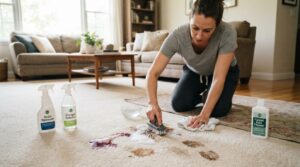
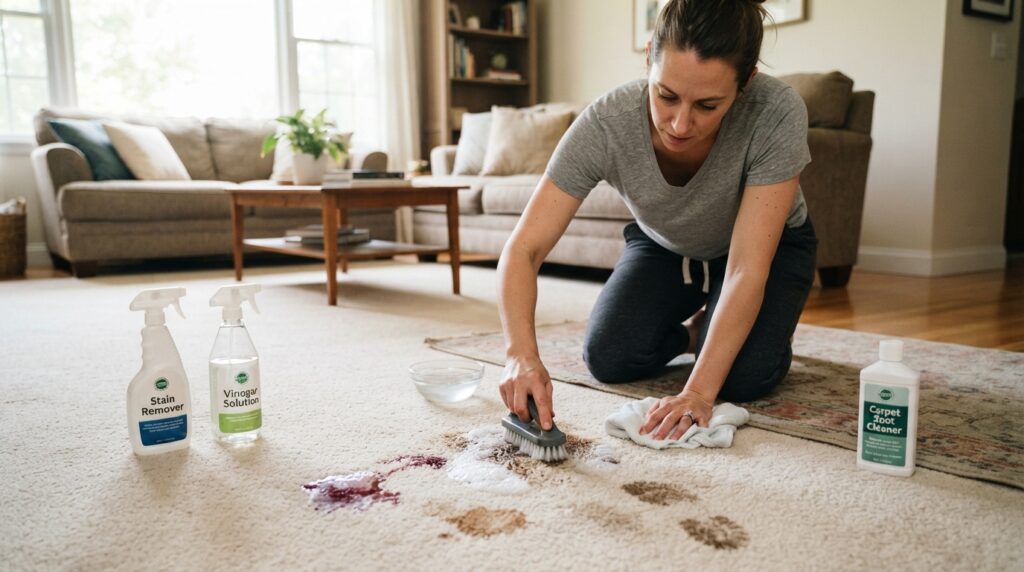
Accidents happen, and they can lead to frustrating situations. The first step in tackling a spill is to act quickly. Blotting from the outside in is crucial. This technique prevents the stain from spreading further into the carpet fibers. Gently press a clean paper towel or cloth against the spill, lifting moisture gradually.
Next, for solid messes, use a spoon or dull edge to lift the debris. This step is essential before applying any cleaning solution. Always test cleaners on a hidden spot first. This precaution helps avoid any unexpected damage to your carpet. Remember, colored towels can transfer dye, so stick with white cloths or paper towels.
| Step | Action | Tip |
|---|---|---|
| 1 | Blot the spill | Start from the edge |
| 2 | Lift solids | Use a spoon or spatula |
| 3 | Test cleaner | Choose a hidden area |
Make a simple DIY carpet cleaning solution
When a spill occurs, quick action is your best friend. A simple DIY cleaning solution can tackle many common stains effectively. The basic recipe combines 1 cup of warm water, 1 tablespoon of white vinegar, and a few drops of dish soap. This mixture works wonders on fresh food and drink spills.
Start by combining the ingredients in a clean spray bottle. Apply just enough of the mixture to dampen the affected area without soaking the carpet backing. Let the solution sit for a few minutes to break down the stain.
Next, use a clean cloth or paper towel to blot the stain repeatedly. Keep blotting until no color or moisture transfers to the cloth. Afterward, rinse the area with plain water and blot dry. This step is crucial, as leftover cleaning products can attract more dirt and lead to reappearing stains.
For persistent odors, sprinkle baking soda on the spot and let it sit for at least 15 minutes before vacuuming. This helps absorb odors and softens any dried messes.
Match your stain removal method to the mess
Every home faces spills, but understanding how to tackle them can save you time and stress. Different types of stains require unique approaches. Here are some effective methods for various messes.
Clean red wine, juice, coffee, and other drink stains
For red wine or juice, start by blotting the area with a clean cloth. Then, cover the spot with baking soda and spray with white vinegar. Wait for about 5 to 10 minutes before blotting again.
Treat pet stains and odors with an enzyme cleaner
Pet urine can be tough. It contains proteins that sink deep into the fibers. Using an enzyme cleaner is your best bet for tackling these stubborn odors.
Lift grease, ink, gum, and wax without spreading the stain
For grease, sprinkle baking soda or cornstarch on the area and let it sit for 15 minutes. Vacuum the powder and treat any remaining residue with rubbing alcohol. For gum or wax, harden it with ice before scraping it off with a spoon.
Use cold water for blood and let mud dry before vacuuming
When dealing with blood, always use cold water. Warm water can set the stain deeper into the fibers. For mud, let it dry completely before vacuuming up the loose dirt.
Remove old and tough carpet stains safely
Old stains can be stubborn, but there are effective methods to tackle them. You can use common household items to address these issues safely and efficiently.
Use baking soda and vinegar for stubborn spots and odors
For a powerful combination, cover the stained area completely with baking soda. Then, spray white vinegar over it. Wait for 10 to 15 minutes before blotting with a clean cloth and rinsing the area.
Try diluted hydrogen peroxide only on light-colored carpet
Hydrogen peroxide can be effective, but use it cautiously. Dilute it to no more than 3% and test it on a hidden area first. Always wear gloves and ensure good ventilation while using it.
Consider club soda or a borax solution, and test first
Club soda can help with mild stains, sitting for 1 to 2 minutes, while tougher stains may need up to 15 minutes. Alternatively, mix equal parts borax and warm water with a few drops of dish soap, testing it first to ensure it won’t damage your carpet.
Know when to deep clean or call a professional
Recognizing when a deep clean is necessary can make all the difference. Some stains settle deep into the fibers, making them tough to tackle with regular home cleaning methods. In these cases, a professional approach is often the best solution.
Consider a deep clean if:
- Stains have settled: Professional hot water extraction uses heated water and cleaning solution to penetrate deep into the fibers.
- Persistent odors linger: Enzyme cleaners are effective at breaking down proteins in urine, vomit, and food spills.
- Repeated home treatments fail: If DIY methods aren’t working, it’s time to call in the experts.
- Commercial spaces need special care: Encapsulation cleaning traps dirt in crystals that can be vacuumed away efficiently.
As a rule of thumb, if you notice widespread discoloration or persistent odors, don’t hesitate to seek professional help. It can save you time and ensure your carpets remain in great condition.
Keep your carpets fresh and help prevent future stains
Regular maintenance can prevent future mishaps and ensure your carpets stay fresh. A few simple practices can make a significant difference in the longevity of your rugs.
First, vacuum at least twice a week. This routine helps eliminate dirt before it embeds into the fibers. Consider placing area rugs or runners in high-traffic areas like hallways and entryways. They protect your carpets from daily wear and tear.
Additionally, implement a light monthly cleaning routine. Use a mixture of warm water, vinegar, and dish soap to keep your carpets looking their best. This gentle approach helps maintain freshness without damaging the fibers.
Lastly, prepare a stain-cleaning kit for quick responses to spills. Include items like:
- White cloths
- Baking soda
- Vinegar
- A gentle carpet cleaner
If you have kids or pets, consider investing in stain-resistant or pet-friendly carpets. These options make cleanup easier and help maintain a fresh environment.
Conclusion
Fresh results start with calm, quick action. Lift solid debris first, then blot from the outer edge toward the center. Skip rubbing; it can drive soil deeper into carpet fibers.
Choose a cleaner based on the mess. Cold water suits blood, while an enzyme formula targets pet odors from proteins. Test vinegar, peroxide, borax, club soda, and store-bought products on a hidden spot first.
Rinse with clean water and dry the area fully. Extra moisture can leave residue, fuel odors, or promote mold beneath the flooring. If stains remain after careful cleaning, or odors return after repeated treatment, call a professional for extraction. A little caution now can protect your floors for years.