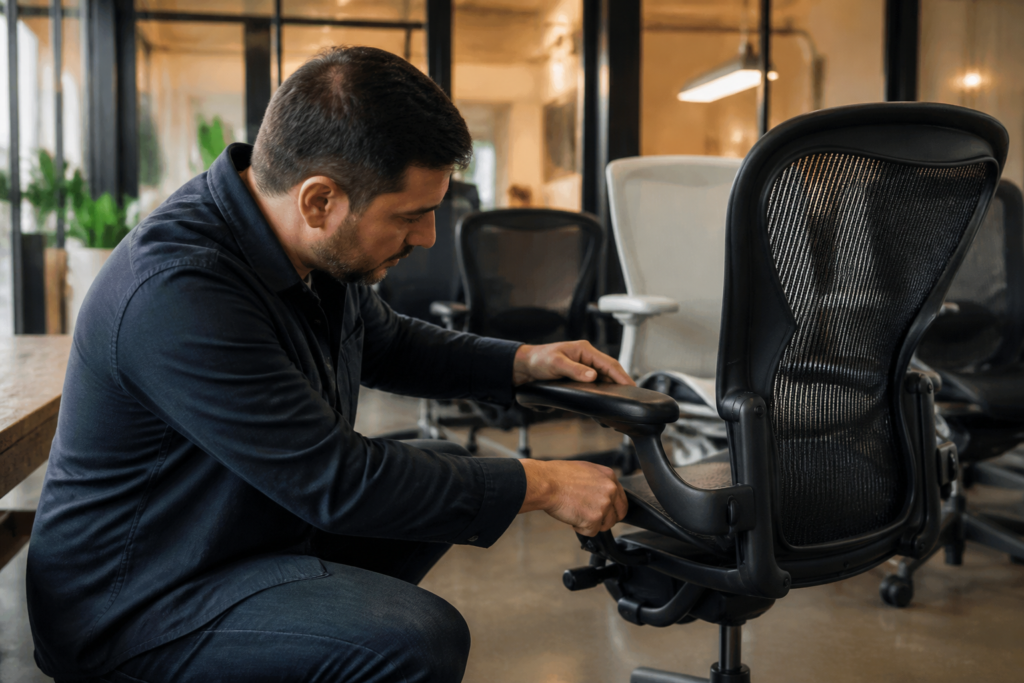
Sit down in the wrong chair for eight hours a day and your lower back will tell you about it by 3 p.m. That’s the reality for most remote workers who bought a chair based on looks instead of what’s actually holding them up. Before you spend a dollar on a Herman Miller style chair, you need to know one thing: mesh and foam aren’t interchangeable, and picking the wrong one can leave you with the same aches you’re trying to fix.
Here’s what most people miss — a chair that looks like an Aeron in Amazon photos might use cheap foam padding instead of tensioned mesh, and that difference shows up in your spine after month two, not week one. Mesh spreads your weight across zones and lets air move. Foam feels plush on day one, then compresses and loses its shape faster than most buyers expect. Neither is universally “better.” It depends on your body, your climate, and how long you actually sit still.
What You’ll Achieve and What You Need Before You Start
Picture this: it’s 2 pm, your lower back is aching, and you’re scrolling through options trying to decide between a mesh seat and a foam one. That moment — right there — is exactly why you need a plan before clicking buy. By the end of this process, you’ll know precisely which material suits your body, your desk, and your daily grind.
The Goal: Picking the Right Seat Material for Your Body and Workday
The goal isn’t finding the cheapest option. It’s matching material to how you actually sit for 8+ hours. A properly chosen Herman Miller style chair should reduce pressure points, not create new ones.
Tools and Info to Gather First (Height, Weight, Desk Setup, Budget)
Before comparing anything, grab these numbers:
- Height and weight — this determines sizing across most models
- Desk height and depth — mesh chairs often sit taller
- Room temperature habits — do you run warm?
- Budget ceiling — know it before you start comparing leather versus mesh options
Step 1: Understand How Mesh and Foam Actually Support Your Spine
Your spine doesn’t care about marketing copy — it responds to physics. Mesh and foam handle body weight in completely different ways, and picking the wrong one is why so many people end up switching chairs within a year. Before you buy any Herman Miller style chair, sit with these two support systems side by side.
How Mesh Suspension Distributes Weight Across Pressure Zones
Mesh works like a tensioned hammock. Weight spreads across multiple zones instead of concentrating under the tailbone and thighs. This reduces hot spots and keeps air moving underneath you, which matters if you run warm during long stretches at a desk. The Herman Miller Celle chair uses this exact approach — flexible mesh that flexes independently at each contact point rather than one solid cushion.
How Foam Cushioning Compresses and Changes Support Over Time
Foam feels plush on day one. But foam compresses — that’s not a flaw; it’s chemistry. Over 18 to 24 months, dense foam softens under repeated pressure, and support shifts unevenly. High-density foam lasts longer than the cheap stuff, but even premium foam eventually loses its original shape.
Step 2: Test Breathability Against Your Work Environment
Does your office turn into a sauna by 2 PM, or do you keep a sweater on your chair year-round? That answer decides more about your seat than any spec sheet. A Herman Miller style chair lives or dies on how well it matches the room it sits in — not just how it looks in photos.
Why Mesh Wins in Warm Rooms or Un-Air-Conditioned Home Offices
Mesh backs pull heat away from your spine instead of trapping it. If you work in a converted garage, attic, or a room without steady airflow, mesh keeps you from sticking to the seat by hour three. It’s also lighter and easier to clean than fabric, which matters if you’re eating lunch at your desk.
When Foam or Leather Makes More Sense in Cooler Climates
Foam and leather feel better in cold rooms — they hold warmth instead of pulling it away. If your workspace runs chilly, a well-padded Herman Miller task chair with foam cushioning will feel far more comfortable than bare mesh against your back. Test both materials in your actual room, not a showroom, before deciding.
Step 3: Match the Chair to Your Sitting Habits and Hours
Here’s a number that surprises most buyers: office workers spend roughly 9 hours a day seated once you count desk time, commuting, and evening screen use. That’s why picking a Herman Miller style chair isn’t a one-size-fits-all decision. A chair built for two hours of reading won’t hold up during a full workday, and vice versa.
Task Chairs for 6-10 Hour Desk Days
If you’re logging long shifts at a desk, foam won’t cut it past hour three — it compresses, traps heat, and flattens under sustained weight. Mesh task chairs breathe better and keep tension zones responsive for the full day. For adjustable, high-output setups, Humanscale chairs offer weight-sensing recline that mesh-based competitors often can’t match at the same price point.
Lounge, Recliner, and Rocking Chair Options for Breaks and Reading Corners
Not every seat needs to be a workhorse.
A leather lounge, oversized recliner, or even a rocking chair works fine for short reading breaks — foam padding actually feels better here since you’re not sitting for hours straight. Save mesh and rigid ergonomic support for the desk, not the reading nook.
Step 4: Compare Herman Miller Style Chairs Against the Aeron and Embody
Here’s a myth worth killing: more mesh zones doesn’t automatically mean better support. A lot of budget sellers slap “8-zone mesh” on the spec sheet and call it a match for the real thing. It isn’t, and your spine will notice within a week.
What Makes the Aeron’s 8Z Pellicle Mesh Different From a Cheap Dupe
The Aeron’s suspension material is engineered with variable tension across eight distinct zones, so your hips get firm support while your upper back gets give. A cheap dupe usually stretches one uniform mesh panel over the frame. That single-tension setup sags fast, creates pressure ridges under the thighs, and loses shape within a year or two. If you’re testing a Herman Miller style chair, push down hard on the seat pan and the lower back area separately. If it feels the same everywhere, it’s not the same engineering.
Where Foam-Based Alternatives and Leather Executive Chairs Fit In
Foam still has a place. Leather executive chairs and foam-cushioned models tend to feel more substantial right out of the box and suit people who run cold. But foam compresses permanently over time, unlike mesh. For a middle-ground option with adjustable back tension and solid build quality, the Humanscale office chair is worth sitting in before you commit to either extreme.
Step 5: Decide Between an Authentic Herman Miller Chair and an Alternative
Picture this: you’ve got two browser tabs open, one showing a certified Aeron and one showing an unbranded mesh option that looks nearly identical. That’s the moment most buyers freeze. A genuine Herman Miller style chair built by the original manufacturer uses specific suspension materials and tested tilt mechanisms that generic copies rarely match — the frame flex, the recline resistance, all of it feels different after month three, not day one.
Reading Reddit Threads and Owner Reviews Before You Commit
Before you buy, spend twenty minutes reading owner threads. Real users mention things spec sheets don’t: squeaky pneumatic cylinders, sagging mesh after two years, arm pads cracking. Look for repeated complaints, not one-off gripes — patterns matter more than a single bad review.
Checking for Authorized Dealer Status and Certification Documentation
Ask for paperwork. A legitimate seller can show authentication records, inspection notes, and warranty terms in writing. If you’re also outfitting a shared workspace, browsing Allsteel office chairs for sale alongside premium mesh options gives you a useful price comparison point before finalizing your decision.
Step 6: Factor In Price, Long-Term Value, and Why These Chairs Cost What They Do
Price is where most buyers stall out. A quality build costs more upfront — it holds up for a decade or longer instead of cracking in two years like a $150 big-box chair.
Why Herman Miller and Steelcase Chairs Carry a Higher Price Tag
Materials, tooling, and warranty coverage drive the sticker price. Mesh suspension systems, cast aluminum frames, and multi-point adjustability aren’t cheap to engineer or manufacture. That’s the honest answer to why office chairs from these brands cost more than what you’d find at a general furniture store.
Comparing New Retail, Marketplace Listings, and Pre-Owned or Open-Box Options
New retail gets you full manufacturer backing but at the highest cost. Marketplace listings (think random resale sites) are a gamble — you often can’t verify condition or authenticity before paying. A certified, pre-owned or open-box Herman Miller leather office chair splits the difference: inspected components, a real warranty, and a lower price than buying new.
Run the math over 10 years, not 10 months. A chair that lasts costs less per year than three cheap replacements — even if the upfront number looks bigger today.
Step 7: Check Fit — Size, Headrest, Arms, and Base Details
Does the chair actually match your body, or are you just guessing based on the product photo? Fit matters more than finish when picking a Herman Miller style chair, and skipping this step is how people end up with a good-looking chair that hurts after two hours.
Sizing Yourself Against Small, Medium, and Large Frame Options
Most mesh—foam models come in small, medium, and large builds. Medium fits roughly 5’3″ to 6’2″ and covers most buyers. If you’re outside that range — shorter, taller, wider — don’t force a medium frame just because it’s in stock. Seat depth and width need to match your actual thighs and hips, not an average.
Deciding If You Need a Headrest, Adjustable Arms, or a Swivel Base
A headrest helps if you recline often or deal with neck tension; skip it if you sit upright most of the day. Adjustable arms (height, width, pivot) matter more than people expect — mismatched arm height causes shoulder strain fast. A swivel base is standard, but check caster type against your flooring. Worth comparing here: the Herman Miller Mirra office chair offers a flexible frame and adjustable arms that suit mixed-use home offices well.
Common Mistakes to Avoid When Comparing Mesh and Foam Chairs
About 68% of office chair returns happen because the buyer never actually sat in the chair for more than a few minutes before purchase. That number should make anyone pause before clicking checkout on a Herman Miller style chair.
Buying Based on Looks Alone Instead of Sitting Trial
A chair that looks like an Aeron in a product photo won’t necessarily support your spine like one. Mesh tension, foam density, and shell flex vary wildly between brands — and none of that shows up in a picture. Sit in it for at least 20 minutes before deciding.
Ignoring Seat Depth and Lumbar Adjustment Ranges
Shoppers focus on price and skip the numbers that matter most. Seat depth and lumbar height ranges determine whether the chair actually fits your torso. A cheap dupe with fixed lumbar support won’t adjust to your body the way a genuine Herman Miller office chair will.
Assuming Every “Herman Miller Style” Chair Uses the Same Materials
Not all mesh is equal. Some alternatives use thin, single-layer mesh instead of tensioned suspension fabric. Others swap real foam for compressed padding that flattens within a year. Check material specs, not just marketing terms like “ergonomic” or “premium.”
Step 8: Verify Your Choice Before You Finalize the Purchase
Most buyers assume the fanciest mesh or the thickest foam automatically wins. That’s not true. The right pick for a Herman Miller style chair depends entirely on your body, your desk setup, and how many hours you actually sit — not on spec-sheet bragging rights.
A Quick Checklist to Confirm the Chair Matches Your Body and Space
- Seat height: feet flat, knees at roughly 90 degrees
- Lumbar contact: support hits your lower back, not your mid-spine
- Seat depth: two to three fingers of space behind the knee
- Armrests: shoulders relaxed, elbows near 90 degrees
- Recline tension: holds your weight without collapsing backward
Sit for at least 20 minutes before deciding. Mesh feels cooler right away; foam feels plush at first but can compress and sag over months. Neither is universally better — it depends on your climate, weight distribution, and whether you run warm during long work sessions.
Next Steps: Setting Up Your New Chair and Adjusting It Correctly
Once it arrives, adjust one feature at a time — height, then depth, then lumbar, then arms. Recheck weekly for the first month. Small tweaks matter more than the chair itself.
How-To FAQ
How long does it take to properly test mesh versus foam before buying?
Give each option at least 20-30 minutes of real sitting, not a quick perch. Your sit bones and lower back need time to settle before pressure points show up, so a showroom test drive under five minutes won’t tell you much. If you can, sit with your normal posture doing actual work — typing, reading, leaning back — for a true read.
What’s the biggest mistake people make when choosing between mesh and foam?
Picking based on looks instead of how their body actually sits for hours. A chair that photographs well in your home office setup can still leave you sore by 3 pm. Match the material to your room temperature and your hours at the desk first, then worry about color and finish.
Can I switch from foam to mesh later if I change my mind?
Not on the same chair frame — mesh and foam backs are built into different chair shells, so swapping later means buying a second chair. That’s why the sizing and material questions in Step 1 and Step 2 matter before you check out, not after.
Is mesh less durable than foam over years of daily use?
Quality mesh, like the tensioned suspension found on premium ergonomic chairs, generally holds its shape longer than foam because it doesn’t compress and flatten. Foam cushions eventually lose density and firmness after a few years of daily sitting, while mesh keeps its tension. Cheaper mesh dupes are the exception — they can sag or stretch out faster than name-brand suspension systems.
Does a mesh chair work for someone who runs cold or sits in an air-conditioned office?
Yes, but it won’t feel as cozy as a padded seat in a chilly room. If your office runs cold, a foam or leather seat pan paired with a mesh back gives you warmth where you need it and breathability where it counts. Some Herman Miller style chairs offer this hybrid setup for exactly that reason.
Is it safe to buy a pre-owned or open-box Herman Miller style chair sight unseen?
It’s safe as long as the seller documents the certification and inspection process and backs it with a warranty. Ask specifically what was tested — tilt mechanism, casters, gas cylinder, mesh tension — before you commit. A seller who can’t answer those questions clearly is a red flag, regardless of price.
Choosing between mesh and foam isn’t really about trends — it’s about how a spine behaves after hour six. Mesh earns its reputation in warm rooms and long sitting stretches, while foam still holds appeal for anyone who wants that softer, sink-in feel during shorter sessions. The frame matters just as much as the material. Sizing, lumbar range, and arm adjustability decide whether a chair actually supports posture or just looks like it does.
Before buying any Herman Miller style chair, run it through the fit checklist one more time: seat depth against your thigh length, lumbar height against your lower back curve, and armrests against your desk height. Skip that step and even premium materials won’t save an awkward setup.
Don’t guess on this one. Pull up your body measurements, check them against the sizing charts, and confirm certification or authentication details before you commit to a purchase. That’s the difference between a chair that fixes your workday and one that just sits in it.