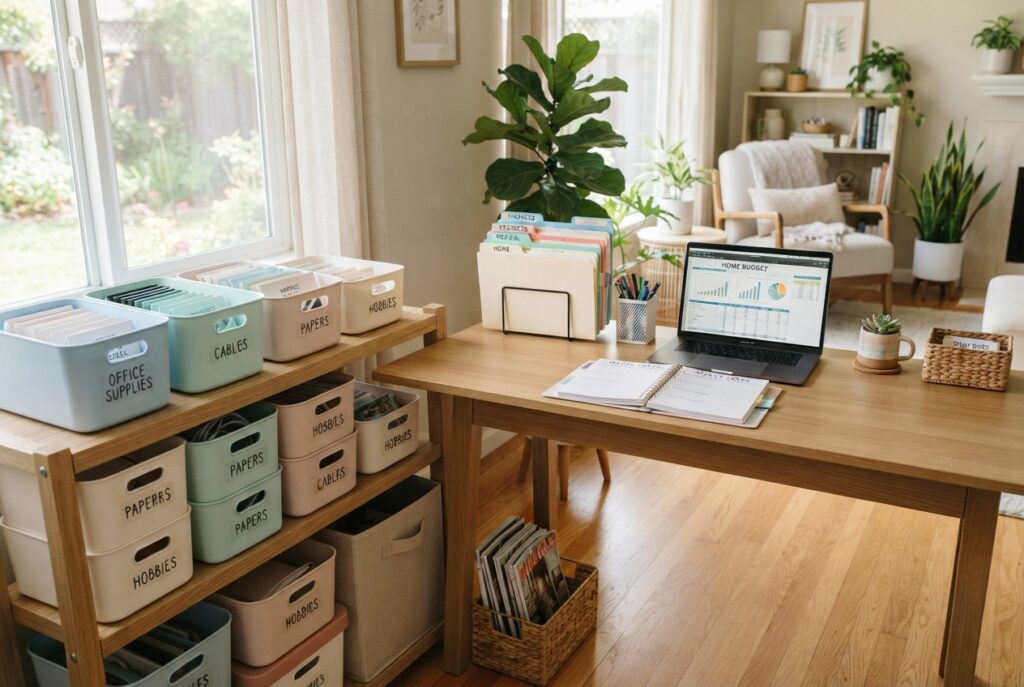
Are you curious about the expenses involved in organizing your space? In this guide, I will share my personal experience with the costs associated with my organizing project in 2026. Understanding these expenses can help you make informed decisions.
Many people wonder how their costs compare to national averages. For instance, Taskrabbit lists an average of $34 per hour for organization tasks. However, I found that professional organizers typically charge between $100 and $150 per hour. This guide will explore why my final price differed from these averages.
Throughout this article, I will highlight the distinctions between small organizing tasks and comprehensive home resets. The final price often depends on factors like the amount of clutter, the organizer’s expertise, and the complexity of the project. My aim is to provide you with practical insights based on my experience and current pricing trends.
Introduction to Home Organization in 2026
Have you ever thought about how organizing your space can transform your life? In 2026, the organizing market has evolved significantly. Professionals like Robyn Reynolds, owner of Organize2Harmonize, and Lenora O’Keith, creator of the Aronel Home app, are reshaping how we view organization.
These experts now tackle various projects, from closets to home offices. They address the needs of people who want to maximize their storage systems. As Christian Pfeiffer from Valley Organizing notes, “An organized space leads to a more efficient life.”
Statistics reveal that Americans lose about 2.5 days each year searching for misplaced items. This amounts to a staggering $2.7 billion spent on replacements. It’s no wonder that 67% of people believe proper organization could save them at least 30 minutes daily, totaling around 130 hours each year.
Investing in organization can lower stress and streamline routines. This value often outweighs the hourly rates charged by professionals.
What is a “home organizer cost”? Understanding the Basics
Understanding the pricing structure of organization services can greatly influence your decisions. The home organizer cost encompasses various aspects, including professional planning, decision support, and decluttering. It also covers arrangement and system installation.
It’s important to note that a professional organizer is not a house cleaner. As Lenora O’Keith explains, there is a clear distinction between light cleaning and deep cleaning. Organizers focus on optimizing your space rather than performing thorough cleaning tasks.
Moreover, organizers like Christian Pfeiffer encourage clients to decide what items to keep. They do not discard belongings without consent. This collaborative approach helps clients feel more in control of their organization journey.
When it comes to costs, different spaces may be quoted differently. For example, a closet, home office, or pantry may require different levels of decision-making and setup. Additionally, products like containers and shelving are separate from labor costs.
Factors Influencing Home Organizer Cost
The costs associated with organizing can be influenced by multiple key factors. Understanding these elements can help you plan your budget effectively.
First, the space being organized plays a significant role. A compact New York City apartment with years of accumulated belongings can cost more than a larger, lightly cluttered suburban home. Additionally, the density of clutter affects the time required for a project. Heavily cluttered areas may yield only 60 to 100 square feet of progress per day, while lighter spaces can see 150 to 250 square feet.
Regional variations also impact pricing. For instance, national organizer rates range from $50 to $150 per hour, while New York City rates can reach $225. Furthermore, rush requests can add a surcharge of 15% to 25%, and premium systems can increase costs by $200 to $1,200.
- Understanding how clutter density and item volume affect time and costs.
- Recognizing the difference in pricing between urban and suburban areas.
- Considering additional fees for rush scheduling and premium systems.
Hourly Rates and Project Pricing Models
Navigating the pricing landscape of organizing services can be a daunting task. Understanding the hourly rates charged by professionals helps in making informed choices.
New organizers typically charge between $25 to $45 per hour. In contrast, experienced professionals usually range from $50 to $100 per hour. For those seeking top-tier expertise, senior or NAPO-certified organizers can command rates of $100 to $150 per hour.
Luxury or concierge organizers often charge between $137 to $200 per hour, while hoarding remediation specialists may ask for $150 to $300 per hour. It’s essential to consider that many organizers require a minimum of three to five hours for their services.
When deciding whether to hire a professional, remember that a two-person team charging $150 per hour can often complete a project in half the time of a single organizer charging $75 per hour.
Detailed Project Costs by Room and Service Type
Have you considered the various expenses that come with organizing different areas of your home? Understanding these costs can help you plan your budget effectively.
Here are some national benchmarks for various projects:
| Room/Area | Cost Range (National) | Time Required |
|---|---|---|
| Single Closet | $150 – $300 | N/A |
| Single Room | $200 – $500 | N/A |
| Kitchen & Pantry | $400 – $1,200 | Varies |
| Garage | $1,000 – $2,500 | 6 – 12 hours |
| Whole Home Reset | $1,440 – $5,000 | Varies by bedrooms |
Kitchens often reach the upper range due to the high density of items, including appliances and pantry goods. Garage projects typically require more time because of heavy lifting and disposal coordination.
For home office organization, expect to spend about 4 to 8 hours, depending on paperwork and filing systems. Understanding these costs can make your organizing journey smoother.
Hidden Fees and Additional Expenses to Consider
When planning an organizing project, it’s essential to be aware of potential hidden fees. These can significantly affect your overall expenses and should not be overlooked.
First, let’s discuss the costs of supplies. Here’s a breakdown:
- Plastic bins: $5 to $30 each
- Fabric bins: $10 to $35 each
- Wall-mounted shelves: $30 to $150 each
- Garage storage racks: $150 to $600
Installation costs can also add up. For example:
- Shelf installation: $150 to $500
- Cabinet installation: $1,500 to $5,000
Additionally, services like consultations, shopping time, and disposal coordination may be billed separately. These costs can catch you off guard if you’re not prepared.
It’s worth noting that many households require 30% to 40% less storage after decluttering. Therefore, purchasing containers before sorting can lead to waste.
Finally, if you feel your organizer did an exceptional job, consider tipping. A customary tip ranges from 10% to 20%.
Understanding these additional costs will help you budget more effectively for your organization journey. For more tips on managing expenses, check out efficient organizing strategies.
Virtual Organizing vs. Traditional In-Person Services
Have you ever considered the advantages of virtual organizing compared to traditional methods? This approach is gaining popularity, especially as more people seek efficient ways to declutter their spaces.
Virtual sessions often provide significant savings. Clients can manage physical sorting, donations, and rearranging themselves, which can lower the overall cost. Here’s a quick comparison:
- Taskrabbit’s average rate is $49 per hour in New York City.
- In Los Angeles and Orange County, the rate drops to $39 per hour.
- Seattle sees an average of $47 per hour.
In contrast, virtual organization typically costs between $100 and $400 per project. These sessions focus on planning, accountability, and system design without the need for travel time.
Projects that suit virtual sessions include:
- Manageable closets
- Paperwork and digital files
- Spaces where you can perform physical work
However, virtual services may not be ideal for heavy lifting or severe clutter. In such cases, an in-person team is essential for effective organization.
Tips and Strategies for Budgeting Your Organization Project
Planning an organization project can be both exciting and challenging, especially when it comes to budgeting. Knowing how to manage your expenses effectively can lead to a successful outcome.
Here are some cost-saving tips to consider:
- Declutter first: Remove obvious trash, expired products, and clear donations before your appointment. This way, your paid time focuses on higher-value decisions.
- Bundle rooms: Organizing multiple spaces at once can reduce the minimum booking effect compared to hiring separate organizers for each closet or pantry.
- Schedule wisely: Opt for weekdays and non-peak periods. Demand often rises in early spring, during summer moves, and at the start of a new year.
- Prepare your home: According to DDH’s analysis, homes that are prepared sell in 23 days instead of 47 days and achieve 4.8% higher prices.
- Compare DIY vs. hiring: Consider the documented benefits of hiring help. Over 61.7% of participants reported reduced stress, and 99.19% felt better overall after professional organizing.
Implementing these strategies can make your organizing project not only more affordable but also more efficient.
Conclusion
My 2026 takeaway is simple: a realistic home organizer cost starts with national rates of $50 to $150 per hour, then shifts with location, clutter, project size, and supplies. A closet may run $150 to $300; a garage can reach $1,000 to $2,500 before products or installation.
Virtual services, early decluttering, bundled rooms, and flexible dates can trim the bill. Before hiring a professional organizer, I’d check referrals, reviews, project photos, consultation policies, and NAPO affiliations. These checks help me compare services and choose a provider whose work fits my needs.
Durable storage systems offer the strongest value. They save time, ease stress, and make the space easier to maintain after the work ends. Professional organizing works best when the plan fits daily routines. For more on practical organization, visit our approach.