Creating a more organized space can feel overwhelming. That’s why I developed a practical approach to tackle each room without the stress of a full-house overhaul. My method focuses on manageable sessions, allowing me to clear clutter effectively.
By setting a timer for just 10-15 minutes, I can concentrate on one area at a time. This strategy helps me make noticeable progress, even on busy days. I recommend starting with the room that causes the most frustration, like the kitchen or entryway.
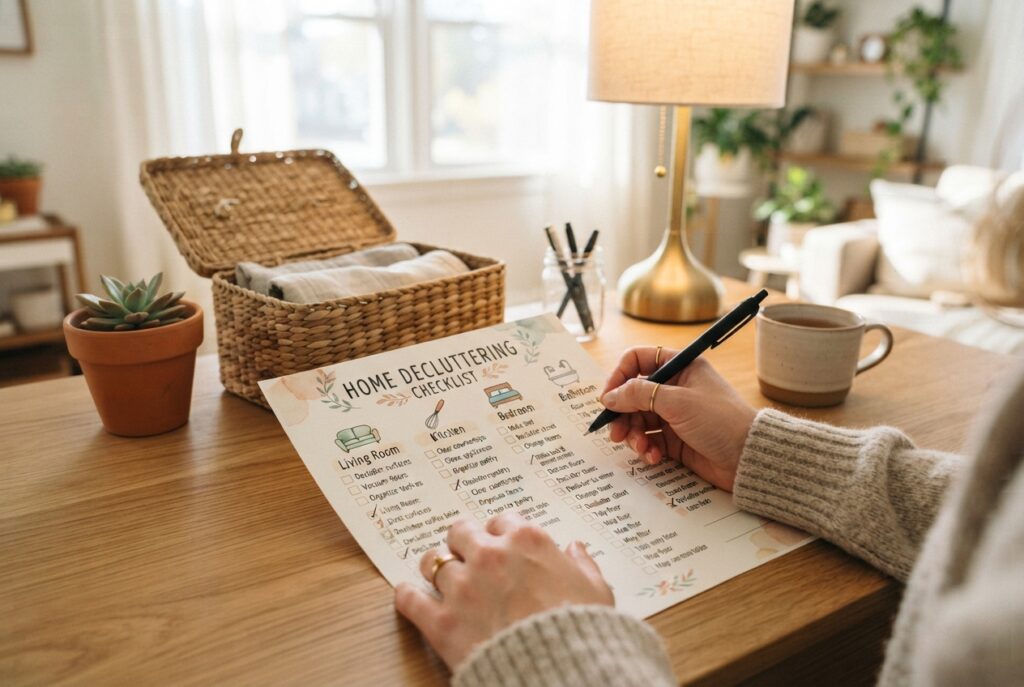
To keep things organized, I always have 3-4 bags or boxes nearby. These are for donations, trash, recycling, and items that belong elsewhere. Additionally, I’ve created a free printable tracker to mark off tasks as I complete them, making my progress visible and motivating.
My Decluttering Journey and Motivation
Transforming my living space into a more manageable area has been a gradual process. Clutter made daily tasks feel overwhelming. Crowded drawers and full counters often turned simple routines into challenges. Misplaced items would lead to frustration, causing me to waste precious time each day.
Over the years, my motivation to simplify my family home grew. As seasons changed and my children grew, I realized that my space needed to adapt too. The turning point came when I set a goal to purge at least 50 items each week before moving. This focused effort showed me how liberating it can be to own fewer possessions.
Reducing my belongings not only made moving easier but also highlighted the benefits of a less cluttered home. I now view organizing as an ongoing process, not just a one-time project. As I continue this journey, I find that each small step leads to a more peaceful and organized life.
“The more I let go, the more space I create for what truly matters.”
Why a Decluttered Home Matters to Me
An organized home brings a sense of calm that I deeply value. With fewer visible possessions, I find that my space feels more open and inviting. This makes everyday cleaning less demanding and allows me to focus on what truly matters.
By limiting decorative displays to just 1-2 items, I can reduce visual noise. This simple change leads to greater mental clarity and helps me feel more at ease in my surroundings. Additionally, setting practical limits, like keeping only 2-3 towels per person, prevents storage areas from becoming overloaded.
A calmer home environment supports my ability to rest and maintain focus. I have discovered that I don’t need expensive organization products to achieve this. Instead, I view decluttering as a way to reclaim valuable time and energy for family, work, and activities that enrich my life.
Ultimate Decluttering Checklist for Every Room
Tackling the clutter in my home has become a rewarding journey. I’ve developed a 25-step system that breaks the process into short, clearly defined actions. This method makes it easier to approach each room without feeling overwhelmed.
To start, I recommend focusing on one drawer, shelf, or corner at a time. Each step is designed to take under 30 minutes, allowing me to fit it into my day easily. As I check off completed tasks, I see visible momentum building, which motivates me to continue.
Using the four-box method, I categorize items into Keep, Donate, Trash, and Relocate. This ensures every item has a clear destination. For example, I sort pantry food, closet clothing, bathroom products, office papers, and children’s toys into these categories.
Room-by-Room Decluttering Strategies
Approaching the organization of my home room by room makes the task feel less daunting. Each space has its unique challenges, and I’ve developed specific strategies for tackling them effectively.
Kitchen and Dining Areas
In the kitchen, I start by clearing out expired pantry food, duplicate utensils, and mismatched containers. I also check for chipped dishes and appliances I rarely use. This method ensures I create a more functional cooking space.
Bedrooms and Bathrooms
For bedrooms, I review clothing not worn in the past year, old sheets, and broken hangers. I also focus on under-bed items that are often forgotten. In bathrooms, I check expiration dates on medications and toiletries, ensuring only the essentials remain.
Living Room and Entryways
In the living room, I remove old magazines, unread books, and duplicate cords. I also eliminate any dated décor that no longer fits my style. Entryways benefit from clearing out unused shoes and outgrown kids’ gear, creating a welcoming space.
Quick Decluttering Tips and Efficient Methods
Finding effective ways to simplify my space can lead to a more peaceful home. I’ve discovered that using the four-box method is a game changer. This approach categorizes items into Keep, Donate, Trash, and Relocate. By doing this, I can make decisions more easily and reduce the stress of sorting through belongings.
Another strategy I love is setting a timer for just 10 minutes. Instead of tackling an entire room, I focus on one drawer, shelf, or corner. This short burst of activity helps me avoid burnout while still achieving visible results. I sort the area, wipe it down, and stop when the timer goes off. This keeps the process sustainable and enjoyable.
By repeating these 10-minute sessions, I can efficiently complete each task on my list in under 30 minutes. It’s amazing how small efforts can lead to significant changes over time!
Personal Organization and Storage Solutions
Finding the right storage solutions can significantly enhance my home’s organization. It’s essential to ensure that clean, usable possessions find new homes instead of ending up in the trash. I often donate items to places like Goodwill, local shelters, food pantries, or even sell them on Facebook Marketplace. This not only helps others but also frees up space in my home.
To make the process easier, I recommend placing donations and returns in my car. Scheduling a drop-off during the same week keeps me accountable and prevents clutter from building up again.
Donation, Trash, and Relocation Tactics
When considering storage options, I have learned about various unit sizes. For instance, a 5×5 unit is comparable to a small closet, while a 10×10 unit is about half a garage. These units are great for seasonal décor, baby gear, and extra furniture. However, I always remember that food, flammable liquids, live animals, and illegal items are prohibited in storage units.
Using Printables and Checklists
Utilizing a printable tracker and clearly labeled boxes helps me separate items awaiting donation, recycling, relocation, or storage. This system keeps everything organized and makes the process more manageable.
| Storage Unit Size | Comparable Space | Best For | Prohibited Items |
|---|---|---|---|
| 5×5 | Small closet | Seasonal décor | Food, flammable liquids |
| 5×10 | Large closet | Baby gear | Live animals |
| 10×10 | Half garage | Extra furniture | Illegal items |
| 10×15 | Full garage | Keepsakes | Food, flammable liquids |
| 10×20+ | Large garage | Multiple items | Live animals |
Reflections on How Decluttering Changed My Life
Looking back, I see how small changes have made a big difference. Removing just 5-10 unwanted toys or clearing one drawer can create meaningful breathing room. These small wins are essential in maintaining motivation.
For instance, I set a goal of purging at least 50 items each week. This measurable target has helped me stay focused and encouraged me to keep going. Even on days when physical organization feels tough, I find success in a simple digital win, like deleting 30 unwanted photos daily.
Establishing daily, weekly, and monthly maintenance habits has been crucial. I make it a point to return items to their rightful places, sort mail immediately, and keep my counters clear. These practices protect the calm home environment I have worked hard to create.
- Daily: Return items and sort mail right away.
- Weekly: Declutter one room and clean the refrigerator.
- Monthly: Revisit bins and donate unused possessions.
“Small changes can lead to significant transformations.”
Conclusion
A home can feel lighter before an entire room changes. I can start with one drawer, one shelf, or a single 10-minute session. A room-by-room checklist and printable tracker help me see each small win and keep moving at a steady pace.
For each item, I use four boxes: Keep, Donate, Relocate, and Trash. This simple choice works in the kitchen, bedrooms, bathrooms, living room, office, and children’s spaces. I focus on what each area needs, rather than trying to fix everything at once.
Daily resets, weekly tidying, and monthly reviews help me protect that progress. These habits make my home easier to care for over time. I can choose one small task today and build from there.