Quick Verdict: Who the Aeron Is Actually Built For
Five years of daily 8-hour sitting, and the Aeron still tracks my spine the way it did in week one — that’s the short version. A $300 mesh chair from a big-box store simply doesn’t survive that timeline without the foam flattening, the tilt mechanism loosening, or the lumbar pad going soft.
Rating: 4.7/5 — docked slightly for the learning curve on dialing in PostureFit SL — the sizing confusion that trips up first-time buyers.
Bottom line: if you’re at a desk 6+ hours a day and you’ve already burned through two or three cheap chairs, get a properly sized Aeron and stop the cycle.
- Best for: remote and hybrid workers with existing back or neck complaints, anyone logging 8+ hour days at a screen, and people tired of replacing a budget chair every 18 months.
- Skip it if: you sit less than 4 hours a day, you don’t want to bother measuring for size A, B, or C, or your workspace genuinely doesn’t need this level of adjustability.
- Where it wins: the 8Z Pellicle mesh and Harmonic 2 tilt mechanism outlast anything foam-based by years, not months.
- Smart buy path: a certified, professionally refurbished Aeron — fully loaded, adjustable lumbar, backed by a 10-year warranty — gets you the same day-500 performance as new without the full retail hit.
Five years. That’s roughly 10,000 hours of sitting in the same chair, five days a week, through back-to-back video calls and long stretches of focused work. Most reviews stop at the unboxing. This one doesn’t.
An Aeron chair sitting under a working body for half a decade tells you things a 30-day trial never will — where the mesh sags, whether the tilt mechanism still feels calibrated, and whether the lumbar support that felt great in month one still holds up in year four. That’s the honest test, and it’s the one that actually matters if you’re a remote professional deciding between a premium ergonomic chair and yet another budget option from a big-box store.
As a workplace ergonomics consultant, I’ve watched clients cycle through $300 mesh chairs every 18 months, chasing comfort they never quite find. I’ve also watched clients sit in a properly sized Aeron for years without a single complaint about their lower back. The difference isn’t hype. It’s body mechanics, materials science, and what happens to foam versus 8Z Pellicle mesh after thousands of sitting hours. So here’s what five years of daily use actually revealed — the good, the annoying, and the parts nobody tells you about until it’s too late.
Quick Verdict: Who the Herman Miller Aeron Is Actually Built For
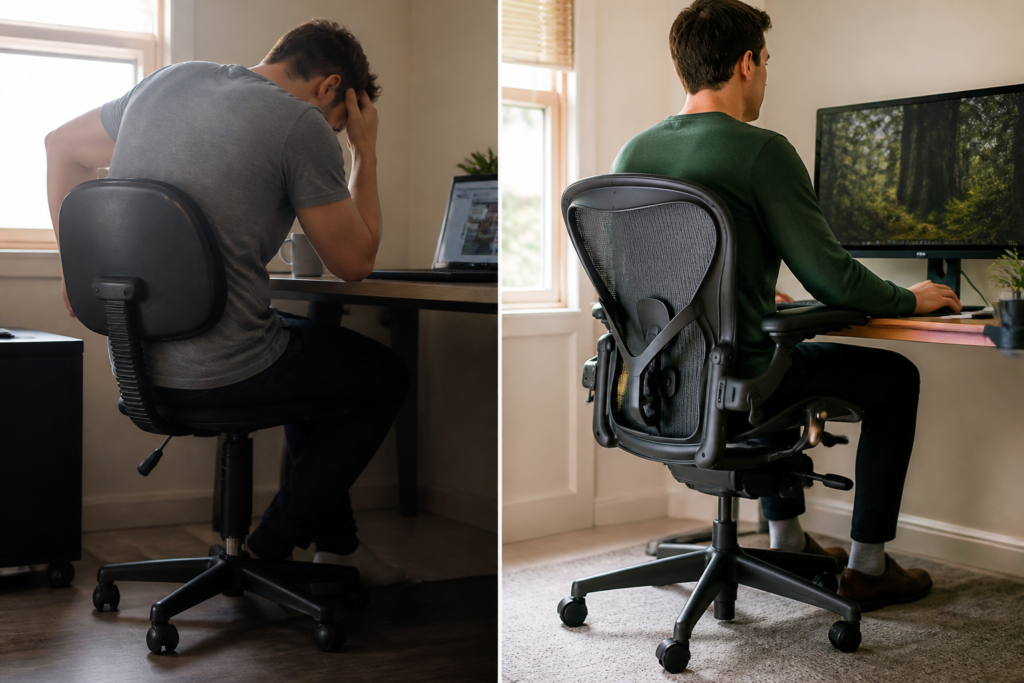
Picture a home office at 4 p.m. on a Thursday: five years in, the budget mesh chair’s gas cylinder sinks an inch every hour, and the lower back is screaming by the third video call. That’s the exact scenario that separates casual buyers from the people who actually need an aeron. The bottom line, from a consultant’s chair (not a sales floor): after five years of 8-plus-hour days, the Aeron still holds its shape, tension, and support where cheaper mesh chairs sag and squeak. This isn’t marketing talk. It’s what shows up in the joints, the spine, and the posture of people who sit for a living.
Here’s who benefits most:
- Remote workers already dealing with back or neck complaints
- Anyone logging 6-10 hours daily at a desk
- People who’ve burned through 2-3 budget chairs in the last five years
And here’s who should skip it entirely:
- Occasional sitters — under 4 hours a day
- Buyers who don’t want to bother measuring for size A, B, or C
- Anyone treating a chair as a one-time furniture purchase instead of a long-term joint-health decision
Aeron Chair Herman Miller Key Features That Actually Matter for Body Mechanics
Most spec sheets miss the point entirely. What actually matters is what happens to your spine, hips, and shoulders after hour six — not hour one.
8Z Pellicle Suspension: Why Mesh Beats Foam for Long Sitting Sessions
The 8Z Pellicle uses eight zones of graduated tension, so weight gets spread across the sit bones and thighs instead of piling onto one compressed foam pad. Foam breaks down and traps heat — that’s the real complaint with leather executive chairs after a few years. Mesh breathes, holds its shape, and doesn’t create the sweaty-back problem foam eventually causes.
PostureFit SL Versus Adjustable Lumbar: Which One Fits Your Spine
PostureFit SL uses dual pads that support the sacrum and lumbar independently, keeping the pelvis tilted forward and the natural S-curve intact. That’s the better pick for anyone with a history of lower back flare-ups. The strap-adjustable lumbar pad works fine for lighter users without chronic pain who just need basic curve support.
Herman Miller Aeron Size Chart: Getting Size A, B, or C Right
Roughly 70% of buyers fit Size B, which is exactly why the aeron chair size b sells fastest. Wrong sizing — not the chair itself — is the number one reason people claim the Aeron doesn’t work for their body.
Real-World Performance: What Five Years of Daily Sitting Reveals
Ever wonder what a chair actually feels like after the honeymoon phase wears off? Most reviews cover the first 30 days. This one covers years two through five — the stretch where budget chairs usually start falling apart, foam goes flat, and mechanisms start creaking. That’s the window that matters.
Back and Hip Support Over Time: Does the PostureFit Hold Up?
PostureFit SL still delivers the same firm sacral push it did on day one. Foam-cushioned budget chairs lose shape within 12 to 18 months — the padding compresses, the lumbar bump flattens, and you’re basically sitting on a plank by month 20. The Harmonic 2 tilt mechanism deserves credit here, too. Its weight-responsive recline held calibration through five years of daily use, no drifting, no sudden give when leaning back.
Heat, Breathability, and Long Shifts at the Desk
By hour three, upholstered budget chairs trap heat against the lower back — that damp, sticky feeling that makes you shift every ten minutes. The 8Z Pellicle mesh never does that. Larger frames — think aeron chair size c users — benefit most, since more surface contact means more heat if the material can’t breathe.
Herman Miller Aeron Price Versus Value: Is a Refurbished Aeron Worth It?
Here’s a number that stops most buyers cold: a new Aeron runs well past a thousand dollars before tax — depending on configuration, it can climb close to two grand. That’s a serious commitment for a desk chair — even a legendary one.
New Aeron Pricing Versus a Certified Refurbished Aeron
A professionally refurbished Herman Miller Aeron closes that gap without cutting corners on what actually matters: the 8Z Pellicle suspension and the Harmonic tilt mechanism arrive intact, doing the same job they did on day one. Take the herman miller aeron titanium chair in the fully loaded configuration — fully adjustable arms, tilt limiter, tension control. That’s the same trim level buyers pay top dollar for new.
Why the 10-Year Warranty Changes the Math
A budget chair lasting 18 to 24 months before the gas cylinder sags or the mesh tears isn’t a bargain — it’s a subscription. A certified Aeron backed by a 10-year warranty flips the cost-per-year math entirely. Madison Seating’s 127-point inspection and authentication process is why performance matches factory spec, not a diminished copy of it.
Pros and Cons: An Honest Breakdown After Five Years
Here’s a claim that surprises most first-time buyers: an Aeron isn’t automatically the right chair just because it’s famous. Five years of daily sitting exposes what marketing copy never mentions — good — bad. This aeron work chair earns its reputation in some areas and demands patience in others.
What Held Up (Pros)
- Spinal support consistency — the lumbar contour never went soft or flattened out, even after thousands of hours.
- Breathable mesh that never trapped heat, even through summer stretches at the desk.
- Adjustable arm precision — height, pivot, and depth stayed locked in without drifting.
- Sizing options across A, B, and C meant the fit matched actual body proportions, not guesswork.
- Warranty coverage on refurbished units gave real peace of mind when a tilt tension knob needed attention in year three.
What to Watch For (Cons)
- There’s a real learning curve on adjustments. Expect a week of tweaking before it clicks.
- Sizing mistakes happen constantly if measurements get skipped — don’t eyeball it.
- Upfront cost stays higher than a big-box chair, even refurbished.
- No headrest on the classic design. Anyone wanting one needs an aftermarket add-on.
Aeron Chair Versus Budget Chairs and Other Premium Alternatives
A client of mine bought a $279 mesh chair from a big-box store in 2019. By month 14, the tilt mechanism clicked with every recline, and the foam had gone flat under the sit bones. That’s the pattern I see over and over with cheap seating.
Why $200-$400 Chairs Break Down Within Two Years
Budget chairs fail in three predictable spots. Foam compresses permanently after a few hundred hours of sitting, losing the rebound that once cradled your hips. Plastic tilt mechanisms — the cheapest part of the whole build — crack under repeated recline stress. And lumbar pads, usually glued foam rather than engineered support, go soft and flat within eighteen months. That’s exactly why the Aeron is recommended for long hours: its 8Z Pellicle mesh doesn’t compress like foam because there’s no foam to break down.
Aeron Chair Versus Steelcase Leap and Amia
PostureFit SL targets the sacrum and lumbar independently, holding pelvic tilt in place through a full workday. Steelcase’s LiveBack flexes continuously with movement, while the Amia’s LiveLumbar responds more passively. In practice, the Aeron holds its adjustment settings longer under daily wear than either Steelcase system.
Final Verdict: Rating and Who Should (and Shouldn’t) Buy the Aeron
Five years in, the Aeron earns an 8.5 out of 10 on body mechanics and durability. The 8Z Pellicle hasn’t sagged, the PostureFit SL knob still holds its setting, and the frame shows zero creak. That’s a real result, not marketing copy.
Who benefits most? Anyone logging 7+ hours a day at a desk, especially people managing lower back strain or a stiff neck from years in a budget chair. Tall or heavy users also gain from the size range — a Size C seat pan handles frames that a $250 mesh chair simply can’t support without sagging by month six.
Who doesn’t need it? Someone working 2-3 hours a day from a laptop at the kitchen table. That user won’t feel a difference between a decent budget chair — a premium one. Spinal loading only becomes a problem with sustained sitting.
One practical note before buying: getting the size wrong ruins the experience entirely. the 3-step test for picking Aeron sizes correctly takes ten minutes and prevents a costly mistake.
Realistically, a certified, professionally refurbished Aeron delivers this same five-year performance without new-chair spending. That’s the smarter entry point for most buyers.
Pros and Cons After Five Years
No hedging here — this is what actually held up and what still bugs me after five years of daily sitting.
What Held Up (Pros)
- Spinal support stayed consistent. The PostureFit SL still holds its tension — no sagging, no flattening out like a foam lumbar pad does by year two.
- The 8Z Pellicle mesh never sagged or pilled. Eight zones of tension still distribute weight across the sit bones the same way they did on day one.
- Arm adjustments stayed precise. Height, width, depth, pivot — every stop still locks where I set it. That’s not always true on cheaper chairs after heavy use.
- Sizing options actually matter. Once I got into the correct size (B, in my case), pressure points at the hips disappeared. A one-size-fits-all budget chair can’t do that.
- A certified, refurbished unit with a 10-year warranty changes the math. You get the same Harmonic 2 tilt performance and PostureFit support as new, backed by authentication and a 127-point inspection, without new-chair spending.
What to Watch For (Cons)
- There’s a real learning curve. Between tilt limiter, tension knob, and lumbar depth, it takes a week or two to dial in — don’t expect instant comfort out of the box.
- Skip the sizing step, and you’ll blame the chair. Wrong size (A instead of B, or vice versa) is still the number one reason people say the Aeron “doesn’t work” for them.
- Upfront cost is still higher than a big-box mesh chair — even refurbished. You’re paying for engineering, not just a name.
- No built-in headrest on the classic frame. If you recline a lot or work reclined on calls, you’ll want an aftermarket headrest add-on.
- Casters matter more than people expect. Standard casters on hardwood can scuff floors — order the right wheel type up front instead of swapping later.
Five years is long enough to expose a chair’s weak points, and the Aeron simply doesn’t show the ones that sink budget seating. Foam collapses. Plastic tilt mechanisms crack. Lumbar pads flatten into nothing by year two. The Aeron’s mesh and dual-pad spine support kept doing their job long after cheaper chairs got replaced — twice, in some cases. That durability is really what buyers are paying for, not a name on a spec sheet.
For anyone still on the fence, the math is straightforward: a body logging 6-plus hours a day at a desk needs support that holds its shape for years, not months. A certified, professionally restored Aeron gets there without the full cost of buying new, — a 10-year warranty backs that performance up. Skip the guessing game with sizing charts and generic reviews. Look at a fully loaded, adjustable-lumbar Aeron in a configuration built for daily use, and measure it against what a chair actually needs to survive year five — not just week one.