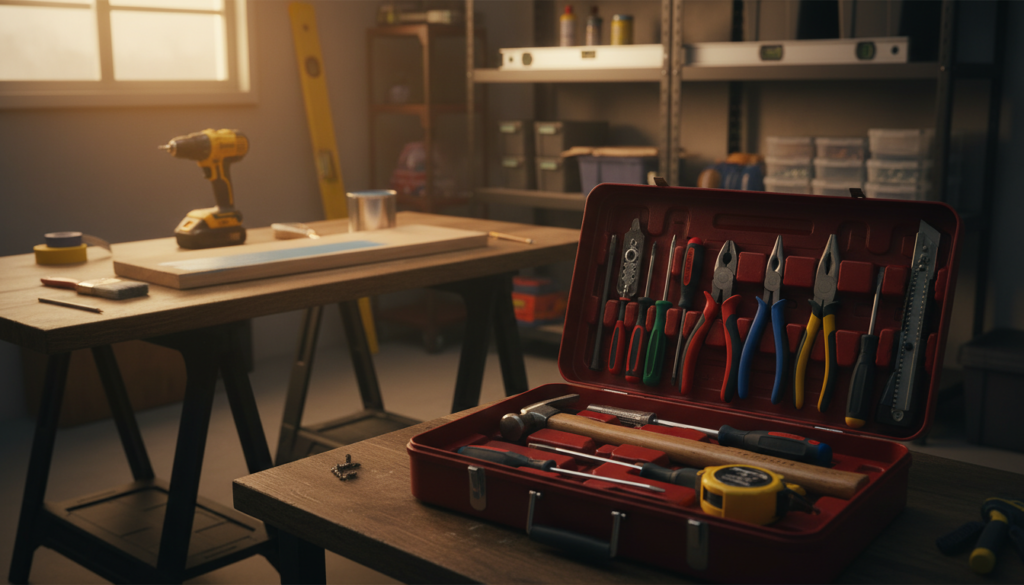
Nearly 70% of small household fixes take less than an hour when the right gear is on hand.
This guide gives clear, friendly information to get your diy journey moving without stress.
Start with a compact kit that covers common tasks around your home. A few reliable items make routine fixes faster and safer.
Whether you just moved into a place or want to handle simple updates, building a small collection of tools saves time and money.
Gain confidence by learning what to pick and how to use it. Small projects become rewarding when the gear matches the task.
Key Takeaways
- Having a few multipurpose tools makes common fixes simple and quick.
- Quality over quantity: reliable items last longer and work better.
- Learning basic skills boosts confidence and reduces repair costs.
- Start small and add gear as projects get more advanced.
- This guide offers practical information to guide your diy home setup.
Why You Need a Reliable Home Repair Toolkit
Keeping the right kit at hand prevents minor faults from becoming costly problems. Investing in a reliable home repair tool kit preserves property value and cuts down on service calls.
When a leaky faucet or loose cabinet handle appears, prompt action keeps the house safe and comfortable. Having essential tools ready lets you fix common household issues fast.
A neat, organized collection helps you manage small projects around house, from furniture assembly to tightening hinges. That ease boosts confidence and makes maintenance less stressful.
- Save money: DIY minor fixes instead of hiring out.
- Improve safety: Quick repairs reduce hazards.
- Be prepared: Handle unexpected maintenance with a home tool set.
| Benefit | How it helps | Example |
|---|---|---|
| Cost savings | Fewer professional calls | Fix a running toilet |
| Speed | Quick response to issues | Tighten loose railings |
| Confidence | Comfort handling repairs | Assemble new shelving |
| Home value | Keep property in good shape | Touch up minor damage |
Essential Hand Tools for Beginners
The best tools often fit in a small kit. Start with a few reliable hand items and you’ll tackle common fixes with ease.
Hammer and Screwdriver Set
A claw hammer is a top pick. It drives nails for hanging pictures and pulls them during simple fixes.
Invest in a screwdriver set that includes flathead and Phillips tips. These essential tools help tighten loose cabinet handles and assemble furniture with less hassle.
Pliers and Utility Knives
Needle-nose pliers handle precise tasks. Slip-joint pliers grip, twist, and cut wires around the household.
A sharp utility knife ranks among the most useful things in a kit. It slices cardboard, opens packaging, and trims drywall cleanly.
- Include an Allen wrench set to speed up flat-pack furniture assembly.
- Keep the collection compact so it’s ready when small projects pop up.
“Start with these hand tools and you’ll be ready for most quick repairs.”
What Tools Do You Need for Basic Home Repairs for Beginners
Start by choosing a compact kit that solves the most common household snags. Pick items that let you fill nail holes, tighten loose fixtures, and stop small leaks fast.
Focus on versatility. A quality adjustable wrench handles many nut and bolt sizes. A set of screwdrivers and a claw hammer cover most quick fixes around the house.
Keep a few reliable hand pieces and a tape measure. These let you work with confidence and mimic the efficiency of a contractor on small jobs.
Plan purchases by priority. List the repairs you face most often and buy what meets those needs first. That approach saves money while you build a larger diy home collection over time.
“Having the right tools for home repair lets you tackle minor maintenance tasks with ease.”
Power Tools to Simplify Your Projects
If you want bigger results in less time, a handful of power machines will change how you work. These devices move you beyond simple hand tasks and make larger jobs manageable.
Cordless Drill Versatility
A cordless drill is one of the best tools for diy projects. It drills holes and drives screws into wood, drywall, and metal with ease.
Pick a model with a lithium-ion battery for longer runtime and steady power during longer tasks.
Circular Saw Basics
A circular saw gives straight, accurate cuts when building furniture or tackling larger home improvement projects. It replaces slow hand sawing and keeps edges cleaner.
Choose the blade type to match the material you cut and always clamp stock to avoid kickback.
Electric Sander Benefits
An electric sander saves serious time when refinishing wood. It smooths surfaces faster than sandpaper and helps you get professional results with less effort.
Together, these must-have tools expand what you can handle at home and let you finish projects faster.
“Adding powered gear helps you complete complex tasks much quicker and enjoy your improvements sooner.”
Precision and Measuring Gear
Accurate measuring turns average diy projects into clean, lasting results.
A 25-foot tape measure is a critical tool in any home kit. It gives reliable dimensions for furniture placement and shelving.
Keep the tape locked when measuring. That steady read prevents mistakes and saves material and time.
Use a 9-inch torpedo level to make sure artwork, shelves, and curtain rods sit perfectly straight. Small adjustments here create a polished look across rooms.
A stud finder protects wall surfaces when mounting heavy items. Locating wooden supports keeps installations secure and limits drywall damage.
- Precision prevents waste: accurate reads lower the chance of ruined boards.
- Consistent results: repeatable measurements help all your projects finish neat.
- Invest wisely: quality gear pays off with professional accuracy and longer life.
“Good measuring is the simplest way to make upgrades look built by a pro.”
Must-Have Adhesives and Patching Supplies
Having spackling, caulk, mortar, and epoxy on hand saves time and prevents bigger damage. These basic products let you tackle small repair tasks around the home without stress.
Using Spackling and Putty
Spackling is a soft putty used to fill nicks, holes, and scratches in drywall. You’ll need a putty knife to apply it smoothly and feather edges for a clean finish.
Tip: Keep a damp cloth nearby to wipe excess and tidy edges before the compound sets.
Working with Caulk and Mortar
Caulk is a waterproof adhesive product that you’ll need to seal gaps around windows, doors, and bathroom fixtures. Read drying times on the packaging so the seal stays durable.
Mortar paste mix repairs cracks in brickwork or concrete. Use a putty knife to press the mix into gaps and smooth the surface.
- Epoxy creates permanent bonds for broken metal or plastic furniture.
- Keep a roll of tape and a utility knife handy during prep and trimming.
“Make sure you follow cure times and keep cleanup supplies close for professional-looking results.”
Prioritizing Safety Gear for Every Project
Before any project begins, choosing the right protective gear keeps accidents small and confidence high. Safety should be the first item on your checklist when working around the home.
Essential Protective Equipment
Safety goggles protect your eyes from dust and debris when drilling holes or sanding surfaces. Wear them even during quick tasks; a small chip can cause a big problem.
Work gloves guard your hands from blisters, cuts, and heat when handling a hand tool or rough materials. Choose gloves that fit well so grip and dexterity stay strong.
A respirator mask is vital when using chemical products or creating dust. It prevents inhalation of harmful particles during longer jobs.
Keep a well-stocked first aid kit nearby with adhesive tape and bandages. Quick access to basic supplies reduces downtime and helps you treat minor mishaps fast.
- Read labels: check safety warnings on all products before use.
- Use the right gear: wearing proper protection is non-negotiable when operating power tools.
- Stay prepared: small items like tape and a spare respirator filter make a big difference.
“Protecting yourself is the simplest way to keep projects safe and enjoyable.”
Tips for Keeping Your Tools in Top Shape
A little care after each use stops rust and keeps parts moving smoothly.
Wipe down metal and plastic pieces after every job to remove dirt and grit. This prevents corrosion and cuts down on wear over time.
Sharpen blades and saw edges regularly. Sharp edges make repair work faster and safer when you tackle routine tasks.
Store gear dry and organized. A toolbox or pegboard keeps things visible and ready to use. Make sure the area stays moisture-free to avoid rust.
- Apply a light oil to moving parts to preserve function.
- Inspect each tool before starting a new job and replace any damaged piece right away.
- Follow simple maintenance routines to save money on replacements and reduce wasted time.
| Task | Frequency | Benefit |
|---|---|---|
| Wipe clean | After every use | Prevents rust |
| Sharpen blades | Monthly | Safer cuts |
| Oil joints | Quarterly | Smoother action |
“Take care of your kit and it will return the favor when repairs matter most.”
When to Call a Professional
Complex systems in a house often require trained technicians to diagnose and fix issues safely. Calling a pro limits risk and helps preserve the value of your home.
Protect major systems and appliances by hiring licensed help for electrical, plumbing, and HVAC work. If an appliance breaks down repeatedly, a technician can spot the root cause faster than trial-and-error fixes.
Consider coverage. Protecting your home with an American Home Shield warranty lets you focus on projects you enjoy while reducing stress about unexpected appliance failures.
- If you are unsure how to fix a major issue around house, call a pro rather than risk more damage.
- Even with the right tools, major electrical or plumbing work should be left to licensed professionals to ensure safety and code compliance.
- Knowing when to seek help shows responsibility and protects long-term house integrity.
“When in doubt, reach out—trusted pros keep your household safe and functional.”
Building Your Collection Over Time
Let real projects shape your tool set; practical use reveals what matters most.
Start with a small tool kit and focus on nine core pieces that cover common fixes. Begin with must-have items like a cordless drill and an Allen wrench set. These are perfect for assembling furniture and many quick projects.
Buy quality over quantity. A good home tool lasts longer and saves money over time. As you take care to learn new techniques, you’ll spot the extra items that match your property’s specific needs.
Many tools homeowners in Greater Tampa Bay expand their kits after tackling a few tasks. You’ll add specialty pieces when those tasks come up. That steady approach keeps costs low and builds confidence.
- Tip: track the jobs you do and buy the right additions.
- Tip: keep a few reliable hand items ready for fast fixes.
“With patience and practice, your diy home set will handle almost any challenge.”
Conclusion
Wrapping up, a few smart purchases and steady practice make small projects feel easy and rewarding. Gather clear information on common fixes, then match that knowledge to sensible gear.
Follow these practical tips to maintain your property and handle common issues without constant professional help. Start small, learn steadily, and expand your kit as tasks grow.
It is also important to keep safety front and center. Prioritize proper safety gear on every job, even quick ones, to avoid setbacks and stay confident.
Keep tools organized and cared for, and practice often. Over time, your skills will grow and bigger improvements will feel within reach.