Surprising fact: more than half of costly repairs are avoidable with steady upkeep.
That reality changes the way you think about chores. Following a clear home maintenance checklist keeps value up and damage down. Experts even recommend setting aside 1–3% of a house’s value each year for this work.
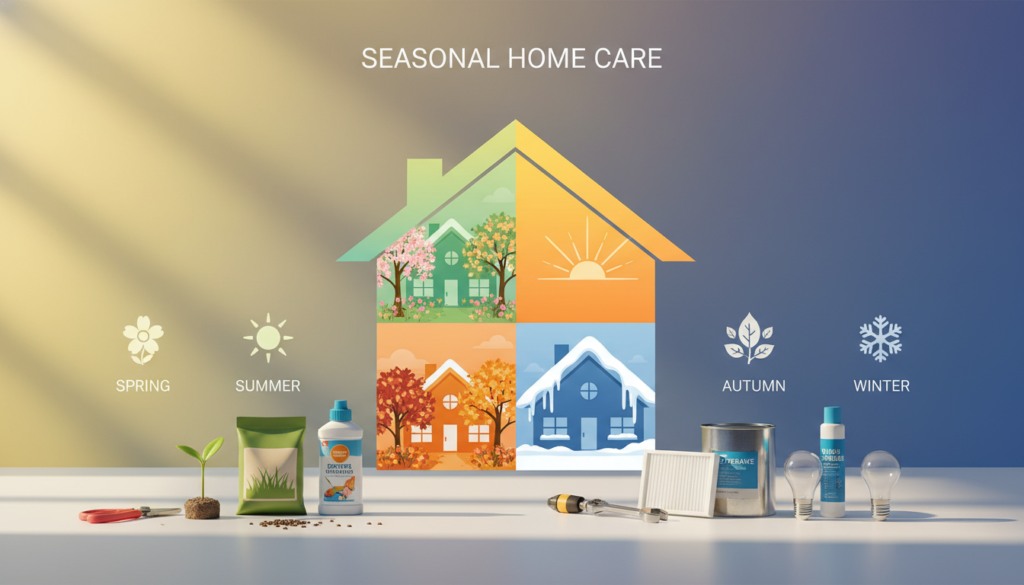
Spring is ideal for clearing gutters, power washing siding, and inspecting the roof for rot. Winter prep focuses on insulating pipes and sealing drafts to stop energy loss and ice dams.
Mr. Handyman offers seasonal lists that help you manage systems like HVAC and exterior components. Spend a little time each season on cleaning and minor repairs, and you will likely avoid expensive fixes later.
Key Takeaways
- Regular upkeep prevents many costly repairs and preserves value.
- Set aside 1–3% of house value yearly for upkeep and minor fixes.
- Spring tasks: gutters, roof checks, and exterior cleaning.
- Winter tasks: insulate pipes, seal drafts, and protect against ice.
- Use a structured list to track HVAC checks and seasonal tasks.
Why Regular Home Maintenance Matters
Small, regular tasks can stop minor flaws from turning into major structural problems. Your residence is often the largest financial asset you own, and steady care protects that investment.
Farm Bureau data shows an older $300,000 house may need about $9,000 each year for upkeep. That figure reflects repairs, replacements, and work that prevents bigger damage later.
More than half of major repairs are avoidable when routine inspections and minor fixes happen on a calendar schedule. Contractors recommend marking these checks on a yearly plan to prevent surprises.
“Routine inspections catch small issues early and save money over time.”
Takeaway: proactive care reduces risk, preserves value, and lowers long-term repair costs. Spotting chipped paint or small cracks now prevents hidden structural damage later.
| Item | Typical Annual Cost | Benefit | Action |
|---|---|---|---|
| Roof/Flashing | $500–$1,500 | Stops leaks and rot | Inspect, repair minor damage |
| HVAC Tune-up | $150–$300 | Improves efficiency | Service twice a year |
| Exterior Paint/Seals | $1,000–$3,000 | Prevents moisture intrusion | Touch up and reseal |
| Plumbing/Small Repairs | $200–$2,000 | Avoids major water damage | Fix leaks promptly |
Monthly Tasks for Every Homeowner
A short monthly routine keeps small issues from turning into costly repairs. A quick check of safety devices, filters, and appliances protects air quality and prevents water damage. These tasks form the core of a practical home maintenance checklist.
Safety Device Testing
Test smoke and carbon monoxide alarms each month. Replace batteries when alerts sound weak and press the test button to confirm functionality.
HVAC Filter Care
Change air filters monthly to lower heating and cooling costs and extend furnace and AC life. Clean vents and check for blocked returns so systems run efficiently.
Appliance Cleaning
Run a dishwasher cycle with one cup of white vinegar to clear residue and smells. Refresh the garbage disposal with ice and salt to remove buildup and bacteria.
- Inspect water heater pressure relief for leaks and check water softener for salt bridging.
- Scan windows doors and exterior areas for wear to avoid drafts and damage from weather.
- Call a professional service for complex repairs if a task feels risky.
“Monthly attention prevents surprises and keeps repair costs down.”
How Often Should You Do Home Maintenance Checklist by Season
Create a simple timetable that maps specific tasks to each quarter of the year. Use a printable list from Mr. Handyman or another trusted source to stay organized and save time.
Spring is the right moment for gutters, downspouts, and a roof inspection. Catching clogs and loose shingles before heavy rain prevents exterior water damage and costly repairs.
Summer focuses on exterior cleaning and airflow. Power wash decks, service the hvac system, and install attic fans to improve air circulation and lower cooling costs.
Fall means disconnecting outdoor hoses and blowing out irrigation lines. Prep windows doors and clear yard debris so freezing weather won’t cause pipe or foundation problems.
Winter requires attention to drafts and heat circulation. Reverse ceiling fans, check seals around windows and doors, and confirm heating service for reliable systems through cold months.
- Tip: follow a maintenance checklist that lists exact timing for each task and system service.
- Tip: prioritize gutters, roof, and HVAC to reduce risk of damage and expensive repairs.
“A short, seasonal plan keeps systems healthy and saves money over time.”
Spring Cleaning and Exterior Preparation
When buds appear, it’s time to tackle exterior cleaning, gutter clearing, and a quick roof inspection. These simple checks protect value and stop small issues from turning into costly repairs.
Inspecting Gutters and Roofs
Start by clearing leaves and debris from gutters and downspouts so water drains away from the foundation. Clogged channels lead to pooling and hidden damage during heavy rains.
Walk the yard and trim errant limbs that brush siding or roof edges. Rake beds, remove debris, and inspect the foundation for new cracks that may need sealing.
Wash windows, siding, and doors to spot chipped paint or soft wood early. Clean patios and decks, then treat exposed wood with a borate solution to prevent rot and extend life.
- Check shingles for winter wear and loose flashing.
- Clear gutters so spring rains won’t cause water intrusion.
- Repair small paint or siding damage to avoid larger repairs.
“A focused spring exterior pass saves time and prevents water damage later.”
Summer Maintenance for Indoor and Outdoor Systems
Long summer days are perfect for tackling indoor systems and refreshing exterior surfaces. Quick summer checks keep appliances efficient and cut utility waste.
Plumbing leak checks are a top task. Inspect under sinks, around toilets, and by dishwashers for drips or stains. Fixing small leaks stops water waste and prevents hidden damage.
Plumbing Leak Checks
Look for damp spots, loose fittings, and slow drains. Replace worn washers and tighten loose connections. Run faucets and watch meters to catch unseen losses.
Ceiling Fan Direction
Flip ceiling fans to counter-clockwise to push cool air down. That small change improves air flow and eases pressure on cooling systems.
Vacuum refrigerator coils and clear dryer vents to protect appliances during peak use. Power wash decks and play structures to restore appearance and prevent rot.
- Install attic or garage venting fans to reduce heat buildup.
- Include these items on a simple home maintenance checklist so nothing is missed.
“A short summer pass on systems and exterior cleaning can save time and money later.”
Fall Projects to Ready Your Home for Winter
Before cold weather arrives, tackle key outdoor projects that guard against frozen pipes and roof damage. A short fall pass through exterior areas and systems pays off when snow and ice show up.
Preventing Frozen Pipes
Disconnect hoses and shut off outdoor spigots to stop water from freezing in lines. Drain irrigation zones and remove standing water from faucets.
Insulate exposed pipes in basements, crawlspaces, and unheated garages. Check windows and doors for drafts and add weather stripping where needed.
Managing Ice Dams
Clean gutters of leaves and debris before the first heavy snow. Clear channels let water flow away from the roof and prevent ice buildup.
Have the furnace and air ducts serviced so the attic stays closer to living-space temperatures. A swept chimney and sealed driveway cracks also reduce winter damage risks.
- Quick fall tasks: chimney inspection, gutter cleaning, disconnect faucets, driveway sealing.
- Schedule professional HVAC and furnace service to keep systems ready for heating demands.
“A focused fall check keeps systems steady and prevents costly repairs in cold months.”
Winter Care for Pipes and Energy Efficiency
A short winter plan that targets pipes and energy use can prevent costly damage and high bills. Start with a few simple practices that protect plumbing and keep heating efficient.
Preventing Frozen Pipes
Leave cabinet doors open under sinks to let warm air reach exposed lines. During extreme cold, keep a slow drip from faucets tied to vulnerable pipes.
Wrap exposed runs in attics and basements with Styrofoam or foam sleeves. This insulation reduces the risk of bursts and limits water damage.
Keep the thermostat at or above 55°F. A programmable thermostat helps balance comfort and savings while guarding plumbing.
Managing Ice Dams
Check the roof for ice buildup after storms. Ice dams trap water, which can harm gutters and leak into walls or the foundation.
Keep attic vents clear and have the furnace and HVAC serviced so the roof stays closer to indoor temperatures.
Test smoke and carbon monoxide detectors and clean furnace filters before deep cold arrives. Also inspect windows and doors for drafts and add weatherstripping where needed.
- Quick winter tasks: insulate pipes, set thermostat, test detectors.
- Schedule professional chimney and HVAC service to reduce repair risk.
- Refer to seasonal home maintenance essentials for a compact reference.
“A few preventive steps in winter shorten repair lists and protect both plumbing and heating systems.”
Conclusion
Wrapping up with a simple plan makes upkeep less stressful and more effective.
Follow a clear home maintenance checklist to protect value and reduce surprises. A seasonal plan breaks big work into small, doable steps and helps keep the house in good shape all year.
Use a compact maintenance checklist to track key tasks like spring prep, pipe protection, and HVAC service. Staying organized turns big projects into brief, regular efforts that save time and money later.
Start by adding these items to a calendar. That small act will help keep home systems steady and lower the chance of emergency repairs.